On this page
- 01Key takeaways
- 02Should accountants use organic or paid social?
- 03What organic content works for accountants?
- 04When are paid ads worth it for accountants?
- 05What rules apply to accountants' ads?
- 06How should a practice combine both?
- 07What does this look like in practice?
- 08Accountants checklist
- 09Next step
- 10Sources and further reading
- 11Frequently asked questions
Key takeaways
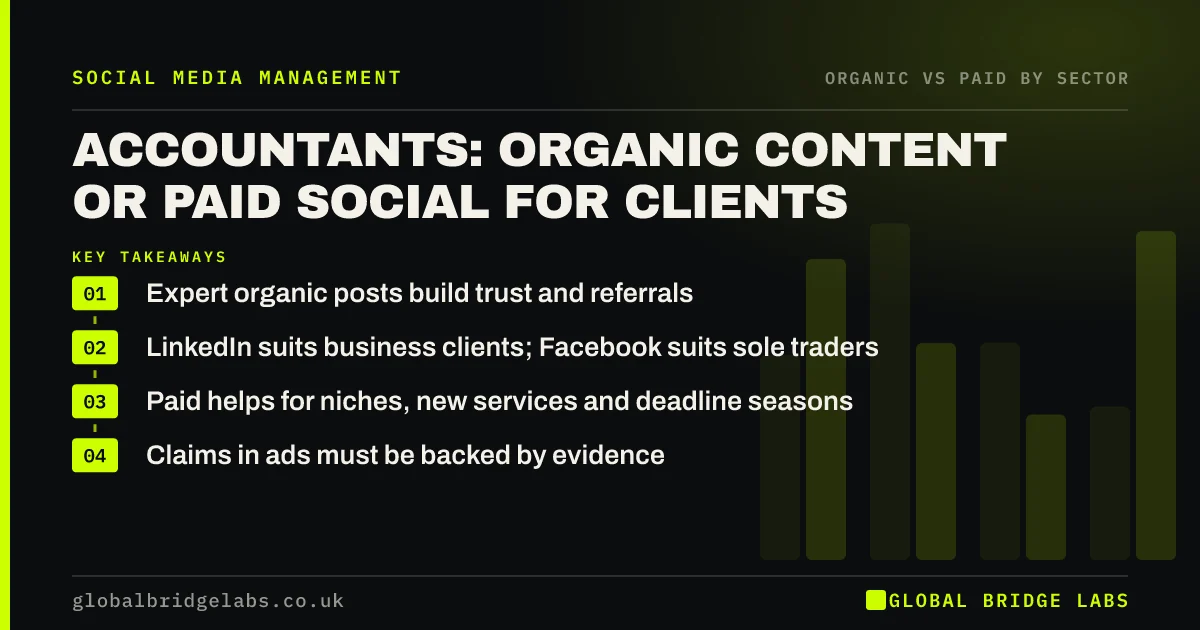
For accountants, organic content usually does most of the work: partners and staff explaining tax changes, deadlines and practical money questions build trust and bring referrals. Paid social helps when launching a new service, targeting a niche such as trades or landlords, or ahead of key deadlines. Lead with expertise; use ads for specific niches.
- Expert organic posts build trust and referrals.
- LinkedIn suits business clients; Facebook suits sole traders.
- Paid helps for niches, new services and deadline seasons.
- Claims in ads must be backed by evidence.
Running a practice? Tell us your ideal clients on WhatsApp.
Chat on WhatsApp →Should accountants use organic or paid social?
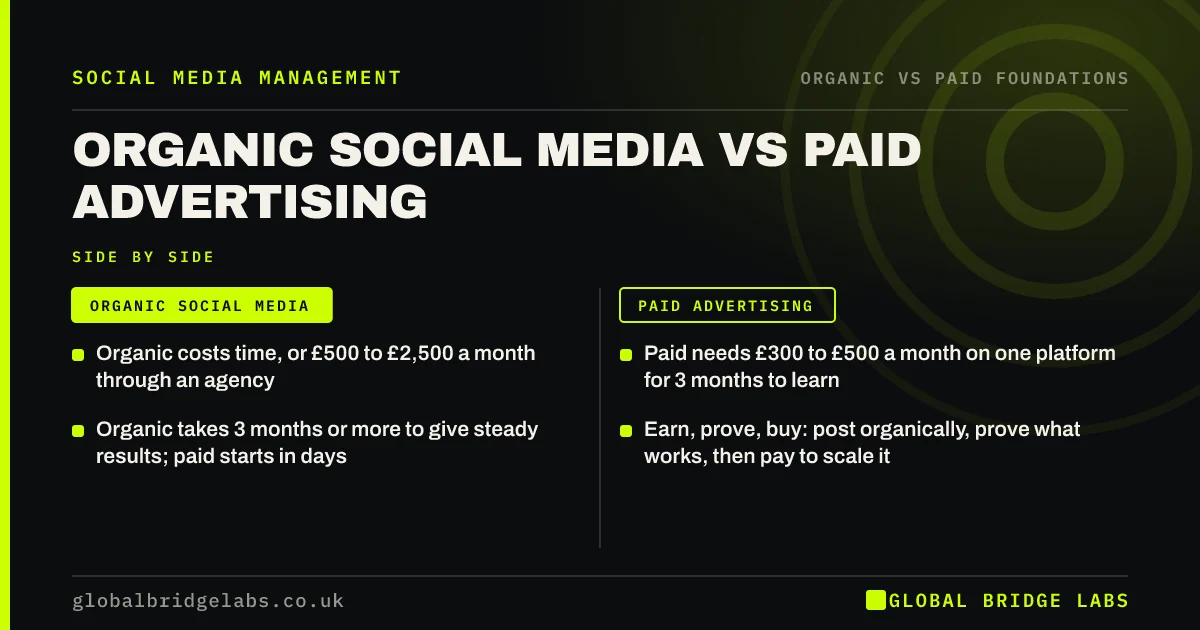
Most accountancy practices should lead with organic, because clients choose accountants on trust and expertise. Paid works well for specific aims: a new service, a niche such as landlords or tradespeople, or the run-up to self assessment deadlines.
What organic content works for accountants?
What works is clear, practical explanation of money questions clients ask.
- Deadline reminders with what to do.
- Plain explanations of tax changes.
- Answers to common client questions.
- Partner and staff introductions.
When are paid ads worth it for accountants?
Paid ads are worth it for targeting niches by interest or job title, promoting a new service such as bookkeeping or payroll, and reaching sole traders before self assessment deadlines. LinkedIn suits business owners; Facebook often suits sole traders and landlords.
What rules apply to accountants' ads?
Claims such as 'save tax' or 'lowest fees' need evidence under the CAP Code; the ASA's substantiation guidance explains what is expected. Professional bodies may also have marketing rules for members.
How should a practice combine both?
Let partners and staff post expertise weekly, then put modest budget behind posts that start conversations, aimed at your chosen niche. Retarget website visitors who viewed service pages.
What does this look like in practice?
A pattern we see: a two-partner practice posted generic tax tips on its company page with little response. A partner posting plain-English answers to landlord tax questions on LinkedIn and Facebook brought enquiries, and a small Facebook ad aimed at landlords in January lifted new client sign-ups before the deadline.
Accountants checklist
- Choose one or two client niches.
- Get partners posting expertise weekly.
- Post deadline reminders with clear actions.
- Use ads for niches and new services.
- Back every claim with evidence.
- Retarget visitors to service pages.
Next step
Pick one client niche and have a partner post one useful answer for that niche each week for two months. Then test a small ad aimed at the same niche.
Message us on WhatsApp for an accountancy social plan, or book a 30-minute consultation.
Chat on WhatsApp →Sources and further reading
- LinkedIn Pages best practices · LinkedIn
- Substantiation: advice on backing up marketing claims · ASA and CAP
- LinkedIn relevance: optimising the member experience · LinkedIn Help
Frequently asked questions
Do accountants need social media?
Many clients check an accountant's online presence before getting in touch, even after a referral. An active profile with useful posts reassures them. It does not need to be time-consuming: weekly practical posts from a partner, plus deadline reminders, are often enough.
Is LinkedIn or Facebook better for accountants?
LinkedIn suits practices targeting business owners and finance directors. Facebook often works better for sole traders, landlords and individuals. Many practices use LinkedIn for organic expertise posts from partners and Facebook ads for niche consumer audiences, such as landlords, in the weeks around tax deadlines. Test one before adding the other.
Can accountants advertise tax savings on social media?
Only with care. Claims about saving tax or money must be accurate and backed by evidence under the CAP Code. Avoid promising specific savings without context. Check any rules from your professional body and keep claims general unless you can substantiate them.
Written by

Global Bridge Labs (GBL) is a UK–Sri Lanka partner for social media, websites and BPO. Everything here comes from client delivery, not theory.