On this page
- 01Key takeaways
- 02Should a restaurant use organic or paid social?
- 03What organic content works for restaurants?
- 04When are paid ads worth it for restaurants?
- 05What else matters for restaurants?
- 06How should a restaurant combine both?
- 07What does this look like in practice?
- 08Restaurant checklist
- 09Next step
- 10Sources and further reading
- 11Frequently asked questions
Key takeaways
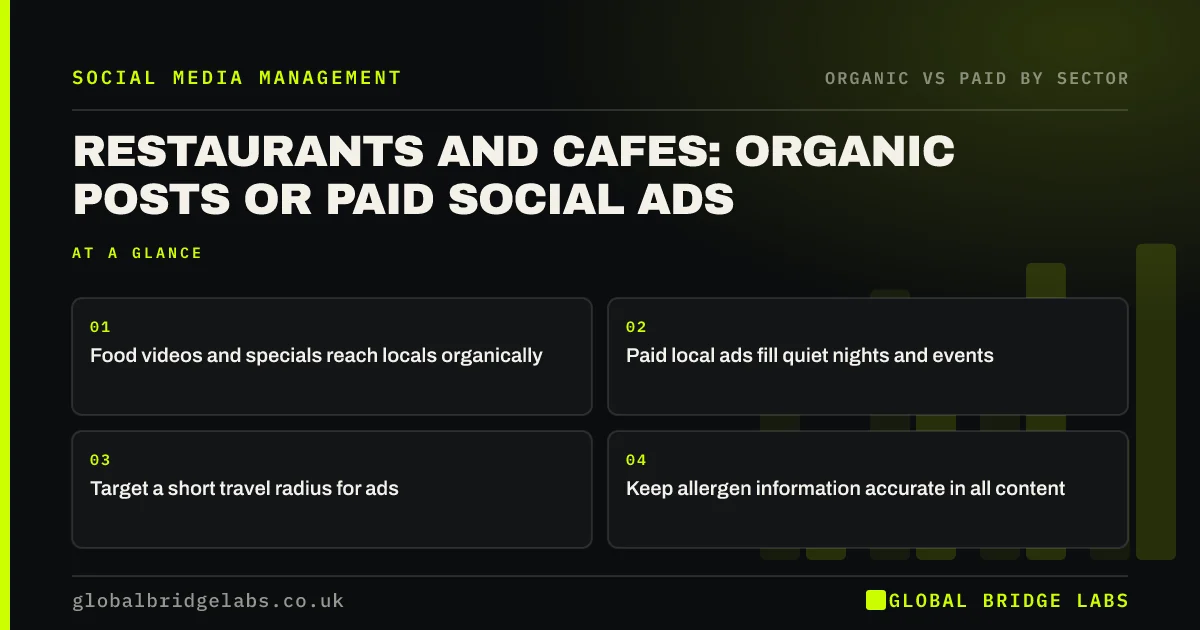
For restaurants and cafes, organic social is the everyday engine: food videos, specials, staff and regulars attract locals for free. Paid social is a tool for quiet nights, openings, events and seasonal menus, with ads targeted to a short travel radius. Organic keeps you visible; paid fills specific tables at specific times.
- Food videos and specials reach locals organically.
- Paid local ads fill quiet nights and events.
- Target a short travel radius for ads.
- Keep allergen information accurate in all content.
Got quiet nights to fill? Message us on WhatsApp.
Chat on WhatsApp →Should a restaurant use organic or paid social?
A restaurant should post organically every week and use paid for specific gaps: quiet midweek services, a new menu, an event or an opening. Local diners decide quickly, so a short radius and timely offer matter more than big budgets.
What organic content works for restaurants?
What works is food, people and timeliness.
- Short videos of dishes being made.
- Today's specials and menu changes.
- Staff and regulars, with permission.
- Events and seasonal menus.
When are paid ads worth it for restaurants?
Paid ads are worth it when you need covers on specific nights, are launching a menu or opening, or promoting a ticketed event. Target people within a short travel distance, run ads in the hours before decisions are made and link to booking.
What else matters for restaurants?
Keep Google Business Profile current with hours, menu and photos, since many diners check it first. Any allergen claims in posts or ads must be accurate; the Food Standards Agency's allergen guidance sets out businesses' responsibilities.
How should a restaurant combine both?
Post daily or several times a week organically, track which dishes and formats get saves and shares, and use those as ads on quiet nights. Retarget people who engaged with recent posts.
What does this look like in practice?
A pattern we see: a neighbourhood bistro posted menus as text images with little response. Switching to short clips of dishes being plated increased organic reach locally. A small ad on Tuesday and Wednesday afternoons, featuring the most-watched dish and a booking link, improved midweek covers.
Restaurant checklist
- Post short food videos weekly.
- Share specials and events promptly.
- Keep Google Business Profile current.
- Check allergen claims are accurate.
- Run short-radius ads for quiet nights.
- Link ads directly to booking.
Next step
Film three short dish videos this week and post them. Note your quietest service and plan a small radius ad for the afternoon before it.
Message us on WhatsApp for a restaurant social plan, or book a 30-minute consultation.
Chat on WhatsApp →Sources and further reading
- Google Business Profile Help · Google
- Allergen guidance for food businesses · Food Standards Agency
- UK Code of Non-broadcast Advertising and Direct & Promotional Marketing (CAP Code) · ASA / CAP
Frequently asked questions
How often should a restaurant post on social media?
Several times a week is typical for restaurants and cafes, with stories daily if possible. Consistency matters more than volume. Specials, short food videos and events give natural reasons to post. Make sure opening hours and menus on all profiles stay current.
Are Facebook ads worth it for restaurants?
They can be, used for specific aims such as quiet nights, openings or events. Target a short radius, run ads close to when people decide where to eat and link to booking. Running small ads all the time without a clear purpose rarely pays.
Should restaurants work with food influencers?
Local food creators can bring new diners, especially for openings and new menus. Choose creators whose followers are local, agree expectations in writing and make sure paid or gifted content is labelled as an ad under ASA rules. Track bookings that mention them.
Written by

Global Bridge Labs (GBL) is a UK–Sri Lanka partner for social media, websites and BPO. Everything here comes from client delivery, not theory.