Short, practical writing on visibility, conversion and capacity, from the team doing the work for 120+ UK startups, SMEs and enterprises.
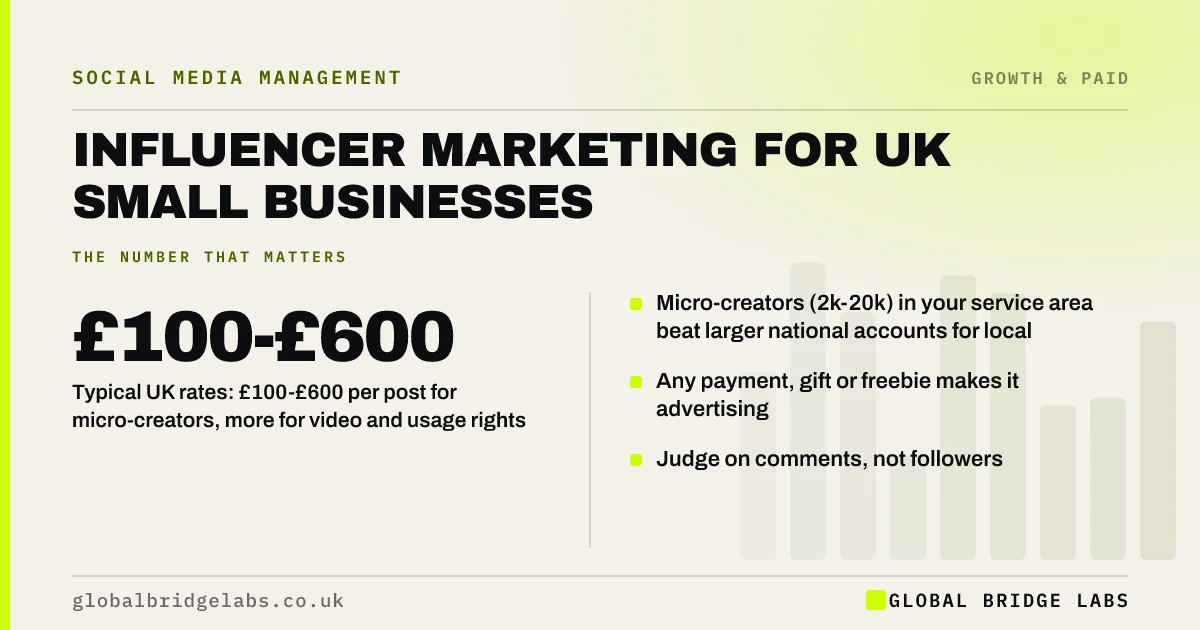
How UK small businesses work with local creators without wasting money: how to choose, what to pay, what to put in writing, and the ASA disclosure rules.
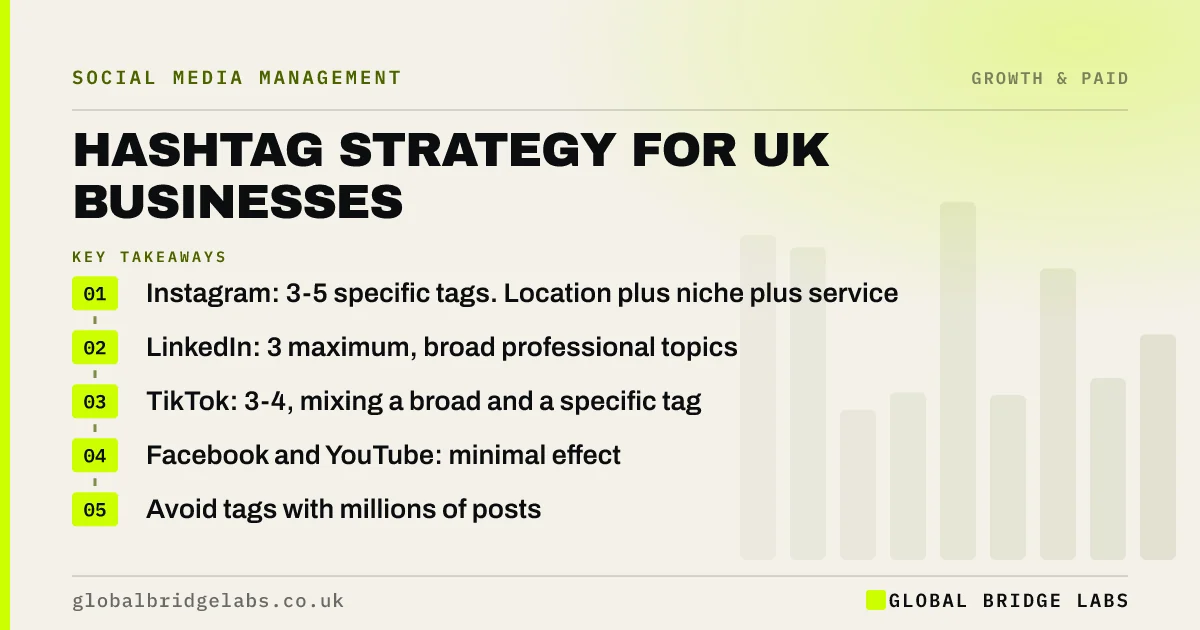
What hashtags still do on each platform, how many to use, and why UK location and niche tags outperform large generic ones for small businesses.
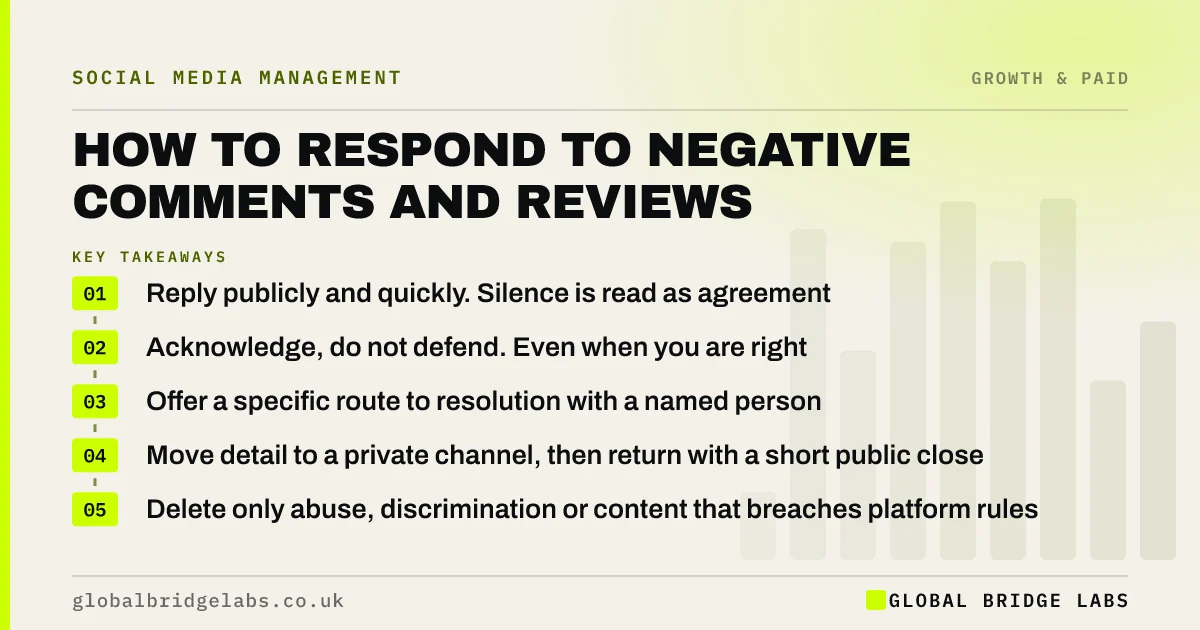
A response framework for UK small businesses facing negative comments and reviews: what to say, what never to say, and when to delete or report.
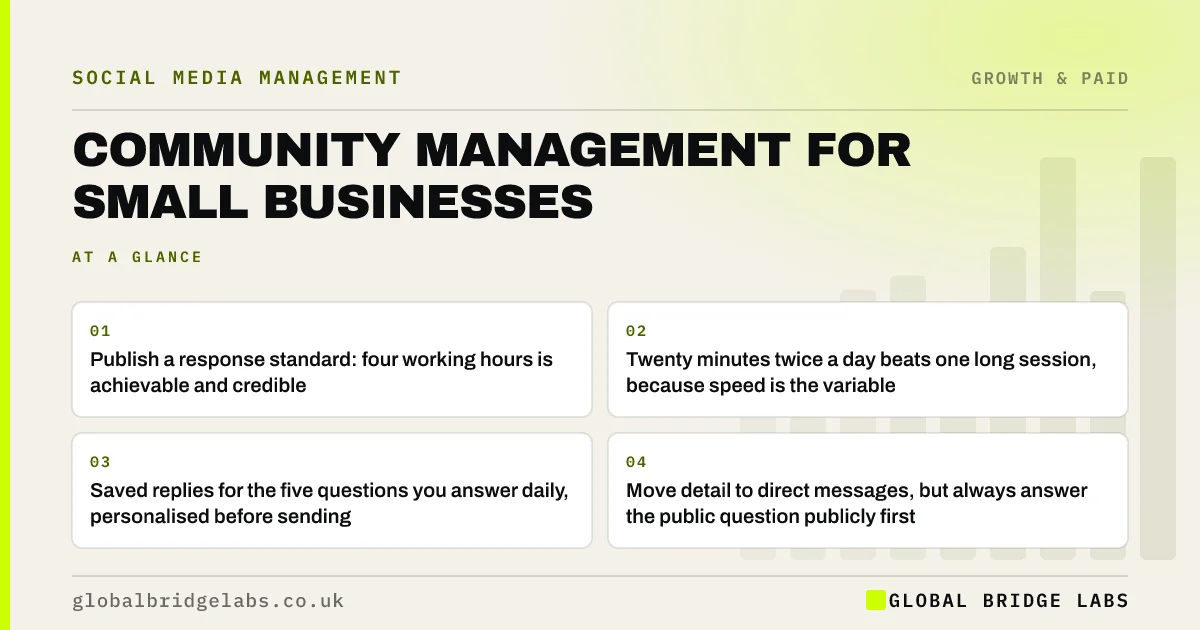
How UK small businesses handle comments, messages and reviews without it taking over the day: response standards, saved replies and when to outsource.
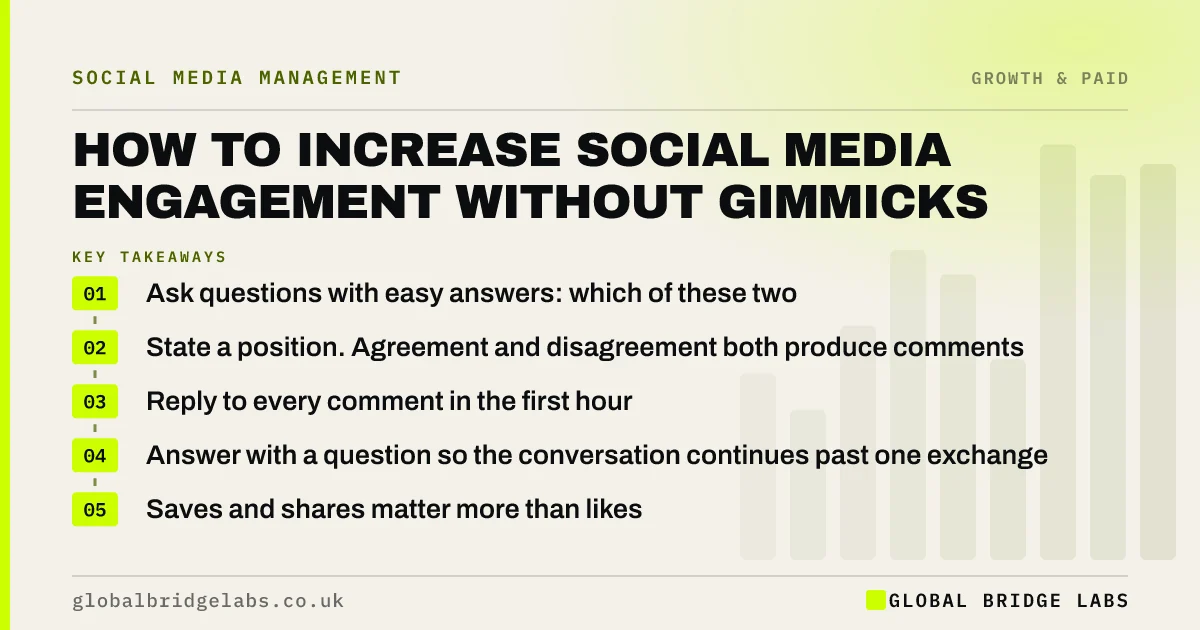
Practical ways UK small businesses increase social media engagement: what actually prompts comments, the first-hour rule, and formats that invite a reply.
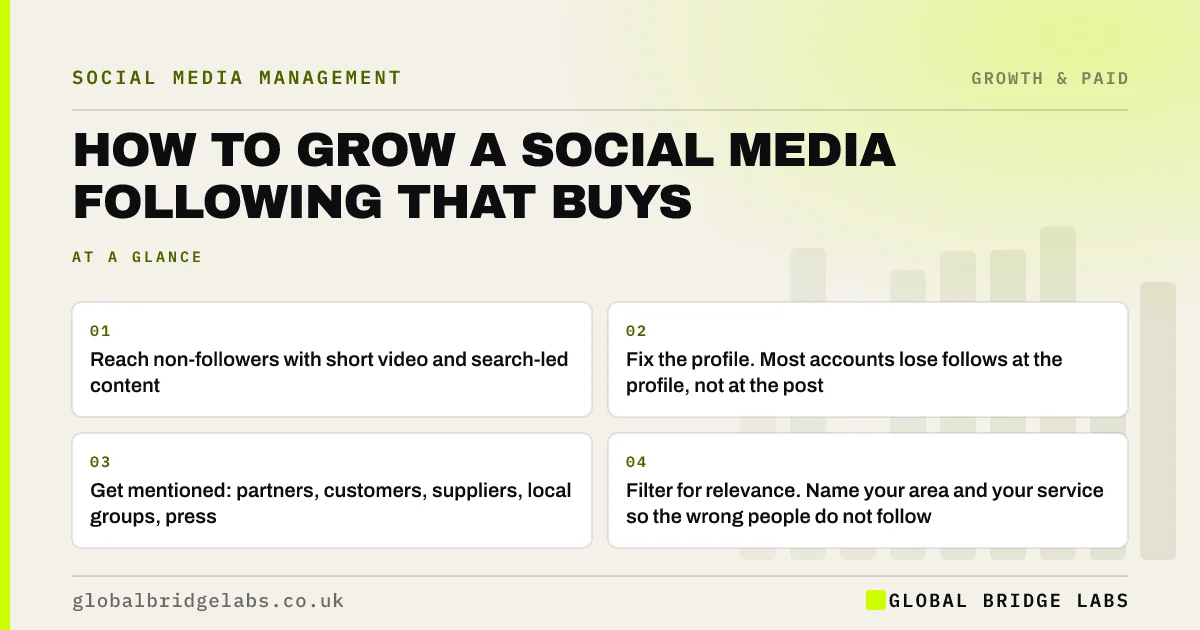
How UK small businesses grow a social media following worth having: the four mechanisms that work, what to ignore, and why 500 local followers beat 10,000.
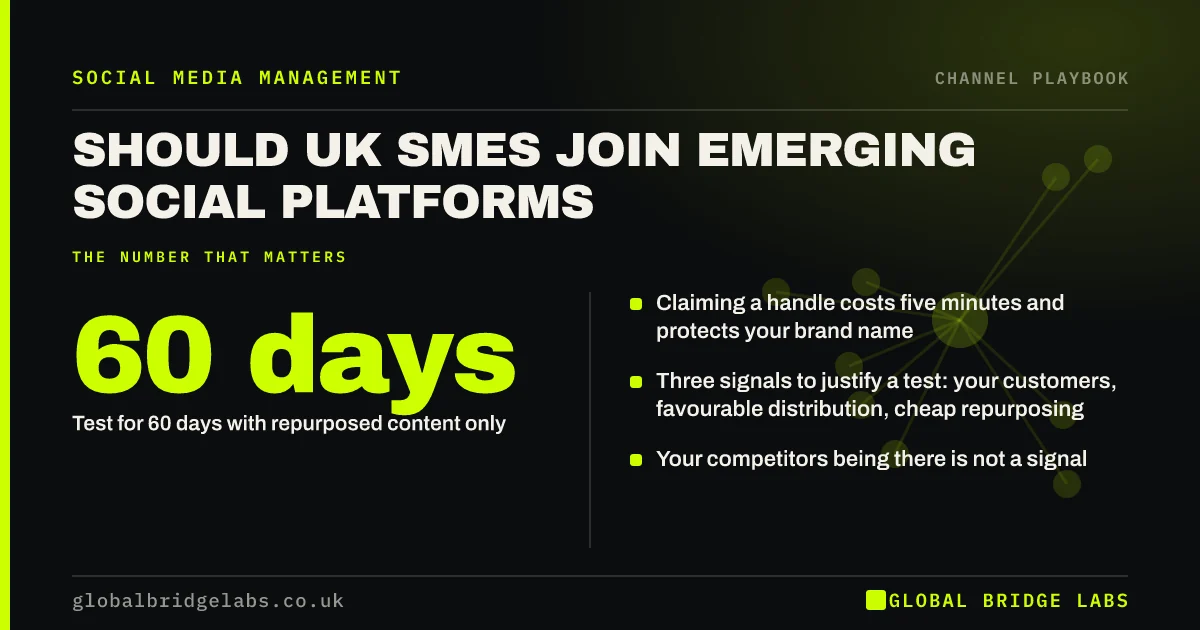
How to decide whether a new social platform is worth your time, the three signals that justify an early test, and how to claim your brand for free.
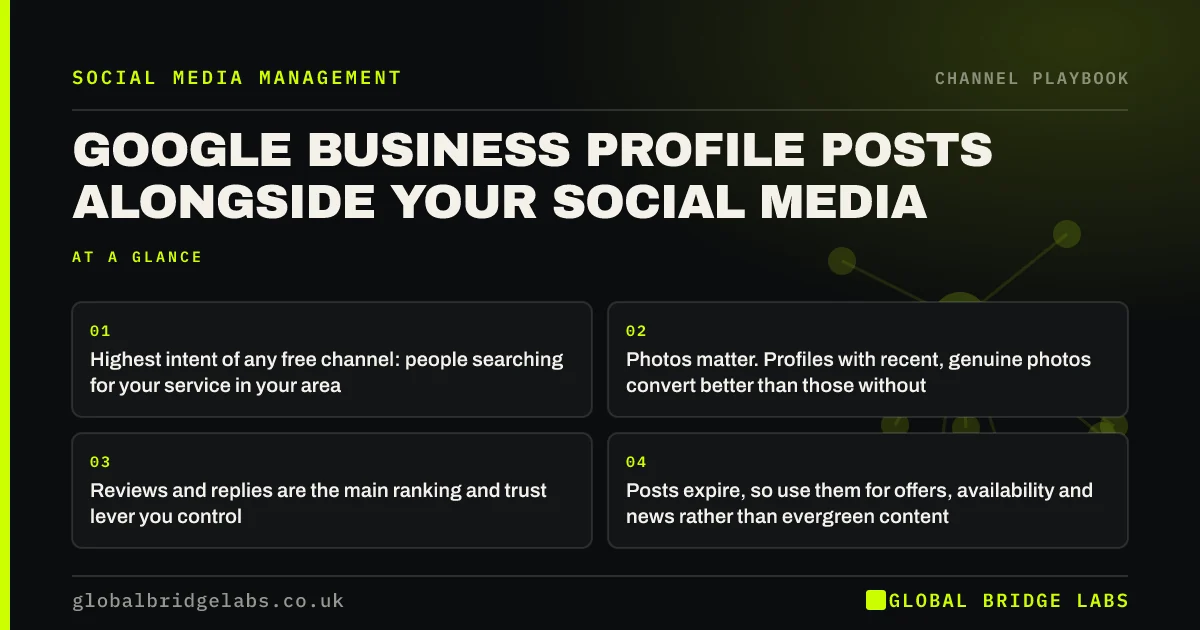
Why a Google Business Profile often outperforms social media for UK local businesses, what to post there, and how to keep both running from one workflow.
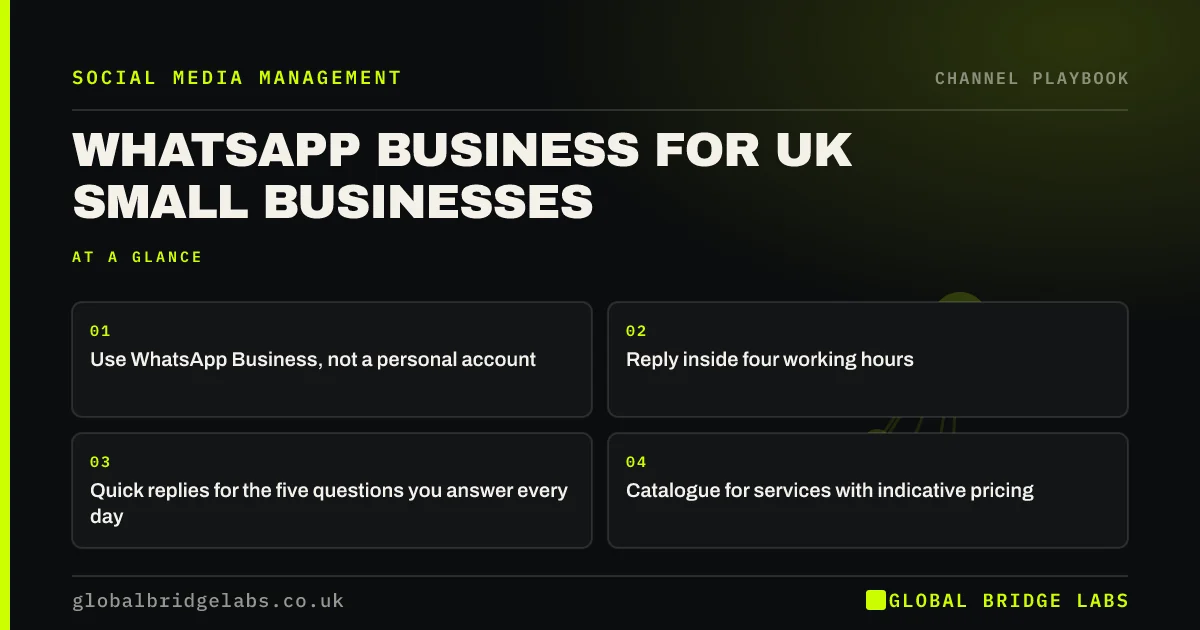
How UK small businesses use WhatsApp Business properly: enquiry handling, catalogues, response standards, and what the rules allow you to send.
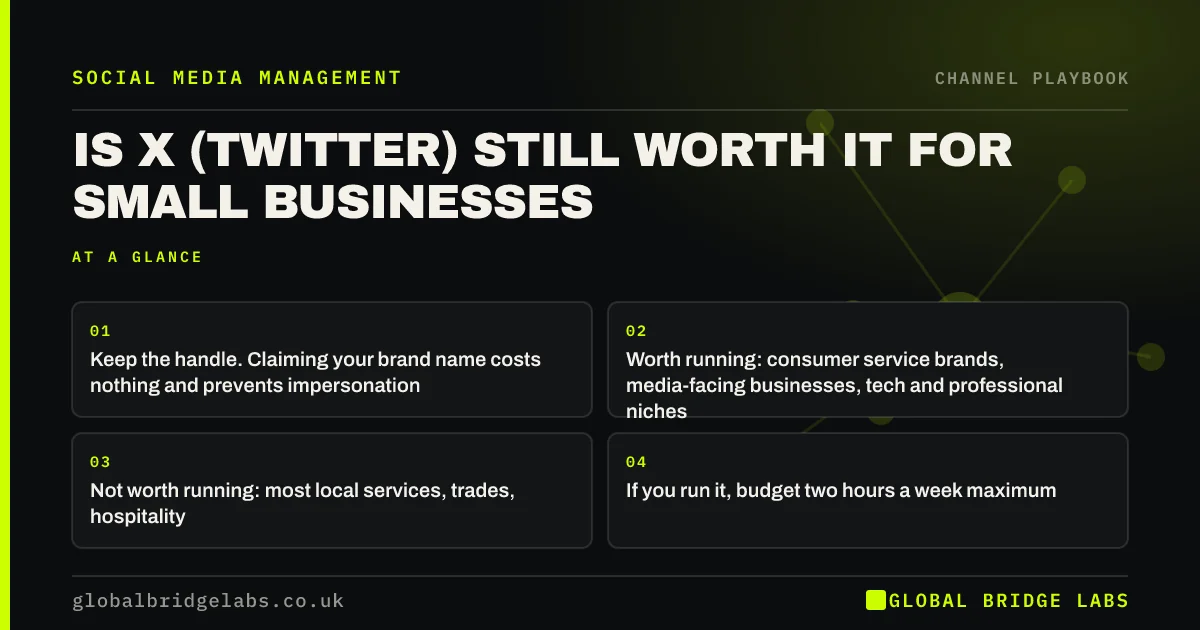
An honest assessment of X for UK small businesses: where it still works, where it does not, and how to run it in two hours a week if you decide to.
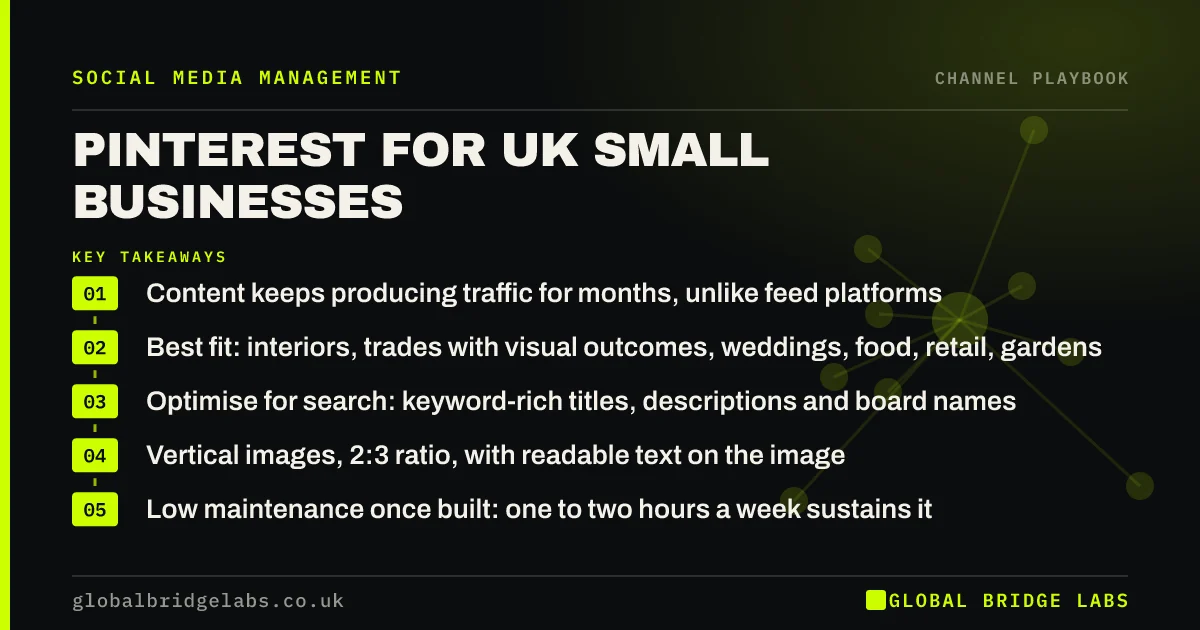
Why Pinterest behaves like search rather than social, which UK small businesses it suits, and how to build a library that drives traffic for years.
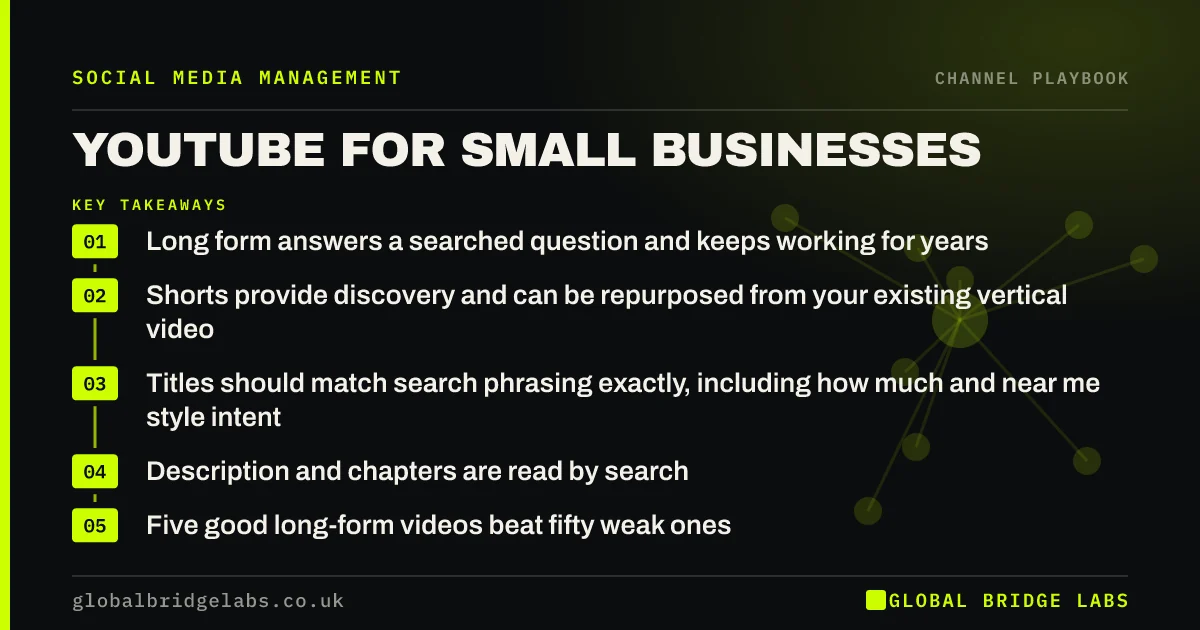
How UK small businesses can use YouTube as a search channel: shorts for reach, long form for trust, and the videos that still get found three years later.
30 minutes with our team and you'll know exactly which of the three problems to fix first.
