On this page
- 01Key takeaways
- 02What is lead scoring?
- 03Why does lead scoring help a small business?
- 04How do you build a simple scoring model?
- 05How should each score be handled?
- 06What are the risks of lead scoring?
- 07What does this look like in practice?
- 08Lead scoring checklist
- 09Next step
- 10Sources and further reading
- 11Frequently asked questions
Key takeaways
Lead scoring gives each website enquiry a simple score based on how likely it is to become a good customer, so the team replies to the best ones first. A small business can do it with three or four form answers, such as service, budget, location and timescale. It turns more of the website's enquiries into customers without generating a single extra lead.
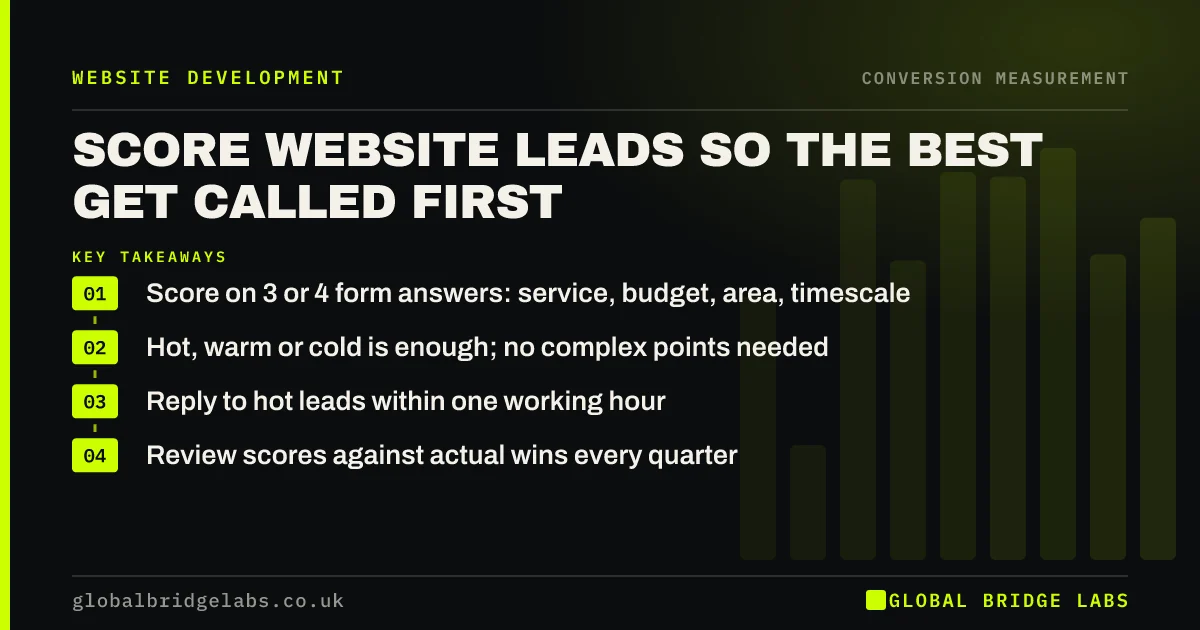
- Score on 3 or 4 form answers: service, budget, area, timescale.
- Hot, warm or cold is enough; no complex points needed.
- Reply to hot leads within one working hour.
- Review scores against actual wins every quarter.
Want a simple lead scoring model for your enquiries? Message us on WhatsApp.
Chat on WhatsApp →What is lead scoring?
Lead scoring is a method of ranking enquiries by how likely they are to become valuable customers, using information such as what they asked for, their budget and their timing. Large firms use software with dozens of signals. Small businesses can get most of the benefit from a handful of form questions and a simple rule.
Why does lead scoring help a small business?
Small teams cannot reply to every enquiry instantly. Without scoring, replies go in the order enquiries arrive, so a £30,000 project can wait behind five small jobs. Scoring puts the most valuable, best-fit enquiries at the front, which raises the enquiry-to-sale rate and makes better use of limited sales time.
How do you build a simple scoring model?
Look at your last 50 customers and find what the good ones had in common when they first enquired. Turn those into form questions and a simple hot, warm or cold rule.
- Service: is it one you want more of?
- Budget or size: is it within your usual range?
- Location: is it within your service area?
- Timescale: do they want to start within three months?
- Hot: all four fit. Warm: three fit. Cold: two or fewer.
Send us your enquiry form on WhatsApp and we will suggest scoring questions.
Chat on WhatsApp →How should each score be handled?
Decide a response for each score and write it down so everyone follows it.
- Hot: personal call within one working hour.
- Warm: reply the same day with a price range and next step.
- Cold: polite reply with useful information or a referral.
What are the risks of lead scoring?
Scoring can filter out good customers if the rules are wrong, such as dismissing small first jobs from clients who later become large. Adding qualifying questions also adds friction to the form. Keep questions few and optional where possible, and check every quarter that cold leads are not quietly becoming your best customers.
What does this look like in practice?
A UK commercial fit-out firm received around 60 enquiries a month and replied in order of arrival. We added three dropdowns to the form (project type, floor area band, start date) and a simple hot or warm label in the notification email. The director called hot enquiries first. Wins from website enquiries increased over the next two quarters with no change in volume.
Lead scoring checklist
- Review your last 50 customers for common traits.
- Add 3 or 4 scoring questions to your form.
- Define hot, warm and cold rules.
- Set a reply standard for each score.
- Show the score in enquiry notifications.
- Check scores against actual wins every quarter.
Next step
Lead scoring is a quick way to get more value from the enquiries your website already produces. We can help you design the questions and the rules.
Message us on WhatsApp for help with lead scoring, or book a 30-minute consultation.
Chat on WhatsApp →Sources and further reading
- About key events · Google Analytics Help
- Structuring forms · GOV.UK Service Manual
Frequently asked questions
What is lead scoring?
Lead scoring ranks enquiries by how likely they are to become valuable customers, using information such as service, budget, location and timescale. It helps teams reply to the best enquiries first. Small businesses can score on three or four form answers, such as service, budget, location and timescale, without any special software.
Do small businesses need lead scoring software?
Usually not. A few form questions and a simple hot, warm or cold rule, shown in the notification email, gives most of the benefit. Software becomes useful as enquiry volume and the sales team grow. Review scores against actual wins quarterly.
What questions should I ask to qualify leads?
Ask about the service needed, budget or size, location and timescale. Base them on what your best customers had in common when they first enquired. Keep the number small to avoid adding too much friction. Make some questions optional to limit friction.
Should I ignore cold leads?
No. Reply politely with useful information, a price range or a referral. Some cold leads become customers later, and a good reply protects your reputation. Just do not let them delay replies to hot leads. Check quarterly whether cold leads are converting.
Written by

Global Bridge Labs (GBL) is a UK–Sri Lanka partner for social media, websites and BPO. Everything here comes from client delivery, not theory.