On this page
- 01Key takeaways
- 02What is brand inconsistency?
- 03What should you audit?
- 04Why do contact details matter most?
- 05What about legal details?
- 06When does brand inconsistency point to a redesign?
- 07When is consistency less important?
- 08How do you keep channels consistent over time?
- 09What does this look like in practice?
- 10Brand consistency checklist
- 11Next step
- 12Sources and further reading
- 13Frequently asked questions
Key takeaways
Inconsistent branding makes buyers wonder whether the website, the van and the social profile belong to the same business. Audit the logo, name, colours, tone, contact details and services across every channel. Small mismatches are fixed in place; a website built for an old brand identity usually needs a redesign.
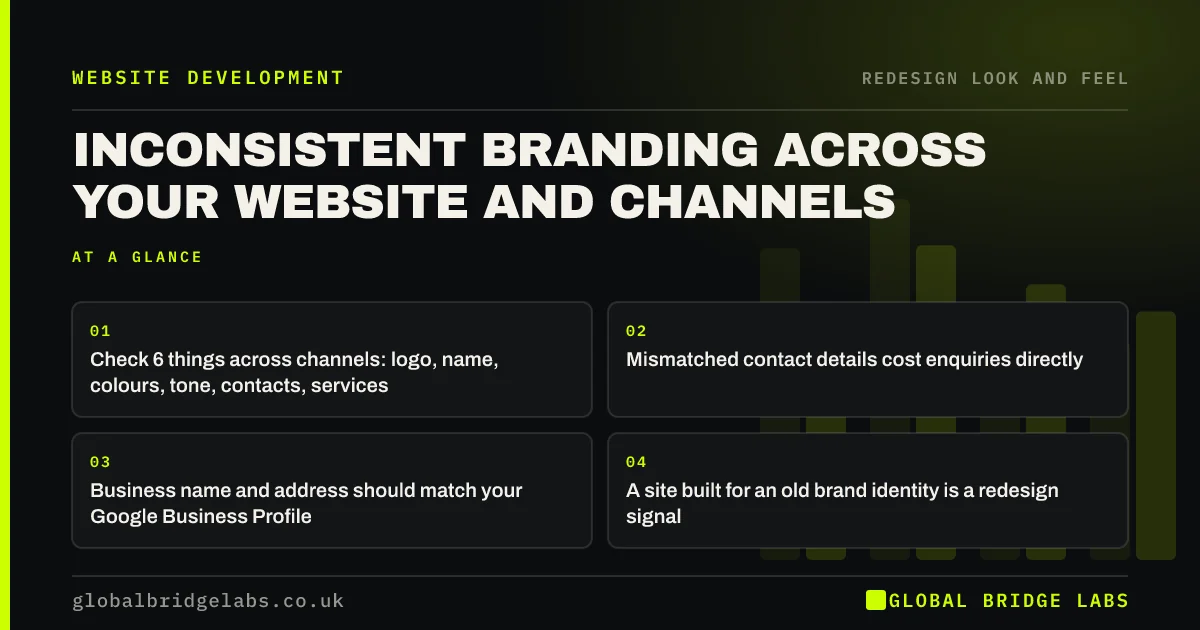
- Check 6 things across channels: logo, name, colours, tone, contacts, services.
- Mismatched contact details cost enquiries directly.
- Business name and address should match your Google Business Profile.
- A site built for an old brand identity is a redesign signal.
Want a quick brand consistency check? Message us on WhatsApp.
Chat on WhatsApp →What is brand inconsistency?
Brand inconsistency is when a business looks, sounds or describes itself differently across its website, social profiles, listings, print and vehicles. It makes buyers less sure they have found the right business and weakens the recognition that brand work is meant to build.
What should you audit?
Put screenshots of each channel side by side and check these six items.
- Logo: same version everywhere, not an old one on the website.
- Business name: identical, including 'Ltd' or trading names.
- Colours and typography: the same palette and fonts.
- Tone: similar voice on the website and social posts.
- Contact details: same phone, email, address and hours.
- Services: the same list and descriptions.
Want us to lay your channels side by side? Ask us on WhatsApp.
Chat on WhatsApp →Why do contact details matter most?
Because they cost enquiries directly and affect local search. Google's guidance on local ranking stresses complete and accurate business information. If your website, Google Business Profile and directory listings show different phone numbers or addresses, buyers and search engines both lose confidence.
What about legal details?
Limited companies must show certain details on their websites, including the registered name, registered number and registered office address. A rebrand to a trading name does not remove that requirement, so check the footer or legal page after any brand change.
When does brand inconsistency point to a redesign?
When the website was designed around an old identity and the new one does not fit the templates: colours that clash, a logo shape the header cannot hold, typography the theme cannot load, or photography in a style the new brand has replaced. Then a redesign aligned with the brand is the cleaner fix.
When is consistency less important?
Tone can flex by channel. Social posts can be more casual than service pages without harming the brand. What must not flex are the facts and the recognisable elements: name, logo, colours and contact details.
How do you keep channels consistent over time?
Write a one-page brand sheet and give it to everyone who creates content or updates listings. It should cover the exact business name, logo files, colour codes, fonts, tone in a few words, contact details and the current service list, with a date so everyone knows it is current.
Update the sheet first whenever anything changes, then update the website, Google Business Profile, social profiles and listings from it in the same week. That single source stops channels drifting apart one small change at a time.
- Create a one-page brand sheet.
- Include name, logo, colours, fonts, tone and contacts.
- Update the sheet first when anything changes.
- Update every channel from it within a week.
What does this look like in practice?
A pattern in UK trades: new vans and social profiles show a refreshed logo and colours, while the website still carries the old ones and a mobile number the owner no longer answers. Updating the logo, colours and contact details on the site takes a day and removes the doubt.
Brand consistency checklist
Do this once a year and after any brand change.
- Screenshot website, social profiles, Google Business Profile and print.
- Compare logo, name, colours and fonts.
- Check phone, email, address and hours match everywhere.
- Check the service list matches.
- Confirm legal company details are on the website.
- Fix mismatches, starting with contact details.
Next step
If your channels have drifted apart, we will run a side-by-side check with you in 30 minutes and list the fixes in order.
Message us on WhatsApp for a brand consistency check, or book a 30-minute consultation.
Chat on WhatsApp →Sources and further reading
- Tips to improve your local ranking on Google · Google Business Profile Help
- Running a limited company: signs, stationery and promotional material · GOV.UK
- Google Business Profile Help · Google
Frequently asked questions
Why is brand consistency important for a small business?
It helps buyers recognise you across channels and confirms they have found the right business. Inconsistent names, logos or contact details create doubt, cost enquiries and can weaken local search visibility when business information does not match. It also makes marketing more efficient.
How do I check my brand is consistent?
Take screenshots of your website, social profiles, Google Business Profile, listings and print, and compare logo, business name, colours, fonts, tone, contact details and services side by side. Fix contact details first, then visual elements. Repeat the check after any brand change.
Does my website need to match my social media?
The recognisable elements should match: name, logo, colours and contact details. Tone can be a little more relaxed on social media, and content will differ by channel, but a buyer moving between them should never wonder whether it is the same business.
What company details must be on a UK business website?
Limited companies must show their registered name, registered number, place of registration and registered office address on their website. Check GOV.UK guidance for your company type and keep these details visible after any rebrand. Include them in the footer or a legal page.
Written by

Global Bridge Labs (GBL) is a UK–Sri Lanka partner for social media, websites and BPO. Everything here comes from client delivery, not theory.