On this page
- 01Key takeaways
- 02What should a tutoring website include?
- 03How should tutors' credentials be shown?
- 04What should parents know about safety?
- 05How should fees and terms be shown?
- 06Which results claims are safe?
- 07When is less better?
- 08What does this look like in practice?
- 09Tutoring website checklist
- 10Next step
- 11Sources and further reading
- 12Frequently asked questions
Key takeaways
A tutoring website should list subjects, levels and exam boards, tutors' qualifications and experience, DBS checks, fees, session length and format, cancellation terms, how online lessons are kept safe, and how to book a first session. Results claims must be honest and evidenced. Parents are choosing someone to be alone with their child.
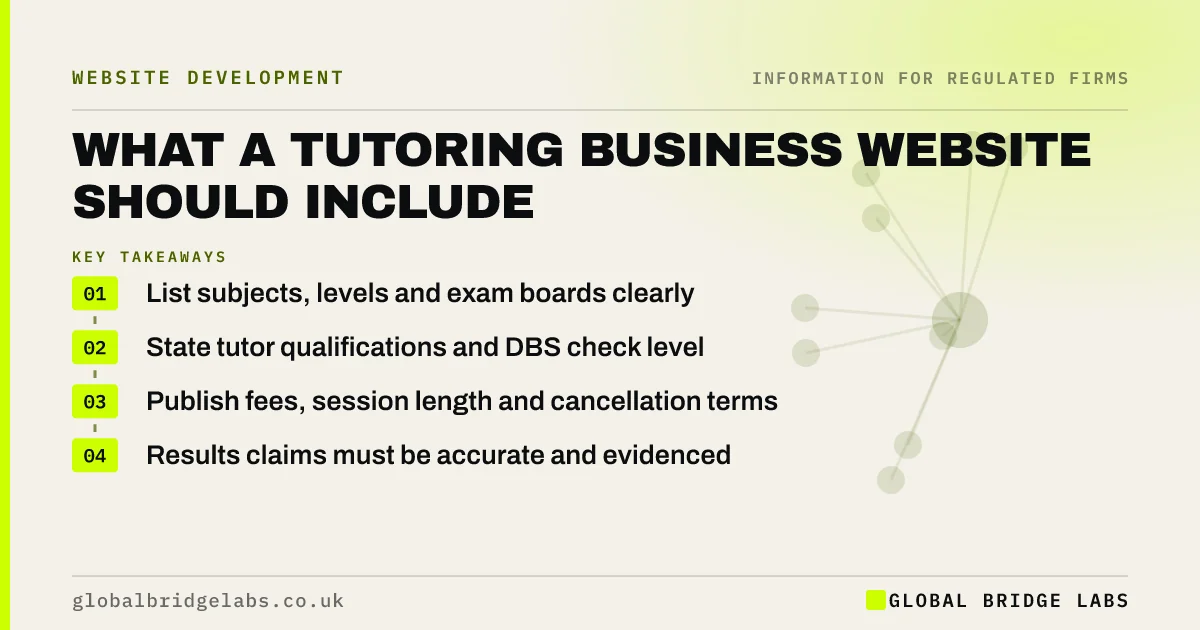
- List subjects, levels and exam boards clearly.
- State tutor qualifications and DBS check level.
- Publish fees, session length and cancellation terms.
- Results claims must be accurate and evidenced.
Running a tutoring business website? Message us on WhatsApp.
Chat on WhatsApp →What should a tutoring website include?
A tutoring website should include subjects and levels, tutor qualifications, safeguarding and DBS checks, fees and terms, the lesson format and how to start. Global Bridge Labs (GBL) sees safeguarding and fees as the deciding items, because parents will not enquire until both feel right.
How should tutors' credentials be shown?
Show each tutor's subjects, qualifications, teaching experience and any exam marking experience, with a photo. Tutoring is not regulated, so credentials and references carry the weight. Avoid implying qualified teacher status unless the tutor holds it.
What should parents know about safety?
State the DBS check level for each tutor and how checks are kept current. Self-employed tutors can get basic checks themselves; enhanced checks require an eligible organisation. Explain how online lessons are kept safe, such as recorded sessions or parents present, and publish a safeguarding summary.
How should fees and terms be shown?
Show fees per session or package, session length, format and cancellation terms. If you sell blocks of lessons in advance, explain refunds for unused sessions. Consumer cancellation rights apply to many online and phone bookings.
Which results claims are safe?
Only use results claims you can evidence, such as the share of students who met target grades, with the period and number of students. 'Guaranteed grade improvement' is risky and can mislead. Advertising rules require objective claims to be substantiated.
When is less better?
Long methodology pages rarely persuade parents. A short explanation of how sessions run, how progress is tracked and how parents are kept informed between sessions works far better than detailed educational theory, and leaves parents with a clear picture of what their child's week will look like.
What does this look like in practice?
A pattern we see with tutoring agencies: the homepage promises 'outstanding results' with no figures, and safeguarding is not mentioned. Replacing the promise with evidenced outcomes and adding a safeguarding summary addresses what parents worry about most.
Tutoring website checklist
- List subjects, levels and exam boards.
- Show tutor qualifications and photos.
- State DBS check levels.
- Explain online safety measures.
- Publish fees and cancellation terms.
- Evidence any results claims.
Next step
Write a short 'keeping your child safe' section covering checks, online lessons and who to contact with concerns. Put it on your homepage.
Message us on WhatsApp for a tutoring website review, with no pitch.
Chat on WhatsApp →Sources and further reading
- Keeping children safe in education · Department for Education
- Substantiation: advice on backing up marketing claims · ASA and CAP
Frequently asked questions
Does a private tutor need a DBS check?
There is no general legal requirement for private tutors, but parents expect one. Self-employed tutors can apply for a basic check; enhanced checks require an eligible organisation such as an agency. State the level clearly on your website.
Should a tutor show prices online?
Yes. Parents compare costs, and clear fees, session lengths and package terms reduce back-and-forth. Explain refund terms for prepaid blocks of lessons, and say whether the first session is offered at a different price.
Can a tutor guarantee grades on their website?
Guarantees of grades are risky and can mislead. Use evidenced results instead, such as the proportion of students who met target grades in a stated period, with the number of students included.
Written by

Global Bridge Labs (GBL) is a UK–Sri Lanka partner for social media, websites and BPO. Everything here comes from client delivery, not theory.