
On this page
- 01Key takeaways
- 02Why do qualifying questions matter?
- 03What questions work for most trades?
- 04What extra questions do larger projects need?
- 05How do you keep the list short?
- 06How should answers be recorded?
- 07Should the questions change by season?
- 08What does this look like in practice?
- 09Qualifying questions checklist
- 10Next step
- 11Sources and further reading
- 12Frequently asked questions
Key takeaways
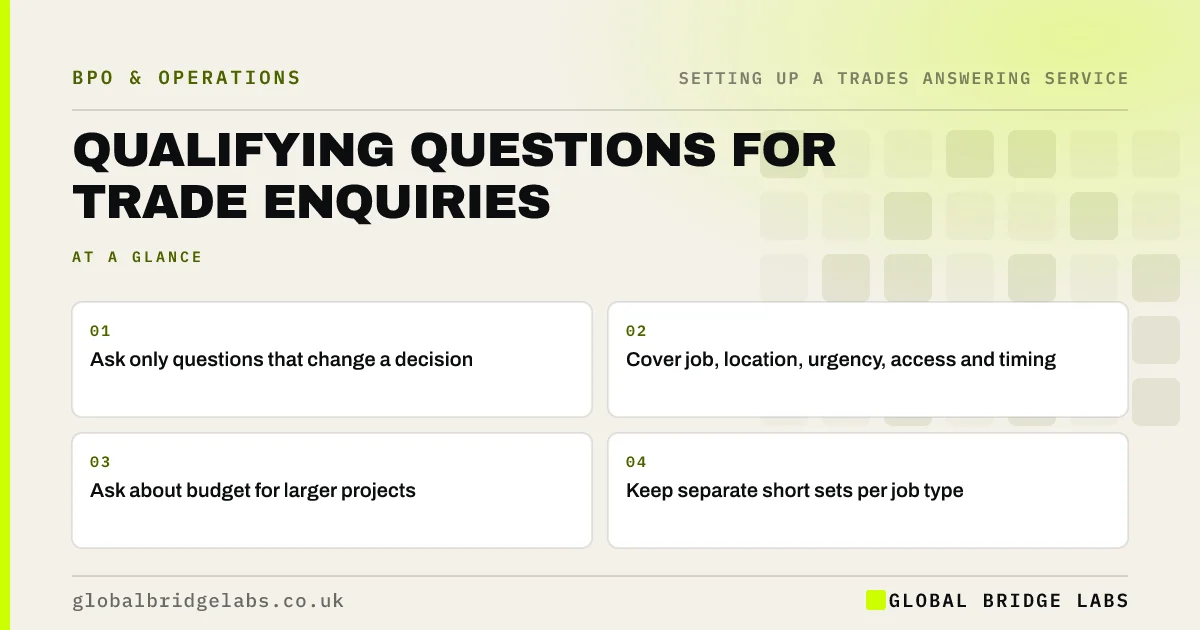
Qualifying questions tell you whether an enquiry is worth a visit, what it involves and how urgent it is, before you leave the van. For most trades they cover the job, location, urgency, property, access, timing and budget for larger work. Ask only questions that change a decision, and keep different short sets for different job types.
- Ask only questions that change a decision.
- Cover job, location, urgency, access and timing.
- Ask about budget for larger projects.
- Keep separate short sets per job type.
Want qualifying questions written for your jobs? Message us on WhatsApp.
Chat on WhatsApp →Why do qualifying questions matter?
Good questions stop wasted visits, help you bring the right parts and let you prioritise. They also show callers you know what you are doing. Poor questions lead to vague notes and extra calls.
What questions work for most trades?
A core set covers most calls.
- What is the problem or job?
- Where is the property, including postcode?
- How urgent is it?
- What type of property, and is it rented?
- Any access issues, parking or pets?
- When would you like the work done?
- Can you send photos?
What extra questions do larger projects need?
For projects, ask about budget, drawings or plans, decision makers, timing and whether other quotes are being sought. These help you decide whether to survey and how to price.
Want project questions added to your script? Message us on WhatsApp and we will discuss your requirements.
Chat on WhatsApp →How do you keep the list short?
For each question, ask what decision it changes. If the answer would not change whether, when or how you visit, drop it. Ask further questions at the visit instead.
How should answers be recorded?
In the same order every time, in the caller's words where possible. Consistent notes are faster to read and easier to compare.
Should the questions change by season?
Sometimes. In winter, a heating firm may add a question about vulnerable occupants; after storms, a roofer may add one about water coming inside. Seasonal tweaks keep priorities right without making the everyday list longer.
What does this look like in practice?
A pattern we see: adding a single question, is the property rented, saves a firm from attending jobs where the tenant could not authorise the work.
Qualifying questions checklist
- Write a core question set.
- Add project questions.
- Test each question's purpose.
- Order them consistently.
- Add photo requests.
- Review quarterly.
Next step
Write your core questions and cross out any that do not change a decision.
Message us on WhatsApp for qualifying questions, or book a 30-minute consultation.
Chat on WhatsApp →Sources and further reading
- Consumer Contracts (Information, Cancellation and Additional Charges) Regulations 2013 · legislation.gov.uk
- Principle (d): Accuracy · Information Commissioner's Office
Frequently asked questions
What questions should I ask before quoting a job?
Ask what the job is, where the property is, how urgent it is, the property type and whether it is rented, access, timing and, for larger work, budget and drawings. Ask for photos. These answers tell you whether to visit, what to bring and how to prioritise.
Is it rude to ask customers about their budget?
Not if asked politely and explained. Many customers appreciate it, because it saves both sides time. For larger projects, a rough budget helps you suggest the right options. For small repairs, budget questions are rarely needed, because your published prices or call-out charge cover it.
How many qualifying questions are too many?
If routine calls take more than about four minutes, there are probably too many. Each question should change a decision about whether, when or how you visit. Questions that only matter on site can wait until the visit. Shorter calls keep callers engaged and notes clearer.
Written by

Global Bridge Labs (GBL) is a UK–Sri Lanka partner for social media, websites and BPO. Everything here comes from client delivery, not theory.


