On this page
- 01Key takeaways
- 02What subscription information should a website show?
- 03Which businesses does this affect?
- 04What does the DMCC Act change?
- 05What rules already apply?
- 06How should cancellation be explained?
- 07When is a subscription page overkill?
- 08What does this look like in practice?
- 09Subscription terms checklist
- 10Next step
- 11Sources and further reading
- 12Frequently asked questions
Key takeaways
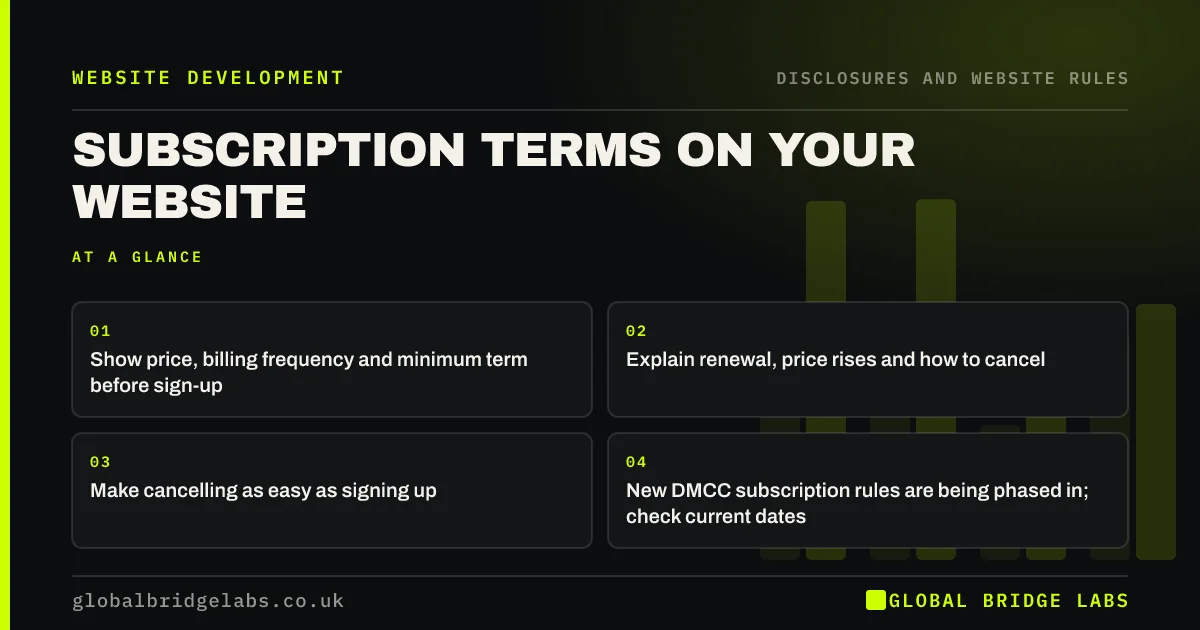
If you sell subscriptions, memberships or service plans to consumers, show the price, billing frequency, minimum term, renewal and price-rise terms, and exactly how to cancel, before sign-up. The DMCC Act 2024 creates a new subscription regime, being brought in after the main consumer provisions, with stronger rules on information, reminders and easy exit.
- Show price, billing frequency and minimum term before sign-up.
- Explain renewal, price rises and how to cancel.
- Make cancelling as easy as signing up.
- New DMCC subscription rules are being phased in; check current dates.
Selling subscriptions or plans? Message us on WhatsApp.
Chat on WhatsApp →What subscription information should a website show?
Show the price and what it includes, how often you charge, any minimum term, what happens at renewal, how and when prices can rise, any free trial and what it converts to, and how to cancel. Global Bridge Labs (GBL) recommends showing these before the buyer enters payment details, not only in linked terms.
Which businesses does this affect?
It affects any business with recurring consumer contracts: gyms, boxes, software, maintenance plans, cleaning contracts, memberships and service plans. Business-to-business subscriptions are usually governed by the contract itself, but publishing clear terms still prevents disputes and speeds up sign-off.
What does the DMCC Act change?
The DMCC Act 2024 creates a dedicated regime for consumer subscription contracts, including key pre-contract information, reminder notices before renewals and trial conversions, cooling-off rights and easy ways to exit. The government is bringing it in after the Act's main consumer provisions; check GOV.UK for current commencement dates.
What rules already apply?
The Consumer Contracts Regulations 2013 already require pre-contract information and cancellation rights for distance contracts, and the CMA's guidance treats hidden auto-renewal terms and hard-to-cancel designs as potentially unfair. Prices shown must include VAT and mandatory fees.
How should cancellation be explained?
Say exactly how to cancel, with a link or button, and how much notice is needed. If people sign up online, let them cancel online. Burying cancellation behind phone calls or retention offers frustrates customers and is the kind of practice regulators are targeting.
When is a subscription page overkill?
A separate page is overkill for a simple monthly plan with one price and online cancellation. Clear text beside the sign-up button and in the confirmation email is enough. Add a page when you have several tiers, trials or minimum terms.
What does this look like in practice?
A pattern we see in service plans: customers sign up online but must phone to cancel, and the renewal price rise is mentioned only in the terms. Moving the key terms beside the sign-up button and adding online cancellation reduces complaints and chargebacks.
Subscription terms checklist
- Show price and billing frequency.
- State minimum term and renewal.
- Explain trials and what they convert to.
- Explain price rise terms.
- Make cancellation easy and online.
- Track DMCC commencement dates.
Next step
Sign up to your own plan as a customer would. Note every term you see before paying, then check how hard it is to cancel.
Message us on WhatsApp for a subscription page review, with no pitch.
Chat on WhatsApp →Sources and further reading
- Digital Markets, Competition and Consumers Act 2024 · legislation.gov.uk
- Consumer Contracts (Information, Cancellation and Additional Charges) Regulations 2013 · legislation.gov.uk
- Unfair commercial practices guidance (CMA207) · Competition and Markets Authority
Frequently asked questions
What must subscription terms include?
They should include the price, what it covers, billing frequency, minimum term, renewal terms, how prices can change, any trial and what it converts to, and how to cancel. Show the key points before the customer pays.
Are the new UK subscription rules in force?
The DMCC Act 2024 creates a new subscription contracts regime that the government is bringing in after the Act's main consumer provisions. Check GOV.UK for the current commencement dates before relying on any timetable.
Do customers have to be able to cancel online?
Under the incoming DMCC subscription rules, exit must be straightforward, and existing guidance treats hard-to-cancel designs as potentially unfair. If customers can sign up online, letting them cancel online is the safe approach.
Written by

Global Bridge Labs (GBL) is a UK–Sri Lanka partner for social media, websites and BPO. Everything here comes from client delivery, not theory.