On this page
Key takeaways
Strategic partnership negotiation should be led by the owners, because a partnership shares your customers, brand or revenue with another business. Brokers and advisers can find partners and draft terms, and outsourced teams can research candidates and run the admin. The decision to partner, the terms and the relationship stay with the people who own the business.
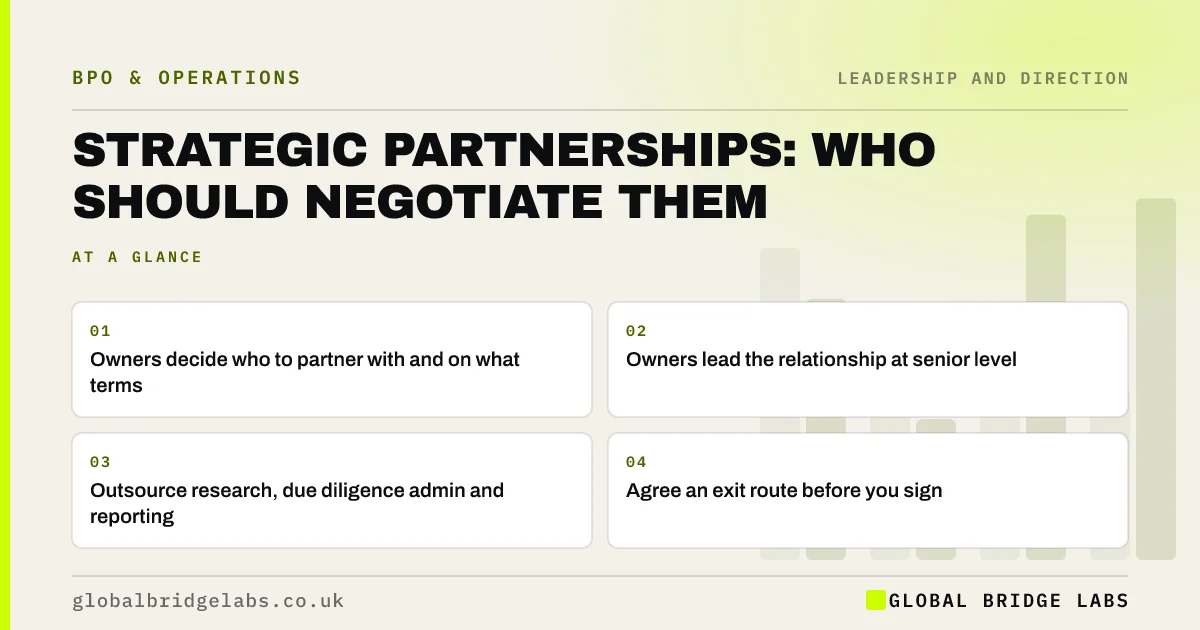
- Owners decide who to partner with and on what terms.
- Owners lead the relationship at senior level.
- Outsource research, due diligence admin and reporting.
- Agree an exit route before you sign.
Want help researching potential partners? Message us on WhatsApp.
Chat on WhatsApp →Why should owners lead partnership talks?
Partnerships rest on trust between leaders. The other side wants to know who they are dealing with and whether that person can commit. A partnership also exposes your brand and customers to someone else's behaviour, a risk only owners should accept. Delegating the talks suggests the partnership is not important to you.
What can be outsourced?
The work that informs and supports the partnership.
- Researching and shortlisting potential partners.
- Checking Companies House records and accounts.
- Preparing meeting packs and term comparisons.
- Tracking referrals, revenue shares and obligations.
What should a partnership agreement cover?
Who does what, how money is shared, who owns customers and data, how the brand can be used, what happens if one side underperforms and how either side can leave. Take legal advice, but decide the commercial terms yourself.
When does a partnership need a broker?
When you are entering an unfamiliar market or sector and lack contacts. A broker can open doors and advise on norms. Keep the relationship direct once talks begin, so the partnership belongs to you, not to the intermediary.
What does this look like in practice?
A pattern we see: a partnership agreed by a sales manager falters because the owners on each side never met. Partnerships where the owners meet at the start and review quarterly tend to last longer.
Partnership checklist
- Write what you want the partnership to achieve.
- Research and shortlist candidates.
- Owners lead the first meetings.
- Agree roles, money, data, brand and exit terms.
- Review the partnership quarterly.
Next step
Before your next partnership conversation, write the three terms you would not accept. That is your negotiating line.
Message us on WhatsApp, or book a 30-minute consultation.
Chat on WhatsApp →Sources and further reading
- Find and update company information · Companies House
- Controllers and processors · Information Commissioner's Office
Frequently asked questions
Who should negotiate a strategic partnership?
The owners or senior leaders, because a partnership shares customers, brand or revenue and needs someone who can commit the business. Advisers can draft terms and brokers can make introductions, but the commercial decisions and the relationship should stay with the owners.
What should a partnership agreement include?
Each side's responsibilities, how revenue or costs are shared, who owns customers and data, how each brand can be used, performance expectations, how disputes are handled and how either side can exit. Take legal advice on the drafting.
Can you outsource partner research?
Yes. An outsourced team can research and shortlist potential partners, check public records and accounts, prepare meeting packs and track the partnership's results. The decision to approach and agree terms with a partner stays with the owners.
Written by

Global Bridge Labs (GBL) is a UK–Sri Lanka partner for social media, websites and BPO. Everything here comes from client delivery, not theory.