On this page
Key takeaways
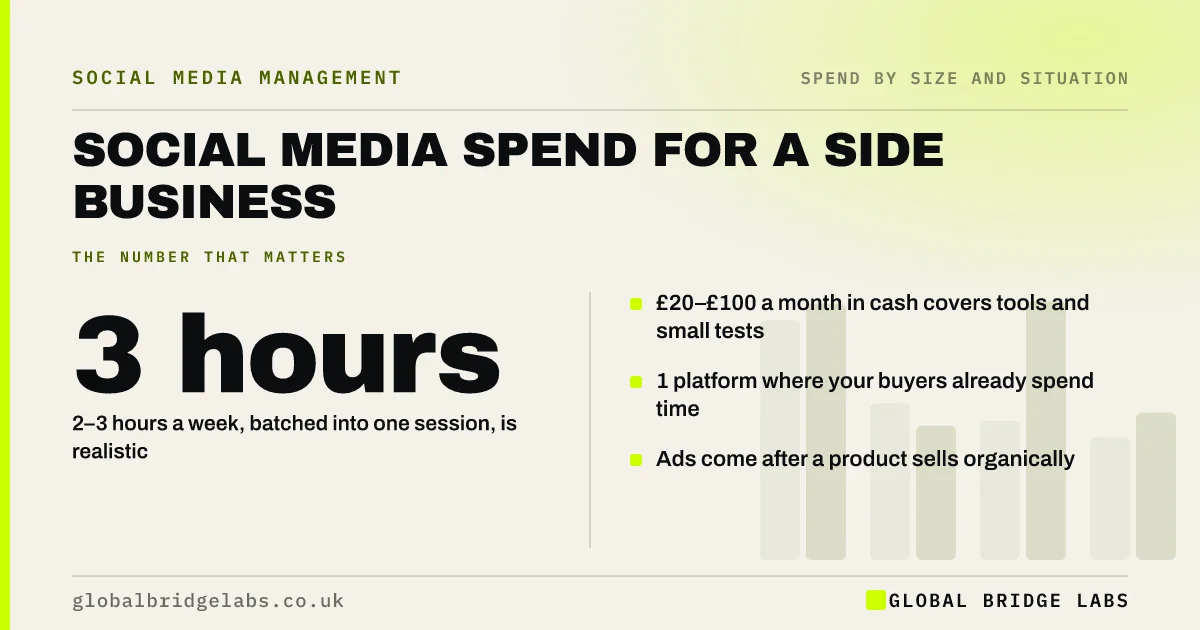
A social media budget for a side business is limited more by hours than money. Plan for two to three hours a week, batched into one session, and £20–£100 a month in cash for basic tools and the odd test. Ads only make sense once a post or product already sells without them.
- 2–3 hours a week, batched into one session, is realistic.
- £20–£100 a month in cash covers tools and small tests.
- 1 platform where your buyers already spend time.
- Ads come after a product sells organically.
Want a simple plan for a side business? Message us on WhatsApp.
Chat on WhatsApp →How should a side business use limited hours?
Batch content in one evening or weekend session, schedule it, and spend ten minutes a day replying. Replies matter more than posting volume, because a quick answer often turns a comment into a sale. Two or three good posts a week on one platform is enough to stay visible.
What is worth paying for?
Free scheduling and design tools cover most side businesses. Pay for one tool only if it saves time every week. Spend the rest on better product photos, because the picture often decides the sale. Keep receipts and records of what you spend, as you would for any trading income.
Tell us what you sell on WhatsApp and we will discuss your requirements.
Chat on WhatsApp →When should a side business pay for ads?
Once one product or post sells steadily without help. Put £5 to £10 a day behind it for one or two weeks, with a clear link to buy, and see whether sales cover the spend. If they do not, improve the product page or offer before trying again.
When is it better not to spend?
When you cannot fulfil more orders in your spare time. Paying for demand you cannot meet leads to slow replies and poor reviews. Grow organically to the edge of your capacity, then decide whether the business is ready to take more of your time.
What does this look like in practice?
A pattern we see: someone running a craft or coaching business in the evenings posts daily for a month, burns out and stops. Two batched posts a week with quick replies usually sells more over a year, because it can be kept up alongside a day job.
Side business checklist
- Choose one platform and one weekly batching session.
- Use free tools until one clearly saves time.
- Reply to comments and messages daily.
- Test ads only behind a proven post or product.
- Keep records of every pound spent.
Next step
Block one two-hour session in your diary this week to batch a fortnight of posts. Set a cash limit for the month and stick to it.
Message us on WhatsApp with your plan, or book a 30-minute consultation.
Chat on WhatsApp →Sources and further reading
Frequently asked questions
How much should I spend on ads for a side business?
Start at nothing until a product sells organically, then test £5 to £10 a day for one or two weeks behind that product. Keep spending only if sales cover the cost with margin to spare. A side business rarely needs a continuous ad budget in its first year.
Which platform is best for a side business?
The one your buyers already use to discover products like yours. Visual products suit Instagram, Pinterest or TikTok; local services suit Facebook and Google Business Profile; professional services suit LinkedIn. Pick one and do it consistently before adding another. Review it each quarter against your enquiries and sales, and adjust in small steps.
Do I need to declare a side business to HMRC?
If your trading income goes above the allowance HMRC sets, you will usually need to register for Self Assessment and report it. Keep records of income and expenses, including any social media costs, and check current GOV.UK guidance for the thresholds that apply.
Written by

Global Bridge Labs (GBL) is a UK–Sri Lanka partner for social media, websites and BPO. Everything here comes from client delivery, not theory.