On this page
- 01Key takeaways
- 02Why do returning visitors matter?
- 03What do returning visitors need?
- 04How do you measure returning visitor conversion?
- 05How do you convert more returning visitors?
- 06When should you not change the site for returning visitors?
- 07What does this look like in practice?
- 08Returning visitor checklist
- 09Next step
- 10Sources and further reading
- 11Frequently asked questions
Key takeaways
Returning visitors are people who have been to your website before and are usually further along in deciding. For considered purchases they often convert at a higher rate than new visitors, yet most small business sites greet them with the same introduction as a stranger. Giving them what the second visit needs, such as prices, proof and a fast route to act, is a cheap conversion gain.
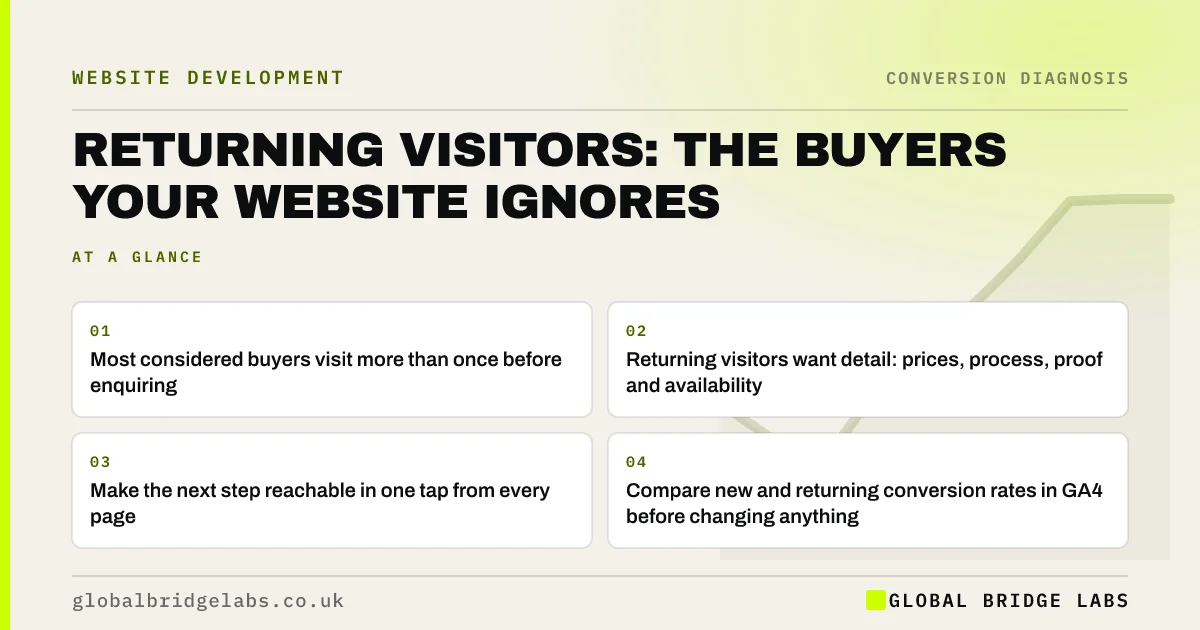
- Most considered buyers visit more than once before enquiring.
- Returning visitors want detail: prices, process, proof and availability.
- Make the next step reachable in one tap from every page.
- Compare new and returning conversion rates in GA4 before changing anything.
Want to know how your returning visitors behave? Message us on WhatsApp.
Chat on WhatsApp →Why do returning visitors matter?
Returning visitors matter because considered purchases are rarely made in one visit. A homeowner planning an extension, a firm choosing an accountant or a patient choosing a clinic usually compares several providers over days or weeks. By the second or third visit they are shortlisting. A site that only speaks to first-time visitors misses that moment.
What do returning visitors need?
First-time visitors need to know what you do and whether you are credible. Returning visitors already know that. They need the details that decide between you and a rival, and a fast route to act once they have decided.
- Price guidance and what is included.
- Process and timescales: what happens after they enquire.
- Detailed proof: case studies, reviews that match their situation.
- Availability or lead times.
- A visible next step on every page, including the ones they come back to.
How do you measure returning visitor conversion?
In Google Analytics 4, compare new and returning users by key events and engagement. Look at which pages returning users view most, since those pages are part of the decision. If returning users convert well below new users, or revisit the pricing page several times without acting, something on that page is not answering the final question.
Want a returning visitor report set up? Ask us on WhatsApp.
Chat on WhatsApp →How do you convert more returning visitors?
Make the decision pages stronger and the route to act shorter. Add detail to the pricing, process and case study pages that returning visitors favour. Keep a persistent but unobtrusive call to action. Offer a low-commitment step, such as a short call or a written estimate, for buyers who are close but not ready.
- Expand pricing and process pages with specifics.
- Add sector- or situation-specific case studies.
- Use a sticky call or enquire bar on mobile.
- Offer a softer option, such as a 15-minute call.
- Use email or remarketing only with proper consent.
When should you not change the site for returning visitors?
If returning visitors are mostly existing customers checking opening hours or logging in, their conversion rate is irrelevant. Separate customers from prospects before acting. Personalising the site for returning visitors with software is also rarely worth it for small businesses; better decision pages help everyone.
What does this look like in practice?
A UK kitchen design studio found that returning visitors viewed the pricing page three times on average before enquiring, and many never did. The page gave a single 'from' price. We added three example kitchens with full cost breakdowns and typical timescales. Returning visitor enquiries rose over the following quarter, and first calls became shorter because buyers arrived informed.
Returning visitor checklist
- Compare new and returning user key event rates.
- Find the pages returning users view most.
- Strengthen pricing, process and case study detail.
- Keep a clear next step on every page.
- Offer a low-commitment option for near-ready buyers.
- Separate customers from prospects before acting on the data.
Next step
Your returning visitors have already chosen to come back. Make sure the site gives them the final answers and an easy way to act. We can show you where they are getting stuck.
Message us on WhatsApp for a returning visitor review, or book a 30-minute consultation.
Chat on WhatsApp →Sources and further reading
- Engagement rate and bounce rate · Google Analytics Help
- About key events · Google Analytics Help
- Cookies and similar technologies under PECR · Information Commissioner's Office
Frequently asked questions
Do returning visitors convert better than new visitors?
For considered purchases they often do, because they are further along in deciding. For impulse purchases or urgent services the difference is smaller. Check your own GA4 data, and separate existing customers from prospects before drawing conclusions. The pages they revisit show what decides the sale.
What do returning website visitors look for?
Usually the details that decide between providers: prices and what they include, the process and timescales, proof that matches their situation, and availability. They also want a quick way to act once they have decided. Pricing, process and case study pages usually matter most on the second or third visit.
Should I personalise my website for returning visitors?
Most small businesses gain more from improving decision pages that help all visitors than from personalisation software. If you do personalise, keep it simple, such as a prominent 'continue your enquiry' link, and follow UK cookie rules for any tracking.
How do I see returning visitors in GA4?
Use the new versus established or returning users dimension in GA4 reports and explorations, and compare engagement and key events. Look at the pages returning users view most, as these are part of their decision. Compare their key event rate with new users over at least three months before acting on any difference.
Written by

Global Bridge Labs (GBL) is a UK–Sri Lanka partner for social media, websites and BPO. Everything here comes from client delivery, not theory.