On this page
Key takeaways
When responding to a regulator letter, from HMRC, the ICO, HSE, the FCA or Trading Standards, a named director should decide the response and sign it. Advisers can draft and advise, and an outsourced team can log the letter, track the deadline and gather documents. What you tell a regulator can have lasting consequences, so it stays with you.
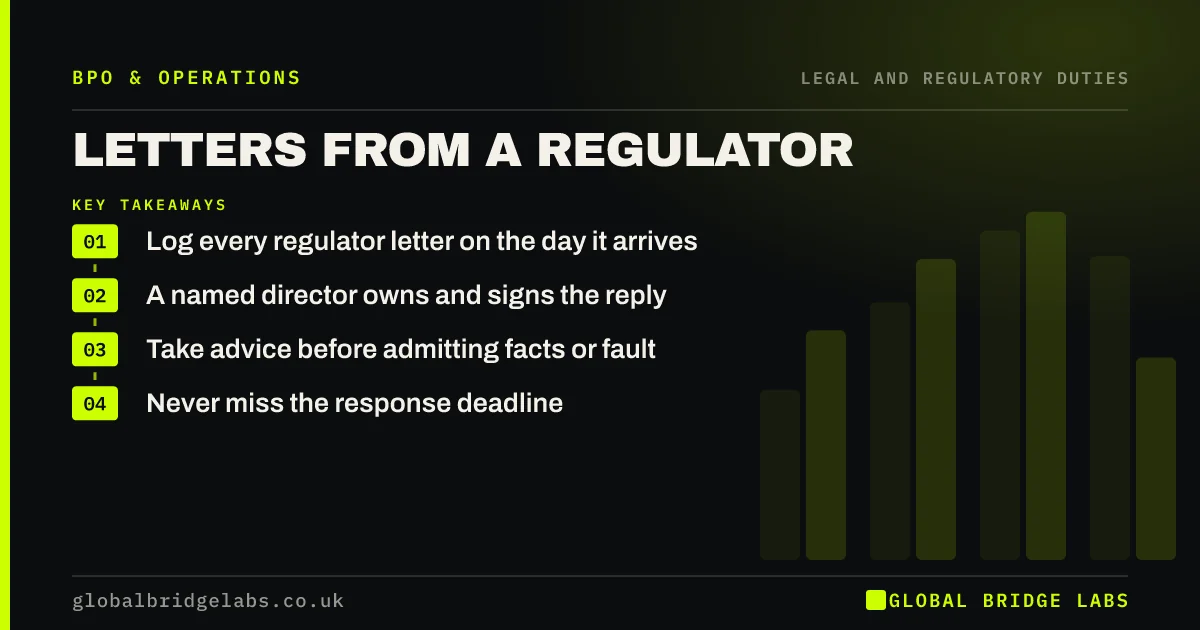
- Log every regulator letter on the day it arrives.
- A named director owns and signs the reply.
- Take advice before admitting facts or fault.
- Never miss the response deadline.
Want regulator letters logged and deadlines tracked? Message us on WhatsApp.
Chat on WhatsApp →Why should a director own the reply?
Because a reply to a regulator is a statement by the company. It may admit facts, commit to actions or set the tone for an investigation. Regulators also judge the firm's culture by how seriously it engages. A reply from a provider, or a missed deadline, suggests nobody senior is in charge.
What should happen when a letter arrives?
A simple routine prevents panic and missed dates.
- Log it with the date received and the deadline.
- Pass it to the named director the same day.
- Decide whether to take advice.
- Gather the documents requested.
- Approve and send the reply, then file it.
When should you take advice?
Whenever the letter suggests an investigation, a penalty, a complaint against you or a possible breach of law. Accountants, solicitors and compliance specialists know how each regulator works and what to disclose. They draft; you decide.
What can be outsourced?
Opening and logging post, tracking deadlines, collecting records, preparing draft schedules of documents and filing correspondence. Make sure confidential letters reach the right person unopened if your process requires it.
What does this look like in practice?
A pattern we see: a regulator's letter sits in a general inbox for weeks. A rule that any letter from a regulator is logged and sent to a director the same day keeps small issues small.
Regulator correspondence checklist
- Name a director for regulator contact.
- Log letters and deadlines on arrival.
- Take advice on anything serious.
- Approve every reply before sending.
- Keep a complete file of correspondence.
Next step
Tell your team, and any provider handling post or email, that regulator letters go to one named director the same day.
Message us on WhatsApp, or book a 30-minute consultation.
Chat on WhatsApp →Sources and further reading
- Advice for small organisations · Information Commissioner's Office
- Health and safety basics for your business · Health and Safety Executive
Frequently asked questions
Who should respond to a letter from a regulator?
A named director or senior person with authority to commit the business, ideally after taking advice from an accountant, solicitor or compliance specialist where the matter is serious. Staff or providers can log the letter and gather documents.
What should I do if I get a letter from the ICO or HMRC?
Log it with the deadline, pass it to the responsible director the same day, read it carefully, take advice if it suggests an investigation or penalty, gather the information requested and reply on time. Keep copies of everything you send.
Can an accountant reply to HMRC for me?
Yes, an authorised agent can deal with HMRC on your behalf. The business remains responsible for the accuracy of the information given, so a director should review and approve what is sent.
Written by

Global Bridge Labs (GBL) is a UK–Sri Lanka partner for social media, websites and BPO. Everything here comes from client delivery, not theory.