On this page
Key takeaways
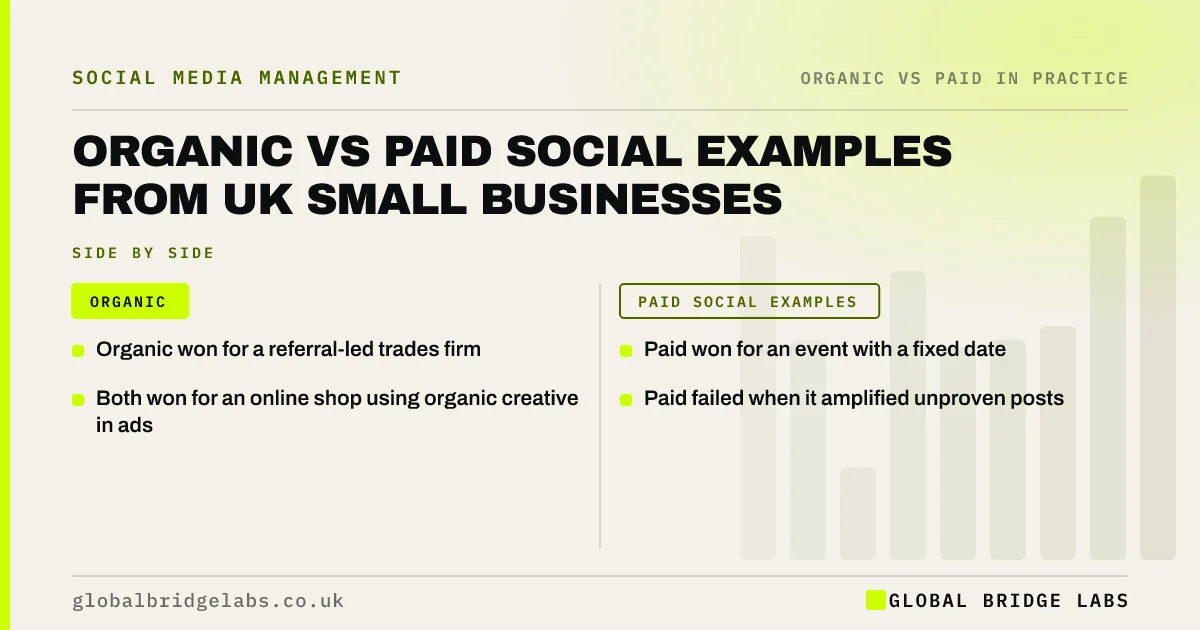
These six anonymised patterns from UK small businesses show how the organic vs paid choice plays out. Organic won where trust and community mattered most. Paid won where deadlines and new audiences mattered. Both together won most often, especially when ads were built from posts that had already worked organically.
- Organic won for a referral-led trades firm.
- Paid won for an event with a fixed date.
- Both won for an online shop using organic creative in ads.
- Paid failed when it amplified unproven posts.
Want to know which example matches your business? Ask us on WhatsApp.
Chat on WhatsApp →When did organic win?
A referral-led electrician posting two finished jobs a week, with reviews and local group activity, filled the diary without ads. The business served a small area and customers checked the profile before calling. Google's local ranking guidance on reviews supported the same trust-led approach.
When did paid win?
A networking group with a fixed event date half-filled its room on organic alone. Two weeks of local ads to business owners, using a clip from a previous event, sold out the next one. The deadline made guaranteed reach worth paying for.
When did both win?
An online homeware shop ran ads with studio images and organic posts with customer photos, separately. Building ads from its best organic posts and retargeting engagers lowered cost per sale within two months.
When did paid fail?
A start-up spent its launch budget on one month of ads using untested creative and got little back. Three months of organic testing first would have found the messages that worked. The IPA's research supports building familiarity before relying on activation.
What other patterns repeat?
Two more patterns are common.
- A clinic's ads were rejected for health claims; clinician-led organic videos passed review as ads.
- A salon's quiet weekdays were filled by small radius ads behind its most-saved transformation videos.
What do the examples have in common?
The common thread is order and fit. Businesses that proved content organically before paying, matched paid to deadlines or new audiences, and kept organic running got the best results. Those that paid to amplify untested content, or expected organic to meet a hard deadline, were disappointed. These are anonymised patterns, not individual client results.
Lessons checklist
- Use organic where trust and community matter.
- Use paid for deadlines and new audiences.
- Build ads from proven organic posts.
- Never amplify untested content with big budgets.
- Check sector rules before ads.
- Keep organic running alongside paid.
Next step
Pick the example closest to your business and copy its approach for one quarter, measuring enquiries by source as you go.
Message us on WhatsApp to talk through your situation, or book a 30-minute consultation.
Chat on WhatsApp →Sources and further reading
- Meta Business Help Centre · Meta
- The Long and the Short of It: balancing short and long-term marketing strategies · IPA
- Tips to improve your local ranking on Google · Google Business Profile Help
Frequently asked questions
Are these real client examples?
They are anonymised patterns based on the kinds of situations we see in UK small businesses, not individual client case studies with named results. Public client work is shown on our projects page. The patterns are shared to illustrate how the organic and paid choice plays out.
Which approach works best for most small businesses?
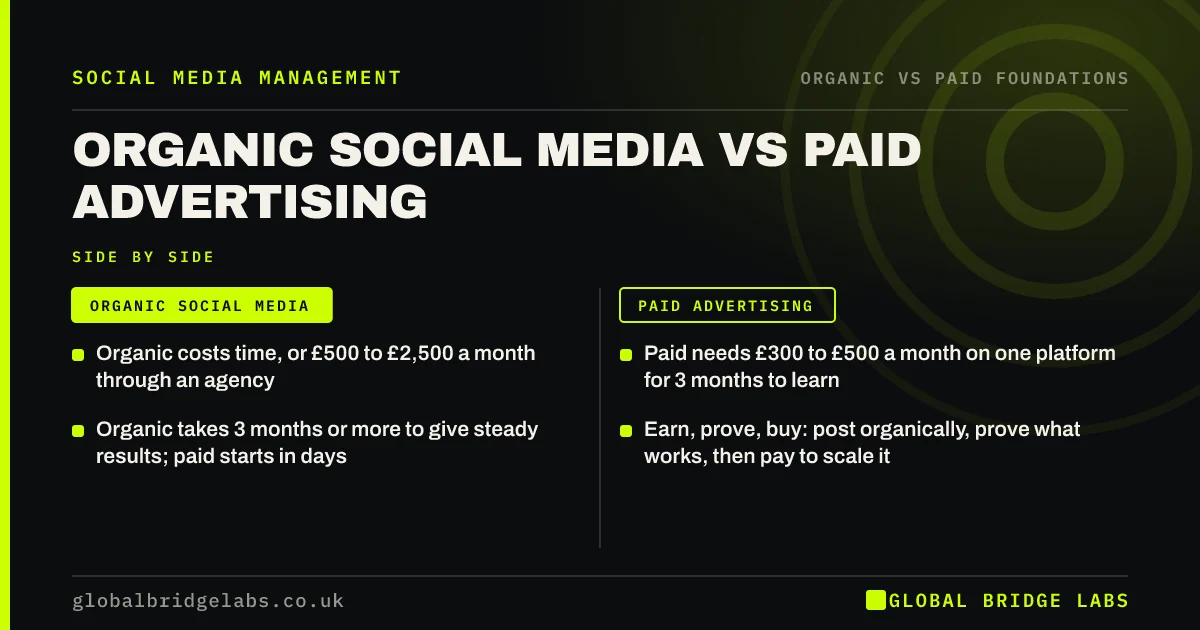
For most small businesses, a combination works best: organic to build trust and find proven content, paid to amplify that content and meet deadlines. The balance depends on goals, budget and sector. Businesses that start with proof and add paid tend to waste the least.
Why did paid fail in some examples?
Paid failed mainly when it was used to amplify content that had not been tested, when budgets were spread too thin, or when sector rules were not checked. In each case, the problem was what was being advertised, not the act of advertising.
Written by

Global Bridge Labs (GBL) is a UK–Sri Lanka partner for social media, websites and BPO. Everything here comes from client delivery, not theory.