On this page
Key takeaways
Follow up admin tasks, such as chasing quotes, after-care check-ins, feedback requests, renewal reminders and next-step emails, are the first work to slip when everyone is busy, because nothing breaks immediately when they are missed. They follow schedules and templates, so they are well suited to outsourcing. Missed follow-ups cost sales and repeat business quietly.
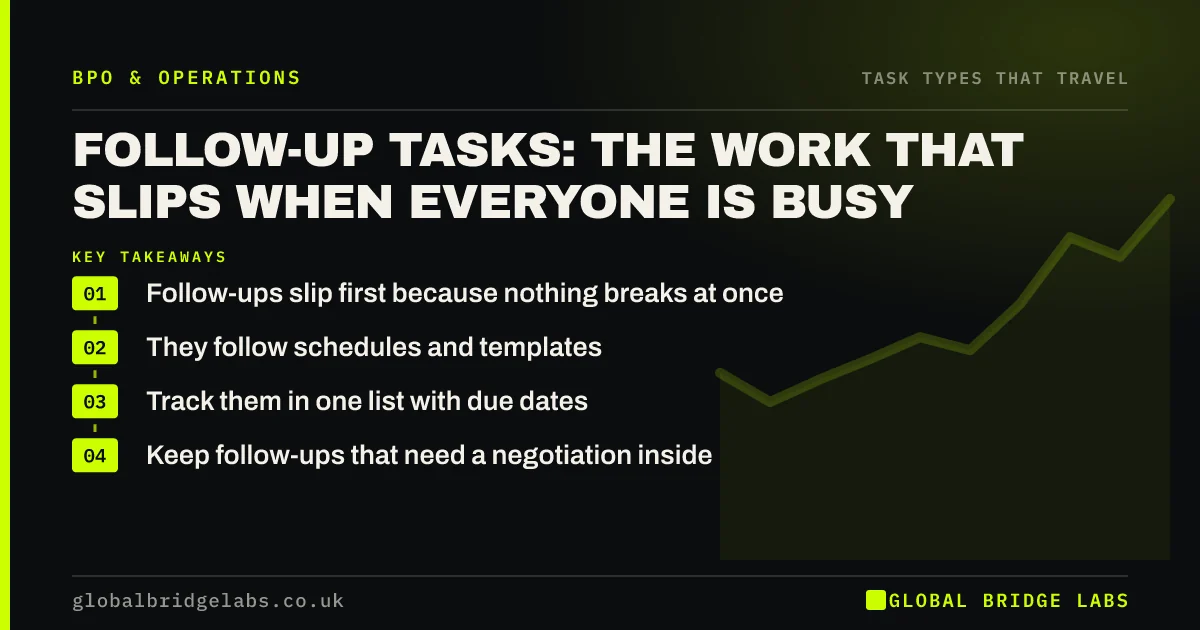
- Follow-ups slip first because nothing breaks at once.
- They follow schedules and templates.
- Track them in one list with due dates.
- Keep follow-ups that need a negotiation inside.
Want your follow-up tasks pulled into one routine? Message us on WhatsApp.
Chat on WhatsApp →Why do follow-ups slip?
Because they compete with urgent work and lose. A quote follow-up on day five can always wait until tomorrow, and tomorrow is just as busy. Nobody notices the missed work, only the result: fewer quotes won, fewer reviews, fewer renewals. Moving follow-ups to a routine run by someone else stops them depending on spare time.
Which follow-ups are common candidates?
These usually follow a schedule and a template.
- Quote follow-ups at set intervals.
- After-care or check-in messages after a job.
- Review and feedback requests.
- Renewal and rebooking reminders.
- Next-step emails after meetings.
- Event and trade show lead follow-ups.
Which follow-ups should stay inside?
Follow-ups that lead into a negotiation, a complaint, or a conversation with a key client stay with the person who owns the relationship. The provider can do the first touch and pass warm replies straight to them. This keeps follow-up consistent without handing over the conversations that win or lose business.
What does this look like in practice?
A pattern we see: a firm sends quotes and follows up only when someone remembers. An outside team follows up every quote on a fixed schedule with a template and passes replies to the estimator. More quotes reach a decision instead of drifting.
Follow-up task checklist
- List every follow-up the business should do.
- Set a schedule and template for each.
- Track due dates in one shared list.
- Pass warm replies straight to the owner.
- Measure completion and results monthly.
Next step
Count how many quotes or jobs last month got the follow-up they should have. The gap is the size of the task.
Message us on WhatsApp for follow-up schedules and templates, or book a 30-minute consultation.
Chat on WhatsApp →Sources and further reading
- Publishing consumer reviews and complying with consumer protection law · Competition and Markets Authority
- Direct marketing and privacy and electronic communications · Information Commissioner's Office
Frequently asked questions
Can follow-up tasks be outsourced?
Yes. Quote follow-ups, after-care messages, review requests, renewal reminders and next-step emails follow schedules and templates, which makes them easy to hand over. Replies that need a negotiation or a key relationship are passed straight to the right person inside.
How soon should you follow up a quote?
Many firms follow up within two to three working days, then again around day seven to ten. The right timing depends on the size of the decision. What matters most is consistency: every quote gets the same follow-up, rather than only the ones someone remembers.
Why do businesses fail to follow up?
Because follow-ups are important but rarely urgent, so busy people put them off. Nothing breaks immediately when they are missed, so the cost is hidden in lower win rates and fewer repeat customers. A routine run by someone else removes the dependence on spare time.
Written by

Global Bridge Labs (GBL) is a UK–Sri Lanka partner for social media, websites and BPO. Everything here comes from client delivery, not theory.