On this page
Key takeaways
These examples of tasks identified for outsourcing are patterns we see repeatedly in UK SMEs, not individual client stories. The tasks that pass the screen share the same shape: frequent, written down or easy to record, done on a screen, with a result someone can check. The surprise is usually where they are found, not what they are.
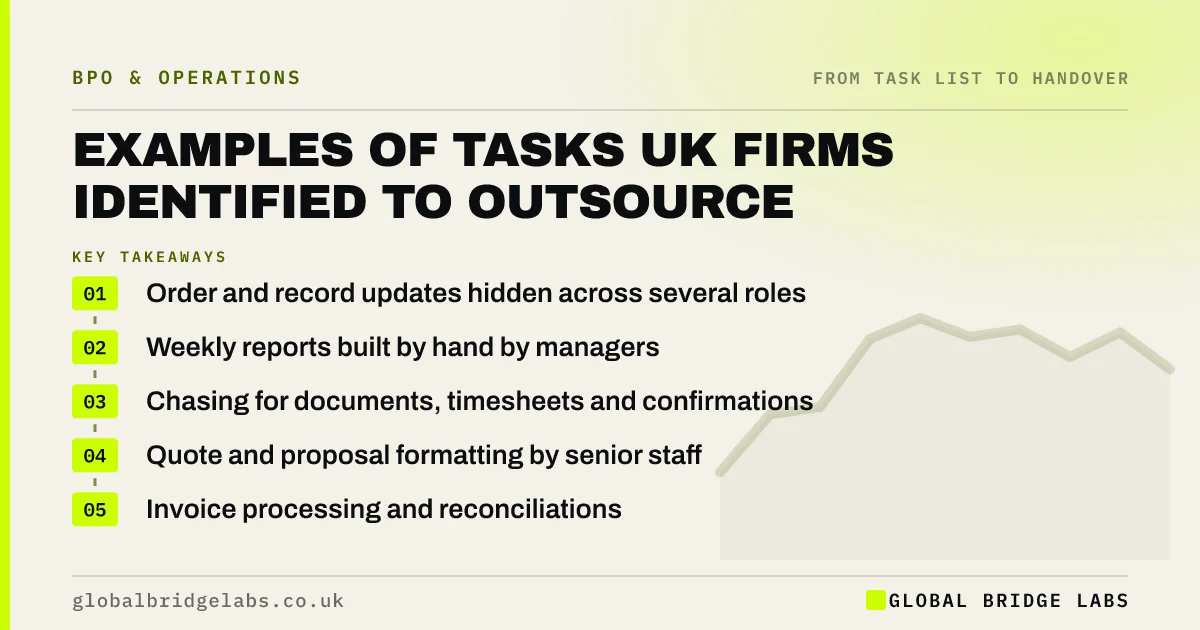
- Order and record updates hidden across several roles.
- Weekly reports built by hand by managers.
- Chasing for documents, timesheets and confirmations.
- Quote and proposal formatting by senior staff.
- Invoice processing and reconciliations.
Want to compare your list with these patterns? Message us on WhatsApp.
Chat on WhatsApp →What do the strongest examples have in common?
They pass all six signals and are found in records rather than memory. Most were never listed as anyone's job: they were scattered across roles, done in evenings or hidden in spreadsheets. Once grouped, each formed a block of 4 to 15 hours a week that an outside team could learn within a few weeks.
Which examples come up by role?
These are the patterns we see most often.
- Founders: quote formatting, invoicing and CRM updates after calls.
- Salespeople: CRM updates, proposal builds and follow-ups.
- Finance managers: invoice entry, reconciliations and report packs.
- Operations managers: supplier chasing and delivery booking.
- Specialists: report typing, document issue and timesheets.
Which examples were rejected, and why?
Common rejections teach as much. Chasing difficult clients for payment failed recoverable and needed the relationship. Pricing updates failed because they contained margin decisions. Supplier bank detail changes were kept as a fraud control. In each case the routine part around the task still moved.
What results do these tasks deliver?
Across our client work, moving well-chosen tasks has meant back-office cost per task down 42% and 31 hours a week returned to owners and managers. These are results across engagements, not a promise for any single task, and they depend on choosing and preparing tasks properly.
Examples checklist
- Compare your long list with these patterns.
- Look for the same task spread across roles.
- Check senior roles for formatting and chasing.
- Note why similar tasks were rejected.
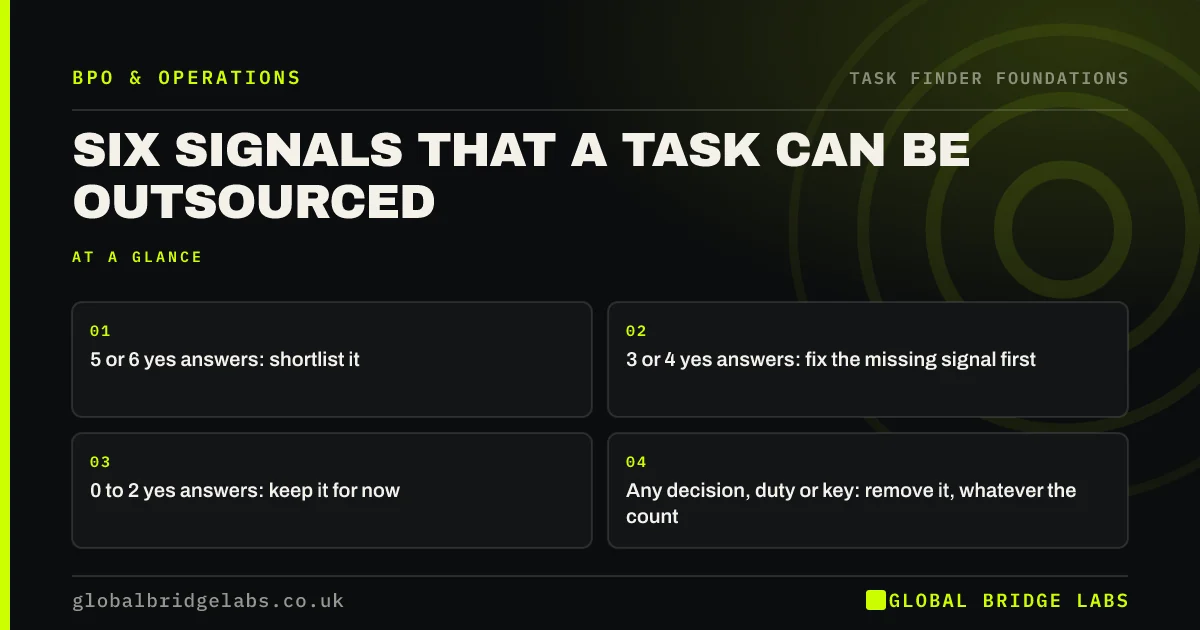
- Screen your matches against the six signals.
Next step
Hold your task list against the role patterns above. Any match you have not listed is worth a second look in your records.
Message us on WhatsApp to compare your list with these patterns, or book a 30-minute consultation.
Chat on WhatsApp →Sources and further reading
- The probability of automation in England: 2011 and 2017 · Office for National Statistics
- Business population estimates for the UK and regions 2025 · Department for Business and Trade
Frequently asked questions
What tasks do UK small businesses usually outsource first?
Commonly, frequent screen-based tasks such as order and record updates, invoice processing, reconciliations, manual weekly reports, chasing for documents or confirmations, and formatting quotes and proposals. The right first task depends on which of these takes meaningful hours in your business.
Why do some obvious tasks get rejected?
Because they hide decisions, relationships or controls: chasing difficult clients, setting prices or changing bank details. These usually fail the recoverable signal. The routine part around them, such as standard reminders or applying approved prices, can often still move.
Are these examples from real clients?
They are patterns we see repeatedly across UK SME work, described without client details. The overall results quoted, 42% lower back-office cost per task and 31 hours a week returned, are across our client engagements and are not a promise for any one task.
Written by

Global Bridge Labs (GBL) is a UK–Sri Lanka partner for social media, websites and BPO. Everything here comes from client delivery, not theory.