On this page
Key takeaways
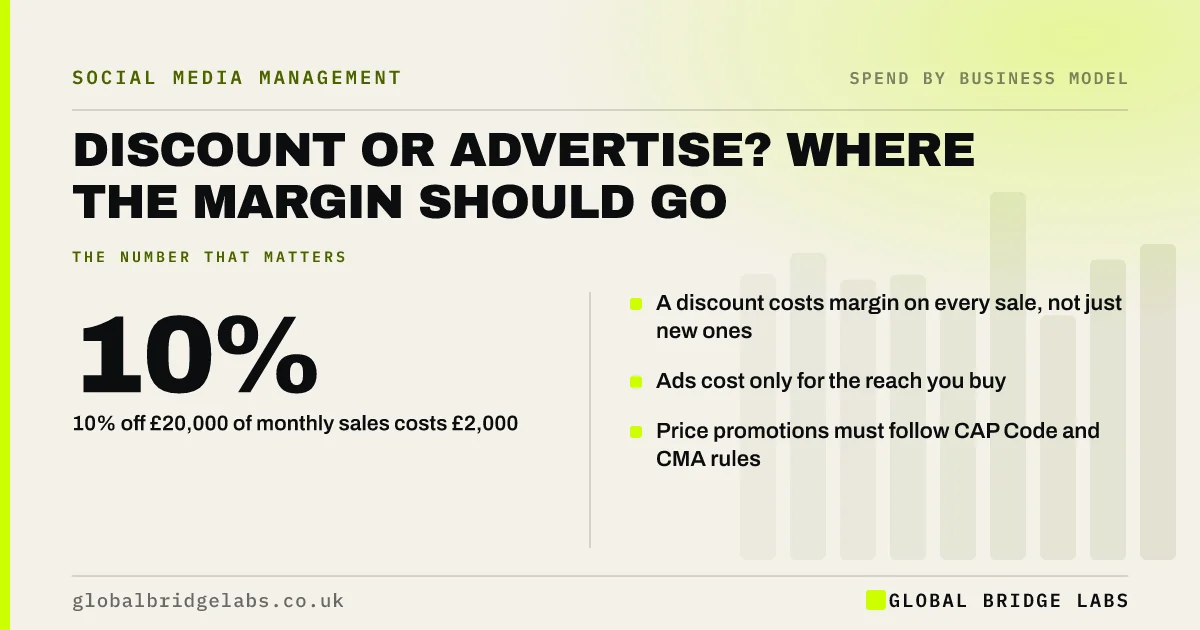
Discounts vs advertising is a question of who pays. A discount costs you on every sale it touches, including customers who would have paid full price. Advertising costs only the reach you buy. A discount can still win if it brings many new buyers, but compare the true cost before choosing.
- A discount costs margin on every sale, not just new ones.
- 10% off £20,000 of monthly sales costs £2,000.
- Ads cost only for the reach you buy.
- Price promotions must follow CAP Code and CMA rules.
Weighing a discount against ads? Message us on WhatsApp.
Chat on WhatsApp →What does a discount really cost?
Multiply the discount by all the sales it applies to. Illustrative example: 10% off for a month on £20,000 of sales costs £2,000, even if most of those buyers would have paid full price. If the discount adds £4,000 of new sales, the extra profit must cover that £2,000.
How does that compare with advertising?
The same £2,000 spent on ads buys reach to new people, and existing customers keep paying full price. If ads bring new customers at a cost per customer below your maximum, advertising is usually the cheaper way to grow. Discounts suit clearing stock or rewarding loyalty.
Send us your planned discount and monthly sales on WhatsApp and we will discuss your requirements.
Chat on WhatsApp →When does a discount make sense?
To clear seasonal stock, reward existing customers, or make a first purchase easier when the product sells itself once tried. Limit it to new customers or a specific product where possible, so it does not cut margin on every sale.
What rules apply to price promotions?
Promotions must be honest: reference prices must be genuine, closing dates real and conditions clear. The CAP Code covers promotional marketing and the CMA enforces consumer protection law on misleading pricing. Repeated fake 'sales' can breach both.
What does this look like in practice?
A pattern we see: a business runs a discount every month to drive sales, and regular customers learn to wait for it. Moving the same margin into targeted ads to new buyers usually grows sales without training existing customers to expect a lower price.
Discount or ads checklist
- Calculate the discount's cost on all affected sales.
- Estimate the new sales it must bring to pay back.
- Compare with the same money in ads.
- Limit discounts to new buyers or specific products.
- Check promotions against the CAP Code.
Next step
Before your next promotion, work out its total cost on expected sales. Compare it with what the same money would buy in ads.
Message us on WhatsApp with your sums, or book a 30-minute consultation.
Chat on WhatsApp →Sources and further reading
- CAP Code section 8: Promotional marketing · Committee of Advertising Practice
- Unfair commercial practices guidance (CMA207) · Competition and Markets Authority
Frequently asked questions
Is it better to discount or advertise?
Usually advertise, if ads can win new customers at an acceptable cost, because discounts reduce margin on every sale, including from buyers who would have paid full price. Discounts make sense for clearing stock, rewarding loyalty or encouraging a first purchase when limited to new customers.
How do I calculate the cost of a discount?
Multiply the discount percentage by all the revenue it applies to over the promotion. Then compare that cost with the extra gross profit from new sales the discount brings. If the extra profit is smaller than the cost, the promotion loses money.
Are there rules on sale prices in the UK?
Yes. Reference prices must be genuine, closing dates real and conditions clear. The CAP Code covers promotional marketing, and the CMA enforces consumer law on misleading pricing. Running permanent 'sales' or false urgency can breach these rules. If in doubt, check the regulator's current guidance or take professional advice before you act.
Written by

Global Bridge Labs (GBL) is a UK–Sri Lanka partner for social media, websites and BPO. Everything here comes from client delivery, not theory.