On this page
- 01Key takeaways
- 02How small should a one-person calendar be?
- 03How do you plan without a team?
- 04How do you handle replies when you are on a job?
- 05What should a solo business post?
- 06When should a solo owner get help?
- 07What does this look like in practice?
- 08One-person calendar checklist
- 09Next step
- 10Sources and further reading
- 11Frequently asked questions
Key takeaways
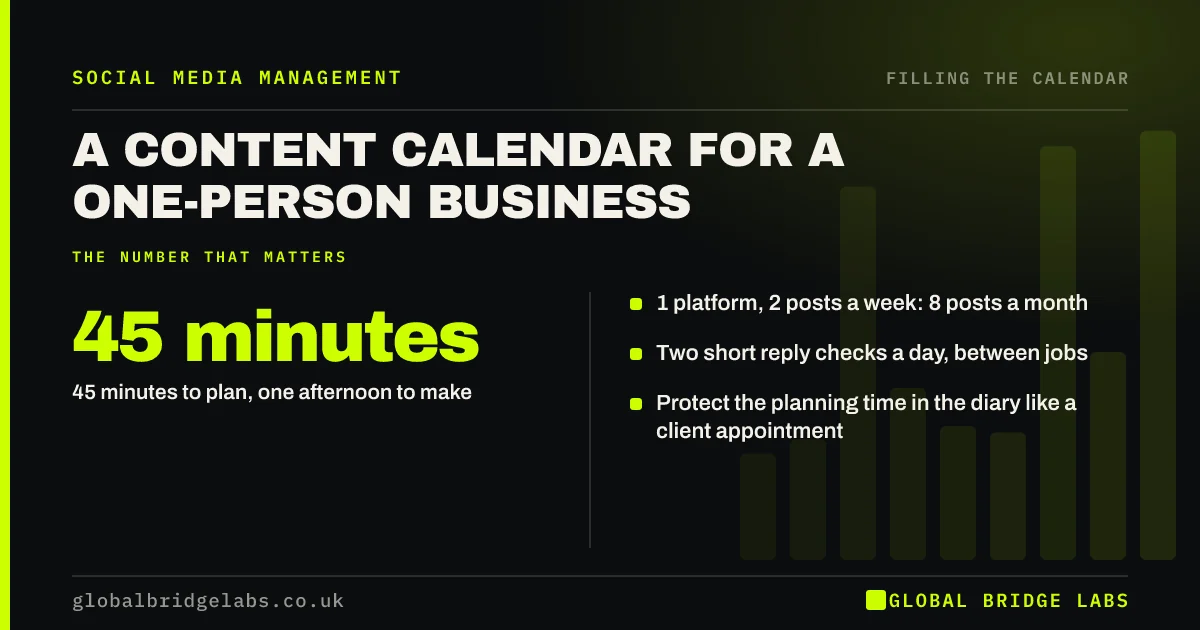
A content calendar for one person has to fit around client work, so keep it small: one platform, two posts a week, a 45-minute monthly planning session with yourself, one afternoon of batch production and two short reply checks a day. A sole trader who publishes eight good posts a month and answers every message is ahead of most competitors.
- 1 platform, 2 posts a week: 8 posts a month.
- 45 minutes to plan, one afternoon to make.
- Two short reply checks a day, between jobs.
- Protect the planning time in the diary like a client appointment.
Running it all yourself? Message us on WhatsApp for a plan that fits.
Chat on WhatsApp →How small should a one-person calendar be?
Small enough to survive your busiest month. For most sole traders and freelancers that is one platform and two posts a week. Plan the same two slots every week, such as a proof post and a help post, and add a third only when you have published every planned post for two months running.
How do you plan without a team?
Book 45 minutes with yourself in the third week of each month, and treat it like a client appointment. Bring your photos from the month, the questions customers asked and next month's dates. Fill eight slots, then book one afternoon to make and schedule all of them.
How do you handle replies when you are on a job?
Check messages at two set times, such as before the first job and at lunch, and use saved replies for common questions. An instant away message that says when you will reply sets expectations. A reply within the working day is enough for most buyers; silence for three days is what loses them.
What should a solo business post?
Post what only you have: your work, your knowledge and you. Buyers of one-person businesses are buying the person, so photos and short videos of you at work, answers to questions in your voice and finished jobs work best. Polished graphics matter much less.
When should a solo owner get help?
Get help when the planning hour keeps disappearing into client work for several months, or when social media is a main source of work and you cannot keep up with replies. A freelancer or agency can plan and make posts, while you supply photos and approve the month.
What does this look like in practice?
A pattern with sole traders: bursts of daily posting in quiet weeks and silence in busy ones. Two fixed slots a week, made in one afternoon a month, usually gives a steadier presence than the bursts ever did, with less effort.
One-person calendar checklist
- Choose one platform.
- Fix two weekly slots.
- Book 45 minutes to plan each month.
- Book one afternoon to make and schedule.
- Check messages twice a day.
Next step
Put two recurring events in your diary: 45 minutes to plan in week three, and one afternoon to make posts in week four.
Message us on WhatsApp and we will help set up your solo calendar, or book a 30-minute consultation.
Chat on WhatsApp →Sources and further reading
- Meta Business Help Centre · Meta
- WhatsApp Business app · WhatsApp
Frequently asked questions
How often should a sole trader post on social media?
Twice a week on one platform is a sustainable level for most sole traders, made in one batch a month. Answering messages within the working day matters more than posting more often.
How can I manage social media on my own?
Keep it small and batched: one platform, two fixed weekly slots, a 45-minute monthly plan and one afternoon to make and schedule posts. Check messages at two set times a day and use saved replies.
What should a one-person business post?
Your work, your knowledge and yourself: finished jobs, answers to customer questions in your own words, and photos or short videos of you at work. Buyers of small businesses are often buying the person.
Written by

Global Bridge Labs (GBL) is a UK–Sri Lanka partner for social media, websites and BPO. Everything here comes from client delivery, not theory.