On this page
- 01Key takeaways
- 02How much does a B2B website cost?
- 03What do B2B buyers expect?
- 04Why does content drive B2B costs?
- 05What integrations are common in B2B?
- 06When can a B2B firm spend less?
- 07What does this look like in practice?
- 08B2B website checklist
- 09Next step
- 10Sources and further reading
- 11Frequently asked questions
Key takeaways
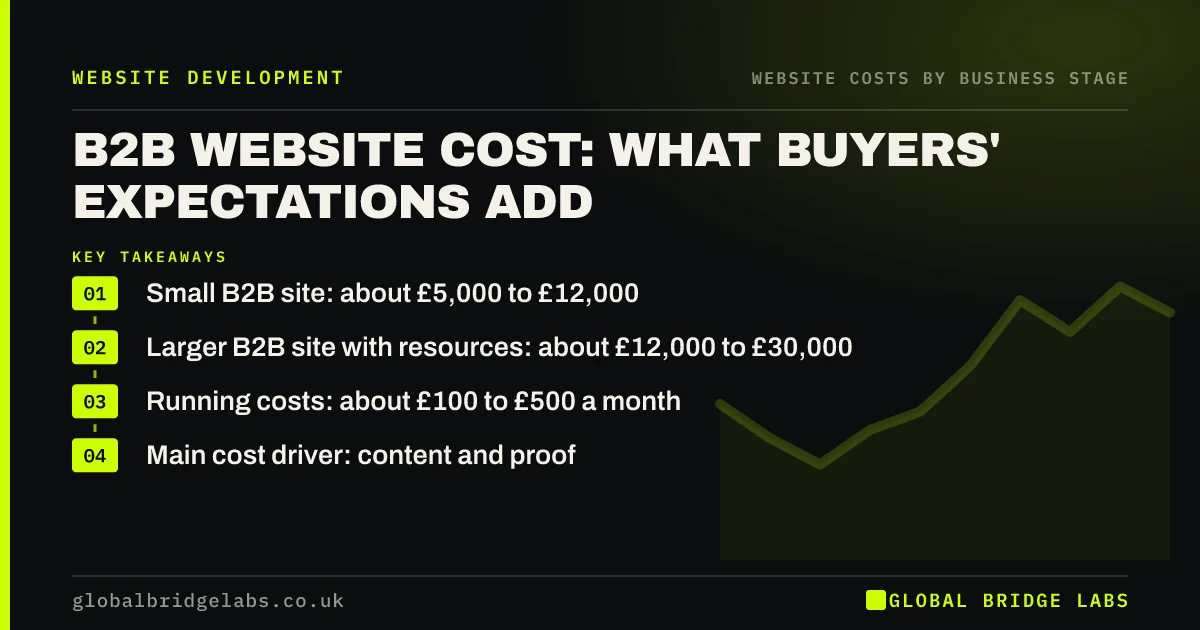
A B2B website in the UK typically costs £5,000 to £30,000, plus £100 to £500 a month to run. B2B buyers research thoroughly, often in groups, so sites need detailed service and sector pages, case studies, credentials and resources. Content and proof usually drive B2B budgets more than design or features.
- Small B2B site: about £5,000 to £12,000.
- Larger B2B site with resources: about £12,000 to £30,000.
- Running costs: about £100 to £500 a month.
- Main cost driver: content and proof.
Want your B2B website costed? Message us on WhatsApp.
Chat on WhatsApp →How much does a B2B website cost?
A B2B website typically costs £5,000 to £12,000 for a small firm and £12,000 to £30,000 for larger sites with sector pages, resources and integrations, based on UK agency quotes. Running costs add about £100 to £500 a month, more with ongoing content work.
What do B2B buyers expect?
B2B buyers expect detailed services, sector experience, case studies with results, team credentials, accreditations, security information and an easy way to request a proposal or call. Several people may review the site before contact, so it must answer each one's questions.
- Services and sectors in detail.
- Case studies with results.
- Credentials and accreditations.
- Security and compliance information.
- Proposal or call request.
Want a B2B site planned around buyer questions? Message us on WhatsApp and we will discuss your requirements.
Chat on WhatsApp →Why does content drive B2B costs?
Content drives costs because case studies, sector pages and resources need interviews, writing and approvals. A ten-page B2B site with four case studies can cost more to write than to build. Budget for content first.
What integrations are common in B2B?
Common B2B integrations include CRM links for enquiries, gated resources, meeting booking and analytics tracking of proposal requests as key events. Each adds set-up and testing cost.
When can a B2B firm spend less?
A B2B firm with a few long-term clients and referral growth can spend less, with a credible site covering services, proof and contact. Spend more when targeting new sectors or bidding for contracts where buyers check your site closely.
What does this look like in practice?
At Global Bridge Labs (GBL), a UK packaging supplier's site listed products but no sectors or case studies. A £9,000 rebuild added five sector pages and three case studies. Their sales team reported prospects arriving already informed, and proposal requests came with clearer requirements.
B2B website checklist
- List sectors and services.
- Plan case studies with results.
- Show credentials and security information.
- Build a proposal request journey.
- Link enquiries to your CRM.
- Budget content before design.
Next step
List the questions your buying committees ask in first meetings. Your B2B site should answer all of them.
Message us on WhatsApp for a B2B website brief, or book a 30-minute consultation.
Chat on WhatsApp →Sources and further reading
- SEO Starter Guide · Google Search Central
- About key events · Google Analytics Help
- Cyber Essentials overview · National Cyber Security Centre
Frequently asked questions
How much does a B2B website cost in the UK?
A B2B website typically costs £5,000 to £12,000 for a small firm and £12,000 to £30,000 for larger sites with sector pages, resources and integrations. Running costs are usually about £100 to £500 a month. Content such as case studies often drives the budget more than design.
What should a B2B website include?
A B2B website should include detailed services, sector pages, case studies with results, team credentials, accreditations, security information and a clear way to request a proposal or call. It should answer the questions of each person in a buying group, not just the first contact.
Why are B2B websites more expensive?
B2B websites usually need more content and proof than consumer sites: sector pages, case studies, credentials and resources, each needing research and approval. They also often need CRM integration and careful tracking of proposal requests. The writing work, more than the build, raises the cost.
Written by

Global Bridge Labs (GBL) is a UK–Sri Lanka partner for social media, websites and BPO. Everything here comes from client delivery, not theory.