On this page
- 01Key takeaways
- 02How much does a second website cost?
- 03What hidden costs come with two websites?
- 04When is a separate site justified?
- 05Why is a section on the main site usually better?
- 06When does adding to the main site confuse buyers?
- 07What does this look like in practice?
- 08Second website checklist
- 09Next step
- 10Sources and further reading
- 11Frequently asked questions
Key takeaways
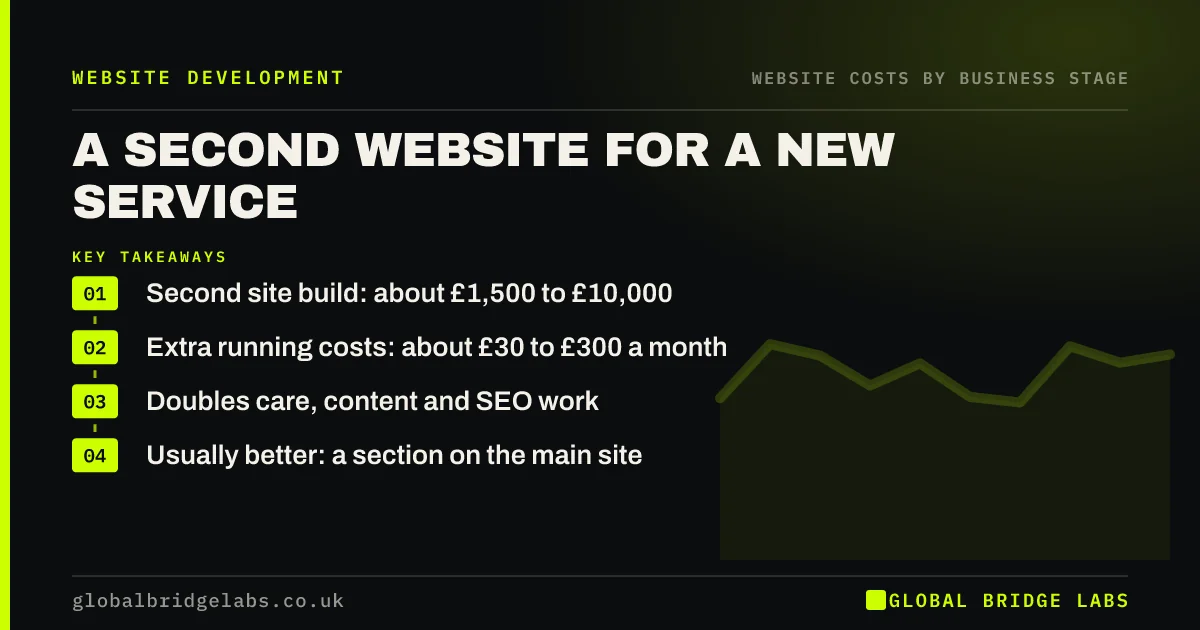
A second website for a new service or brand typically costs a UK small business £1,500 to £10,000 to build, plus a second set of running costs at £30 to £300 a month. It doubles hosting, care, content and SEO effort. For most businesses, adding the service to the existing site is cheaper and stronger, unless the audiences or brands genuinely differ.
- Second site build: about £1,500 to £10,000.
- Extra running costs: about £30 to £300 a month.
- Doubles care, content and SEO work.
- Usually better: a section on the main site.
Want to know if a second site makes sense? Message us on WhatsApp.
Chat on WhatsApp →How much does a second website cost?
A second website typically costs £1,500 to £10,000 to build, depending on size and design, plus £30 to £300 a month in hosting, care and tools, based on UK prices. The larger cost is ongoing: content, SEO and updates now needed for two sites instead of one.
What hidden costs come with two websites?
Two websites double renewals, care and security updates, split search authority built over years, and need two sets of content, reviews and tracking. Staff time to keep both current is often the largest hidden cost.
- Two sets of hosting, care and renewals.
- Split search authority.
- Two content and SEO plans.
- More staff time.
Want both options costed over three years? Message us on WhatsApp and we will discuss your requirements.
Chat on WhatsApp →When is a separate site justified?
A separate site is justified when the new service targets a clearly different audience, needs a different brand to avoid confusing existing customers, or may be sold separately one day. A B2B and a consumer offer from the same firm can be one example.
Why is a section on the main site usually better?
A section on the main site inherits existing search authority, reviews and trust, shares one set of running costs and is easier to manage. New service pages on an established site often rank faster than a brand-new domain.
When does adding to the main site confuse buyers?
Adding to the main site confuses buyers when the new offer conflicts with your positioning, such as budget and premium services side by side. Then clear separation, by section or site, protects both.
What does this look like in practice?
At Global Bridge Labs (GBL), a UK electrical contractor wanted a second site for EV charger installation. Instead, a new section with its own pages cost about £2,000 and used the main site's reviews and authority. It began bringing installation enquiries within weeks, faster than a new domain would have.
Second website checklist
- Check whether audiences really differ.
- Cost both options over three years.
- Count the extra staff time.
- Consider a section on the main site.
- Plan separate tracking either way.
- Decide who owns the second site's content.
Next step
Write down who the new service is for. If they are the same people who already visit your site, add a section rather than a second site.
Message us on WhatsApp for a second site decision sheet, or book a 30-minute consultation.
Chat on WhatsApp →Sources and further reading
- SEO Starter Guide · Google Search Central
- Google Business Profile Help · Google
- About key events · Google Analytics Help
Frequently asked questions
Should I have a separate website for each service?
Usually not. One site with a section for each service shares search authority, reviews and running costs, and is easier to manage. A separate site makes sense when a service targets a clearly different audience, needs a distinct brand or may be sold separately in future.
How much does it cost to run two websites?
Running two websites roughly doubles hosting, care, renewals and security updates, often an extra £30 to £300 a month, plus two sets of content and SEO work. Staff time to keep both current is often the biggest hidden cost.
Will a new website rank faster than a new page?
Usually not. A new page on an established site inherits the site's authority and trust, so it often ranks faster than a brand-new domain. A new site starts from zero and needs time, content and links before it competes for search terms.
Written by

Global Bridge Labs (GBL) is a UK–Sri Lanka partner for social media, websites and BPO. Everything here comes from client delivery, not theory.