On this page
- 01Key takeaways
- 02What should you do first when a post goes viral?
- 03What is the 72-hour plan?
- 04Should you try to repeat the viral post?
- 05How do you handle the comments?
- 06How do you measure what the spike did?
- 07What does this look like in practice?
- 08What are the common mistakes after a post goes viral?
- 09How should you prepare before anything takes off?
- 10Next step
- 11Sources and further reading
- 12Frequently asked questions
Key takeaways
After a post goes viral, the priority is to convert curiosity into something lasting: make your profile explain what you do, reply to genuine questions quickly, post a follow-up within 48 hours and keep your normal schedule. Do not abandon your plan to chase a second hit. The spike is valuable only if it lands on a consistent account.
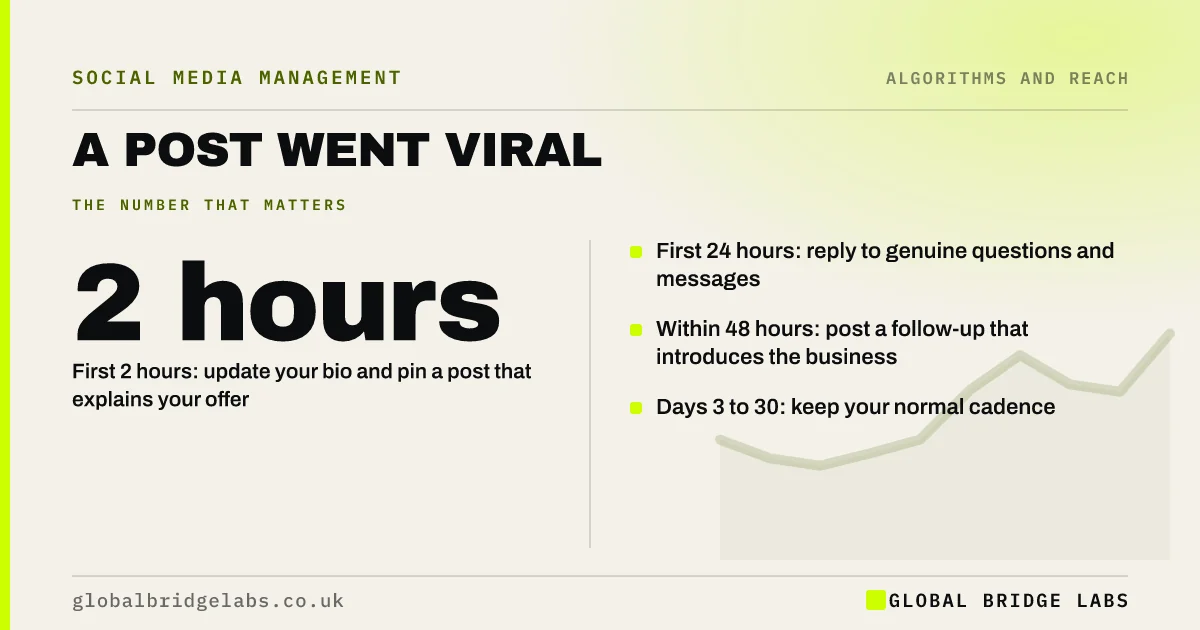
- First 2 hours: update your bio and pin a post that explains your offer.
- First 24 hours: reply to genuine questions and messages. Ignore the rest.
- Within 48 hours: post a follow-up that introduces the business.
- Days 3 to 30: keep your normal cadence. Do not chase the same format.
- Day 30: compare enquiries and branded searches with the month before.
A post just took off? Message us on WhatsApp now and we will help you capture it.
Chat on WhatsApp →What should you do first when a post goes viral?
Fix your profile before anything else. New visitors will look at your bio, pinned posts and recent activity within seconds of seeing the viral post. Make sure the bio says what you do, who for and where, and pin a post that explains your offer or shows a customer result.
Then check that your links work, your website loads and your enquiry route is clear. A spike that hits a broken link is wasted.
What is the 72-hour plan?
- Hour 0 to 2: update bio, pin an explainer post, check links and website.
- Hour 2 to 24: reply to real questions, especially about price, availability or delivery.
- Hour 2 to 24: hide or ignore spam and abuse; do not argue in comments.
- Hour 24 to 48: post a follow-up that introduces the business and what you offer.
- Hour 48 to 72: post your normal scheduled content, not a copy of the viral one.
- Throughout: log enquiries and note where they came from.
Want a ready-made 72-hour checklist? Message us on WhatsApp and we will send it.
Chat on WhatsApp →Should you try to repeat the viral post?
Not directly. Copying the viral post rarely works twice, and it pulls your content away from your buyers. Instead, look at why it worked: was it the topic, the opening, the format or the emotion? If there is a repeatable element that fits your business, turn it into a series and run it alongside your normal content.
How do you handle the comments?
Prioritise comments from potential customers: questions about what you sell, price, delivery or availability. Reply quickly and point them to the next step. Ignore or hide obvious spam and abuse. Do not argue with critics in public; a short, polite reply or no reply is usually better.
If the attention turns negative, treat it as a reputational issue and follow your crisis plan.
How do you measure what the spike did?
After 30 days, compare with the previous 30 days: enquiries or sales, branded searches in Google Search Console, website sessions from the platform, and engagement rate on your ordinary posts. If enquiries and branded searches rose, the spike helped. If only followers rose and engagement fell, it mainly added people outside your market.
What does this look like in practice?
A UK bakery's video of a celebration cake reached far beyond its usual audience. Within an hour, the owner updated the bio with the delivery area and order link and pinned a post showing how to order. The next day she posted a short introduction to the bakery. Orders from within the delivery area rose for three weeks, and the bakery kept its normal three posts a week throughout.
What are the common mistakes after a post goes viral?
- Leaving the bio vague, so visitors cannot tell what you do or where.
- Replying to trolls and critics instead of customers.
- Abandoning the normal schedule to chase a repeat.
- Posting a string of copies of the viral post.
- Judging success by followers rather than enquiries and branded searches.
- Taking orders you cannot fulfil on time.
How should you prepare before anything takes off?
Preparation takes about an hour and makes a spike far more useful. Keep an explainer post ready to pin, write saved replies for common questions about price, availability and service area, and agree who will handle messages if volumes jump. For product businesses, know your stock position and restock time.
Consistent accounts benefit most from spikes because visitors find an active, credible profile. That is the best preparation of all.
Next step
Prepare now. Keep an explainer post ready to pin, make sure your bio says what and where, and agree who will reply to messages if something takes off.
Message us on WhatsApp and we will help you prepare your account for a spike.
Chat on WhatsApp →Sources and further reading
- Performance report (Search results) · Search Console Help
- URL builders: collect campaign data with custom URLs · Google Analytics Help
- How TikTok recommends videos #ForYou · TikTok Newsroom
Frequently asked questions
What should I do when my post goes viral?
Update your bio, pin a post that explains your offer, check your links, reply to genuine questions quickly, post a follow-up within 48 hours and keep your normal schedule. Then compare enquiries and branded searches over the next 30 days with the previous 30.
How long does a viral post last?
Most viral posts peak within one to three days and fade within a week, though some continue to receive views for longer through recommendations. The lasting value depends on what visitors did during the spike, which is why the first 72 hours matter.
Should I post more after going viral?
Keep your normal cadence and add one follow-up post that introduces the business. Posting a burst of extra content usually lowers quality and engagement. Consistency after the spike is what keeps the new attention.
How do I keep new followers after going viral?
Show them what the account is really about. Post a clear introduction, then continue with your usual useful content. Some followers will leave or disengage because they came for one post, which is normal. The ones who stay are more likely to be relevant.
Should I boost a post that is already going viral?
Usually not. It is already reaching people for free, and boosting a broad viral post often spends money on audiences outside your market. If you want to spend, promote your follow-up explainer post to a defined local or sector audience instead.
Written by

Global Bridge Labs (GBL) is a UK–Sri Lanka partner for social media, websites and BPO. Everything here comes from client delivery, not theory.