On this page
- 01Key takeaways
- 02What does the calendar owner actually do?
- 03Should the business owner own the calendar?
- 04What roles do other people have?
- 05What happens when the owner is away?
- 06When should the calendar be outsourced?
- 07What does this look like in practice?
- 08Calendar ownership checklist
- 09Next step
- 10Sources and further reading
- 11Frequently asked questions
Key takeaways
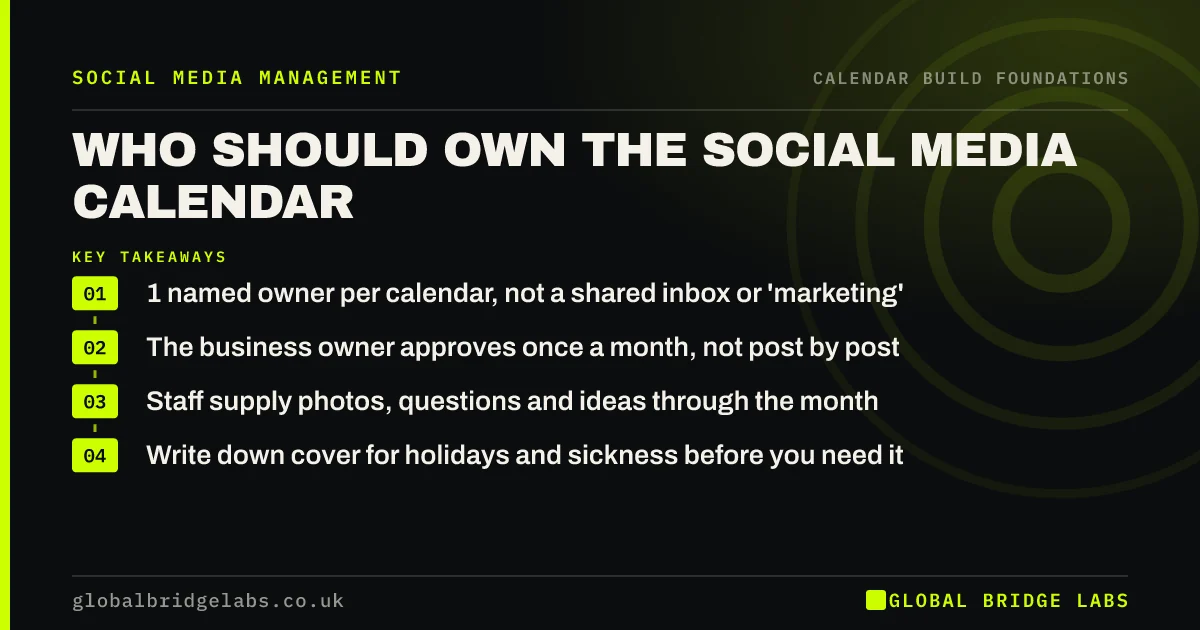
Who should own the social media calendar? One named person: they run the monthly session, chase the posts, publish or schedule them and keep the status up to date. The business owner approves the month and supplies dates and offers. Everyone else contributes ideas and photos. Shared ownership is the most common reason calendars slip.
- 1 named owner per calendar, not a shared inbox or 'marketing'.
- The business owner approves once a month, not post by post.
- Staff supply photos, questions and ideas through the month.
- Write down cover for holidays and sickness before you need it.
Need someone to own your calendar? Message us on WhatsApp.
Chat on WhatsApp →What does the calendar owner actually do?
The calendar owner books and runs the monthly planning session, fills or assigns every slot, chases posts that are behind, gets the month approved, schedules or publishes, and keeps the status column true. They do not have to make every post. Their job is that the month happens.
Should the business owner own the calendar?
Usually not. The business owner is the best source of dates, offers and stories, and the worst person to chase, because client work always wins. A better split: the owner approves the month in one sitting and supplies the inputs, and someone else, in-house or outsourced, owns the calendar.
What roles do other people have?
Staff who see the work supply photos, customer questions and ideas through the month, usually into one shared folder or note. A manager confirms dates and busy periods. If posts include claims, prices or regulated services, one person checks them before scheduling. Each role is small; the mistake is leaving them unnamed.
What happens when the owner is away?
Agree cover in advance: a named deputy, a one-week buffer of scheduled posts, and access to the accounts held by at least two people in the business. Most calendars die in the owner's first holiday because nothing was written down. A one-page handover note solves it.
When should the calendar be outsourced?
Outsource ownership when nobody in the business has a few hours a month to plan and chase, or when the person who does it is also the busiest person in client work. The business still supplies dates, offers and photos and approves the month; the agency or freelancer owns the plan and the publishing.
What does this look like in practice?
A pattern we see: social media is 'everyone's job', so it is done by whoever has a spare moment, which is nobody in a busy month. Naming one owner, even for a few hours a month, usually changes the publishing rate more than any change to the content.
Calendar ownership checklist
- Name one calendar owner.
- Name a deputy for holidays and sickness.
- The business owner approves monthly, not daily.
- One shared place for staff photos and ideas.
- At least two people hold admin access to every account.
Next step
Write the calendar owner's name and their deputy's at the top of the calendar. If you cannot fill in either, that is the first problem to solve.
Message us on WhatsApp and we will talk through who should own it, or book a 30-minute consultation.
Chat on WhatsApp →Sources and further reading
- Meta Business Help Centre · Meta
- LinkedIn Pages best practices · LinkedIn
Frequently asked questions
Who should manage the social media calendar in a small business?
One named person who runs the monthly planning session, chases posts, schedules them and keeps the status current. It does not need to be a full-time role. The business owner should approve the month and supply dates and offers rather than own it.
Should the business owner run social media?
The owner is the best source of stories and offers but usually the worst person to run the calendar, because client work comes first. Approving the month in one sitting and handing the planning and publishing to someone else usually works better.
How many people should have access to business social accounts?
At least two people inside the business should hold admin access to every account, so one person leaving or being away does not lock the business out. Agencies and freelancers should have their own access, not shared passwords.
Written by

Global Bridge Labs (GBL) is a UK–Sri Lanka partner for social media, websites and BPO. Everything here comes from client delivery, not theory.