On this page
- 01Key takeaways
- 02What are the most common website budgeting mistakes?
- 03Which mistakes cost the most?
- 04Why is overspending on design a mistake?
- 05How do you avoid budgeting mistakes?
- 06When are some shortcuts acceptable?
- 07What does this look like in practice?
- 08Budget mistake checklist
- 09Next step
- 10Sources and further reading
- 11Frequently asked questions
Key takeaways
The most common website budgeting mistakes are budgeting for the build only, forgetting content, overspending on design while underfunding copy and tracking, skipping care, and leaving nothing for launch marketing. Each one leaves the site underfunded at the point it needs support. A five-line budget and a 10% contingency prevent most of them.
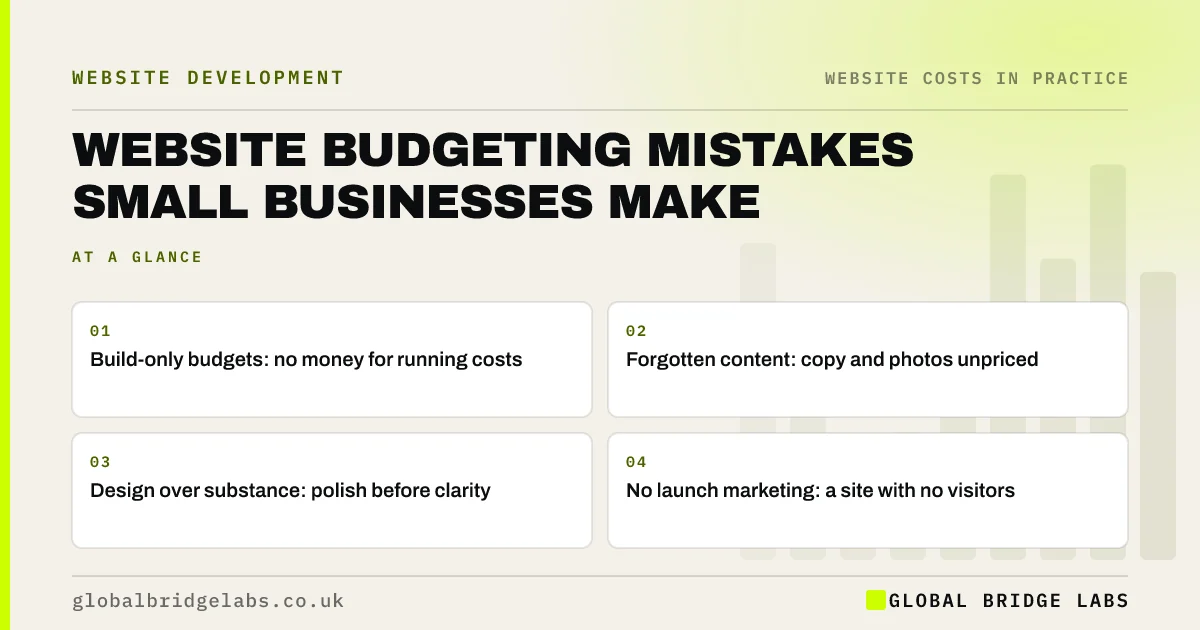
- Build-only budgets: no money for running costs.
- Forgotten content: copy and photos unpriced.
- Design over substance: polish before clarity.
- No launch marketing: a site with no visitors.
Want your website budget checked for these mistakes? Message us on WhatsApp.
Chat on WhatsApp →What are the most common website budgeting mistakes?
The most common mistakes are budgeting for the build alone, forgetting content, overspending on visual design, skipping care and security, ignoring VAT, leaving no contingency and keeping nothing back for launch marketing. Most come from treating a website as a one-off purchase.
Which mistakes cost the most?
The mistakes that cost the most are skipping care, which risks a hack or broken site, and missing redirects when replacing an old site, which can lose search traffic built over years. Both cost far more to fix than to prevent.
- Skipping care and updates.
- Missing redirects on replacement.
- No tracking, so no evidence of results.
Want a budget that avoids the costly mistakes? Message us on WhatsApp and we will discuss your requirements.
Chat on WhatsApp →Why is overspending on design a mistake?
Overspending on design is a mistake when it leaves too little for copy, proof, speed and tracking, which affect enquiries more. Elaborate effects can also slow pages. Good design supports clear content; it rarely replaces it.
How do you avoid budgeting mistakes?
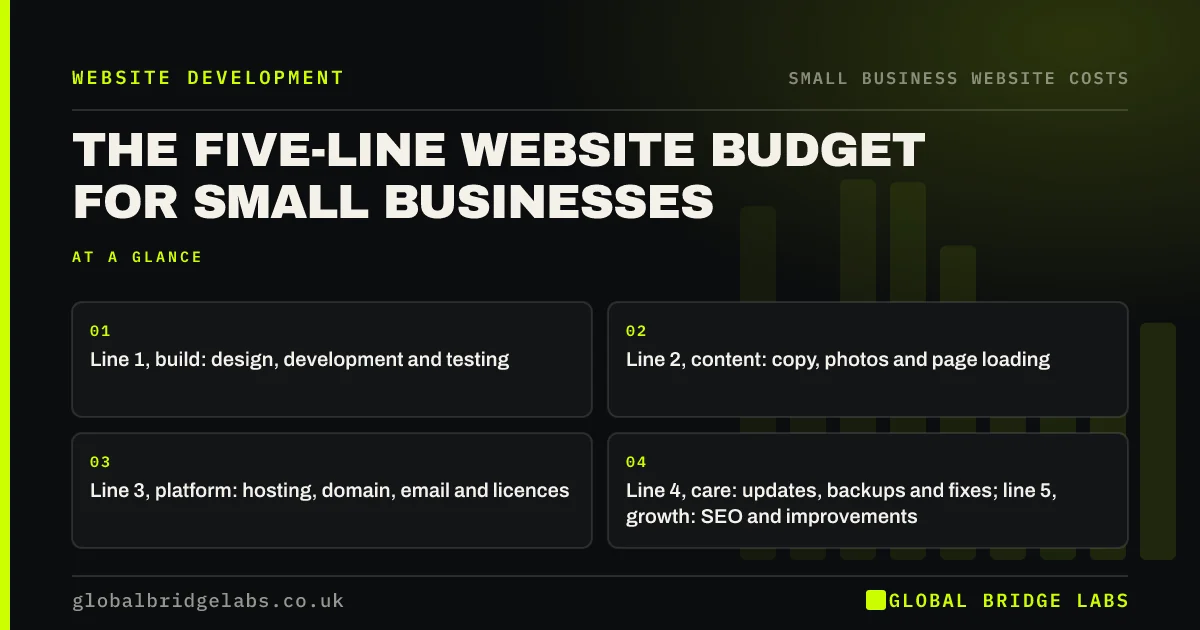
Avoid budgeting mistakes by using a five-line budget covering build, content, platform, care and growth, adding VAT where relevant and a 10% contingency, keeping 20% to 50% of the build back for launch marketing, and comparing three-year totals.
When are some shortcuts acceptable?
Some shortcuts are fine: supplying your own copy, using a template, phasing features. These are deliberate choices, not mistakes, as long as they are planned and the essentials stay funded.
What does this look like in practice?
At Global Bridge Labs (GBL), a UK architect spent their full £10,000 budget on a visually striking site with no tracking, care or launch plan. Within a year, a plugin conflict broke the contact form unnoticed for weeks. Rebudgeting with care and tracking cost £120 a month and would have caught it in a day.
Budget mistake checklist
- Budget all five lines.
- Price content explicitly.
- Fund care from launch.
- Include redirects and tracking.
- Add VAT and contingency.
- Keep launch marketing money back.
Next step
Check your budget against each mistake above. Any you find is cheaper to fix now than after launch.
Message us on WhatsApp for a website budget review, or book a 30-minute consultation.
Chat on WhatsApp →Sources and further reading
- SEO Starter Guide · Google Search Central
- About key events · Google Analytics Help
- Small Business Guide: cyber security · National Cyber Security Centre
Frequently asked questions
What is the biggest mistake when budgeting for a website?
The biggest mistake is budgeting for the build alone. Running costs for hosting, licences and care, plus content and launch marketing, are often left out, leaving the site underfunded soon after launch. A budget covering build, content, platform, care and growth avoids this.
Should I spend more on design or content?
For most small businesses, prioritise content: clear copy, real proof and tracking affect enquiries more than visual polish. Spend on design that makes content easy to read and use on phones. Elaborate visual effects can wait or be skipped.
How do I avoid going over budget on a website?
Agree a written scope, price content and extras upfront, use a change request process, keep a 10% contingency and park new ideas for after launch. Comparing three-year totals rather than build prices also avoids choosing a quote that becomes expensive later.
Written by

Global Bridge Labs (GBL) is a UK–Sri Lanka partner for social media, websites and BPO. Everything here comes from client delivery, not theory.