On this page
- 01Key takeaways
- 02What is a website budget worksheet?
- 03How do you fill in the worksheet?
- 04What does a completed example look like?
- 05How should VAT and contingency be handled?
- 06When is a worksheet overkill?
- 07What does this look like in practice?
- 08Worksheet checklist
- 09Next step
- 10Sources and further reading
- 11Frequently asked questions
Key takeaways
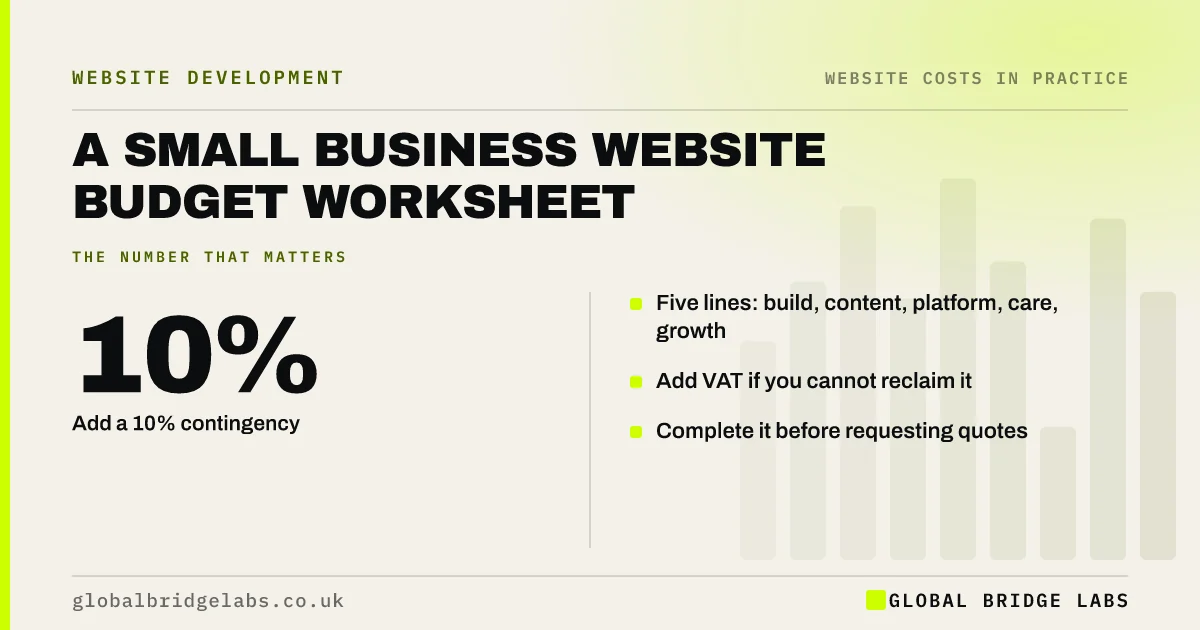
A website budget worksheet turns vague plans into five figures: build, content, platform, care and growth, plus VAT and a contingency. Fill it in before asking for quotes so you can share a realistic range and compare answers. Most small businesses complete it in under an hour using their goals, page list and known running costs.
- Five lines: build, content, platform, care, growth.
- Add VAT if you cannot reclaim it.
- Add a 10% contingency.
- Complete it before requesting quotes.
Want the worksheet as a spreadsheet? Message us on WhatsApp.
Chat on WhatsApp →What is a website budget worksheet?
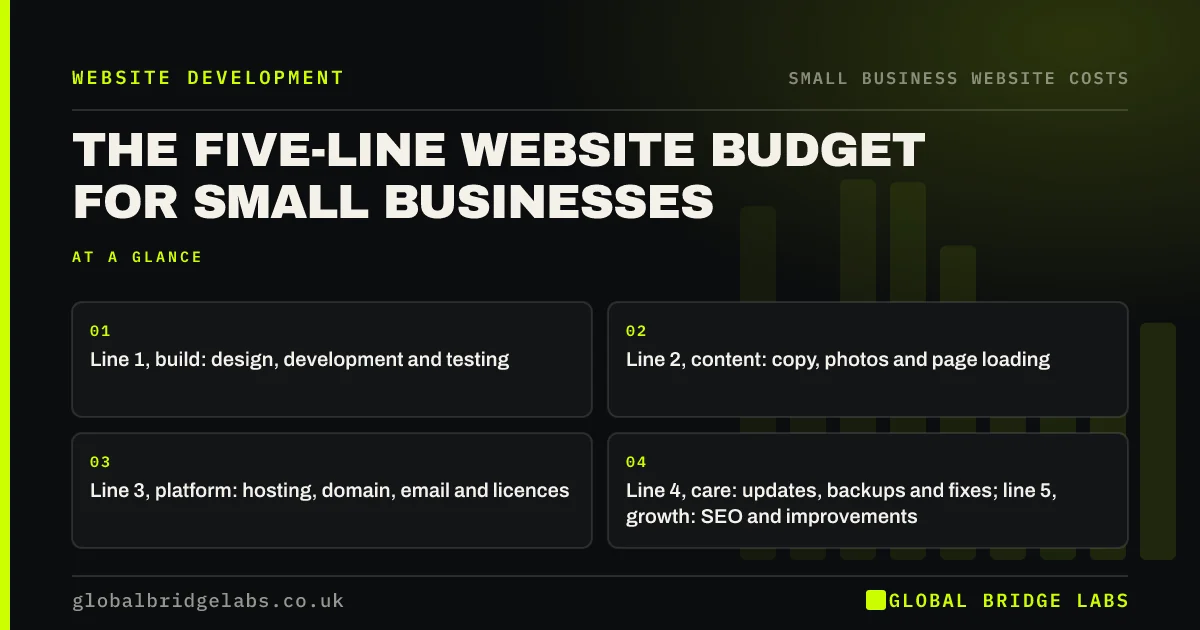
A website budget worksheet is a simple sheet that lists every website cost line, one-off and recurring, with a figure, an owner and a note on whether it is quoted, estimated or supplied by you. It follows the GBL five-line website budget so no cost type is forgotten.
How do you fill in the worksheet?
Fill the worksheet in steps, starting with what the site must do and ending with totals. Use market ranges for estimates until quotes arrive.
- Step 1: write the site's goal and pages.
- Step 2: estimate build from market ranges.
- Step 3: price content you will not supply.
- Step 4: list platform costs yearly.
- Step 5: set monthly care and growth.
- Step 6: add VAT and a 10% contingency.
Want help filling in the worksheet? Message us on WhatsApp and we will discuss your requirements.
Chat on WhatsApp →What does a completed example look like?
A completed example for a ten-page service business: build £4,500, content £1,200, platform £400 a year, care £100 a month and growth £200 a month. Year one totals about £9,700 before VAT and contingency, with later years about £4,000.
- One-off: £5,700.
- Yearly running: about £4,000.
- Year one: about £9,700.
How should VAT and contingency be handled?
Add VAT at 20% to suppliers who charge it if your business cannot reclaim it. Add a contingency of about 10% of one-off costs for changes after launch. Both are often forgotten and both are real.
When is a worksheet overkill?
A worksheet is overkill for a self-built one-page site with known monthly fees. For anything involving a supplier, it saves time and reduces surprise costs.
What does this look like in practice?
At Global Bridge Labs (GBL), a UK veterinary practice completed the worksheet before seeking quotes and found its planned £5,000 budget covered the build but not content or care. They raised the budget to £7,500 and phased growth work, so suppliers quoted the right project first time.
Worksheet checklist
- Write the goal and page list.
- Fill each of the five lines.
- Mark quoted, estimated or supplied.
- Add VAT if not reclaimable.
- Add a 10% contingency.
- Update with real quotes.
Next step
Fill in the worksheet with estimates today. Share the total as a range with suppliers when you ask for quotes.
Message us on WhatsApp for the website budget worksheet, or book a 30-minute consultation.
Chat on WhatsApp →Sources and further reading
- Business population estimates for the UK and regions 2025 · Department for Business and Trade
- VAT rates · GOV.UK
- About key events · Google Analytics Help
Frequently asked questions
How do I create a budget for a website?
List the site's goal and pages, then estimate five lines: build, content, platform, care and growth, using market ranges until you have quotes. Add VAT if you cannot reclaim it and a 10% contingency. Separate one-off from recurring costs to see year one and later years.
What should a website budget spreadsheet include?
It should include build, content, hosting, domain, email, licences, care, growth work, VAT and contingency, with columns for one-off or recurring, amount, owner and status. Totals for year one and later years show the full cost of owning the site, not just launching it.
How much contingency should a website budget have?
About 10% of one-off costs is a sensible contingency for most small business websites. It covers changes once real customers use the site and small items missed in quotes. Larger or more complex projects may need 15% to 20%.
Written by

Global Bridge Labs (GBL) is a UK–Sri Lanka partner for social media, websites and BPO. Everything here comes from client delivery, not theory.