On this page
- 01Key takeaways
- 02What do UK small business websites typically cost?
- 03Six typical examples
- 04What drove costs up?
- 05What kept costs down?
- 06When are examples misleading?
- 07What does this look like in practice?
- 08Example comparison checklist
- 09Next step
- 10Sources and further reading
- 11Frequently asked questions
Key takeaways
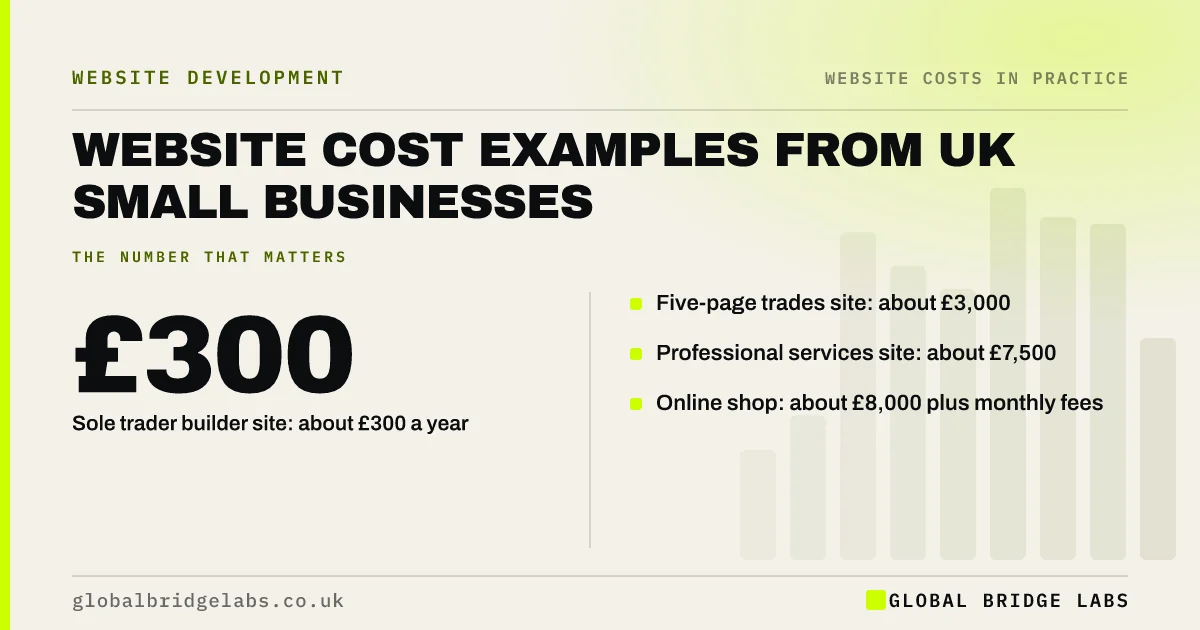
Typical UK small business website costs range from about £300 for a self-built sole trader site to £25,000 or more for a multi-location firm. Six common examples show the pattern: scope, content and integrations drive cost more than page count. Use these as orientation, not quotes; your own figure depends on what your site must do.
- Sole trader builder site: about £300 a year.
- Five-page trades site: about £3,000.
- Professional services site: about £7,500.
- Online shop: about £8,000 plus monthly fees.
Want your project compared with these examples? Message us on WhatsApp.
Chat on WhatsApp →What do UK small business websites typically cost?
UK small business websites typically cost from a few hundred pounds a year for self-built sites to £25,000 or more for larger multi-location sites. These six indicative examples are composite patterns from typical UK projects, not GBL prices or specific clients.
Six typical examples
Each example lists build cost, monthly running cost and the main cost driver.
- Sole trader on a builder: about £300 a year, own copy.
- Five-page trades site: about £3,000, plus £60 a month; area pages.
- Ten-page professional services site: about £7,500, plus £150 a month; copy and case studies.
- Shopify store, 150 products: about £8,000, plus platform and apps; product loading.
- Clinic with booking: about £9,000, plus £200 a month; booking and compliance.
- Multi-location firm: about £22,000, plus £400 a month; location pages.
- How much does a website cost for a trades business?
- Shopify website cost: setup, apps and monthly fees
Want an example built around your business? Message us on WhatsApp and we will discuss your requirements.
Chat on WhatsApp →What drove costs up?
Costs rose with integrations such as booking and stock, professionally written copy, product loading, compliance content and unique location pages. Custom design added cost where brand distinction mattered.
What kept costs down?
Costs fell where owners supplied their own copy and photos, used well-chosen templates, phased features and kept scope tight. Hosted platforms also reduced care costs for simpler sites.
When are examples misleading?
Examples mislead when your needs differ from the example's, for instance more services, regulated content or integrations. Treat them as a starting point and get quotes against your own scope.
What does this look like in practice?
At Global Bridge Labs (GBL), owners often bring a competitor's website cost as a benchmark. A UK physiotherapist assumed their site would cost what a friend paid for a five-page trades site. With booking, clinician profiles and treatment pages, their realistic figure was nearer the clinic example, and planning for that avoided a stalled project.
Example comparison checklist
- Pick the example closest to your business.
- List where your needs differ.
- Adjust for integrations and content.
- Add running costs for three years.
- Get quotes against your own scope.
- Use examples only for orientation.
Next step
Choose the example closest to your business and list three ways your site differs. Those differences are what to discuss with suppliers.
Message us on WhatsApp for a costed example for your business, or book a 30-minute consultation.
Chat on WhatsApp →Sources and further reading
- Business population estimates for the UK and regions 2025 · Department for Business and Trade
- SEO Starter Guide · Google Search Central
- Shopify pricing (UK) · Shopify
Frequently asked questions
How much do small businesses usually pay for a website?
Most UK small businesses pay between about £1,500 and £10,000 for a professionally built website, with self-built sites costing a few hundred pounds a year and larger multi-location or e-commerce sites costing more. Running costs typically add £30 to £400 a month.
What is a realistic website budget for a small business?
For a service business wanting regular enquiries, £3,000 to £8,000 to build and £75 to £200 a month to run is realistic in many cases. Simpler sites cost less; online shops and sites with booking or compliance needs cost more. Base the budget on what the site must achieve.
Why does my website cost more than someone else's?
Usually because your scope is different: more services, written copy, integrations such as booking, compliance content, product loading or custom design. Page count alone rarely explains the difference. Compare the scope line by line before concluding one site was overpriced.
Written by

Global Bridge Labs (GBL) is a UK–Sri Lanka partner for social media, websites and BPO. Everything here comes from client delivery, not theory.