On this page
Key takeaways
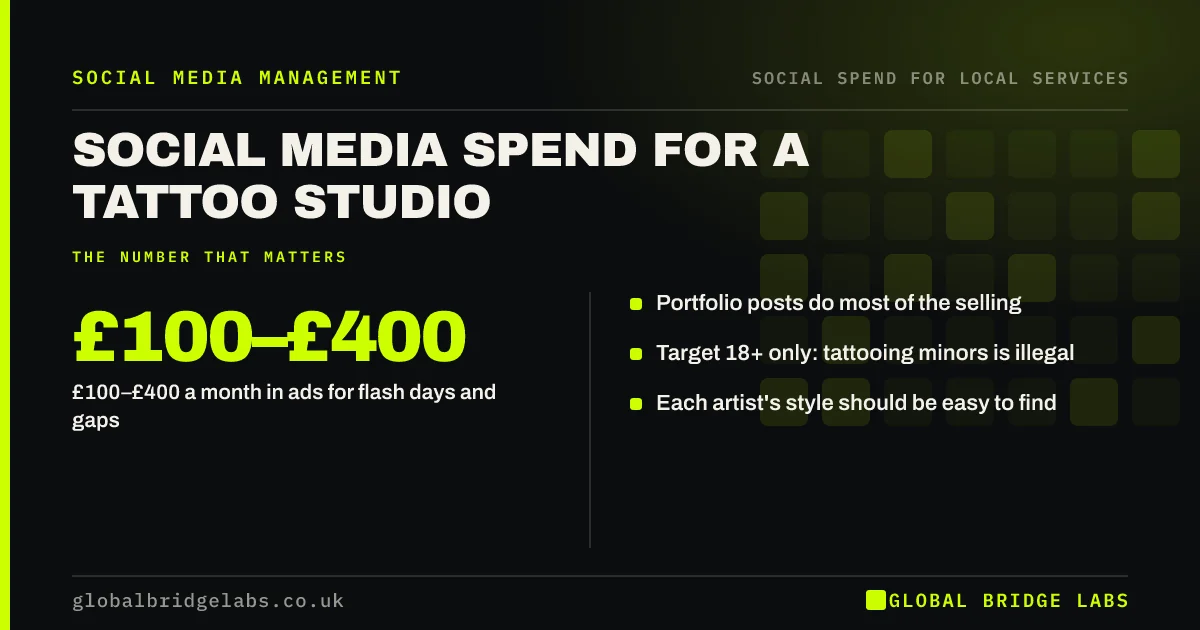
A tattoo studio social media budget is mostly time spent posting healed and fresh work, because buyers choose an artist by portfolio. As a GBL rule of thumb, studios spend £100–£400 a month on ads, mainly for flash days, guest artists and filling gaps. Tattooing under-18s is illegal in the UK, so target adults only.
- Portfolio posts do most of the selling.
- £100–£400 a month in ads for flash days and gaps.
- Target 18+ only: tattooing minors is illegal.
- Each artist's style should be easy to find.
Want a tattoo studio plan? Message us on WhatsApp.
Chat on WhatsApp →What should the budget pay for?
Time and kit for good photos and short videos of healed work, plus ads for specific events: flash days, guest artist visits and short-notice gaps in the diary. Ads for general 'book a tattoo' messages rarely work as well as showing a style to people who like it.
Send us your next flash day or guest spot on WhatsApp and we will discuss your requirements.
Chat on WhatsApp →Which rules apply?
The Tattooing of Minors Act 1969 makes it an offence to tattoo anyone under 18, so ads and content should target and appeal to adults. Studios also need local authority registration. Keep before and after claims honest, and get client consent before posting their tattoos.
When should a studio not advertise?
When artists are booked months ahead. Then posting work keeps demand warm, and ad money is better saved for new artists building their books or for quieter months.
What does this look like in practice?
A pattern we see: a studio posts only fresh, red tattoos, while buyers want to know how work heals. Adding healed photos and artist-specific highlights usually lifts enquiries without any ad spend.
Tattoo studio checklist
- Post healed and fresh work for each artist.
- Get client consent before posting.
- Target ads to adults only.
- Advertise flash days, guest artists and gaps.
- Save ad budget when diaries are full.
Next step
Add a healed-work highlight for each artist. Plan your next flash day ad with date, designs and booking link, aimed at adults nearby.
Message us on WhatsApp with your plan, or book a 30-minute consultation.
Chat on WhatsApp →Sources and further reading
- Tattooing of Minors Act 1969 · legislation.gov.uk
- UK Code of Non-broadcast Advertising and Direct & Promotional Marketing (CAP Code) · ASA / CAP
Frequently asked questions
How much should a tattoo studio spend on ads?
Many studios spend £100–£400 a month, mainly to promote flash days, guest artists and short-notice gaps. Most bookings come from portfolio posts and word of mouth, so time spent photographing healed work usually matters more than ad budget. Review spend each quarter against bookings or enquiries, and adjust it in small steps.
Can tattoo studios advertise on Facebook and Instagram?
Yes, as long as ads follow Meta's policies and UK advertising rules, target adults and make honest claims. Tattooing anyone under 18 is illegal in the UK, so set age targeting to 18 and over and avoid content that appeals mainly to younger people.
What content gets tattoo bookings?
Clear photos and short videos of healed work, each artist's style, flash designs with dates, and answers to common questions about pricing, aftercare and booking. Buyers choose an artist by style, so make each artist's portfolio easy to find. Review spend each quarter against bookings or enquiries, and adjust it in small steps.
Written by

Global Bridge Labs (GBL) is a UK–Sri Lanka partner for social media, websites and BPO. Everything here comes from client delivery, not theory.