On this page
- 01Key takeaways
- 02How does price change what you can pay per lead?
- 03How should a high-ticket budget be spent?
- 04How should a low-ticket budget be spent?
- 05What about businesses selling both?
- 06What does this look like in practice?
- 07Price point checklist
- 08Next step
- 09Sources and further reading
- 10Frequently asked questions
Key takeaways
A marketing budget for high-ticket vs low-ticket offers differs in what you can pay per lead and how long results take. High-ticket offers can afford far more per enquiry but need more content and patience, because buyers research for weeks. Low-ticket offers need cheap, fast results and ads that sell in seconds.
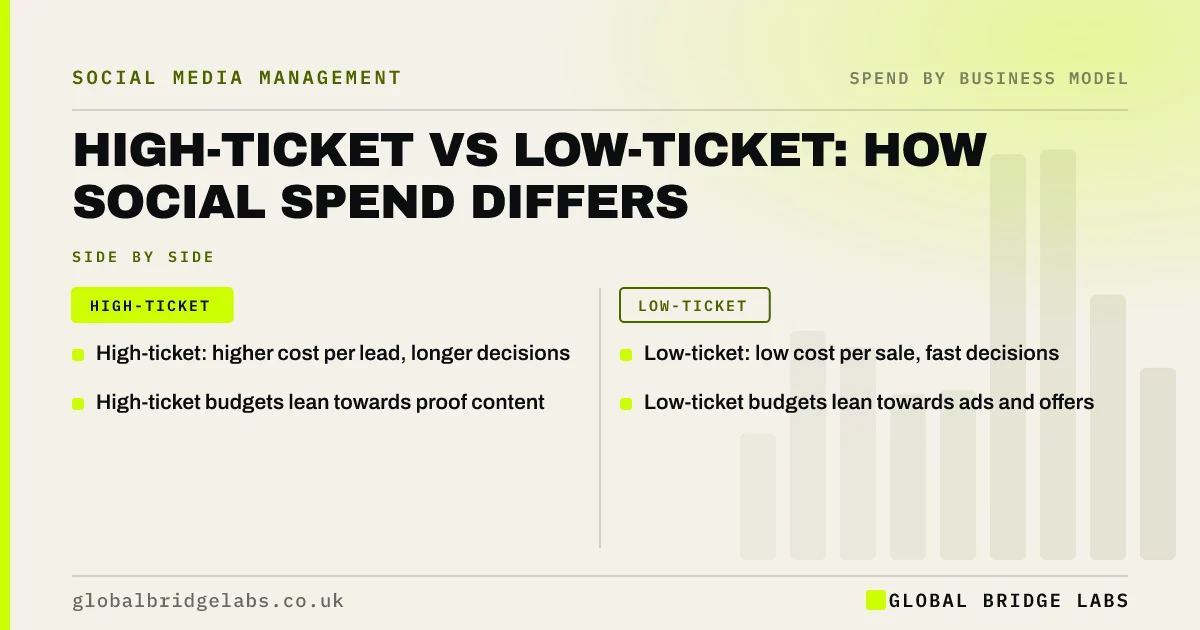
- High-ticket: higher cost per lead, longer decisions.
- Low-ticket: low cost per sale, fast decisions.
- High-ticket budgets lean towards proof content.
- Low-ticket budgets lean towards ads and offers.
Want spend set for your price point? Message us on WhatsApp.
Chat on WhatsApp →How does price change what you can pay per lead?
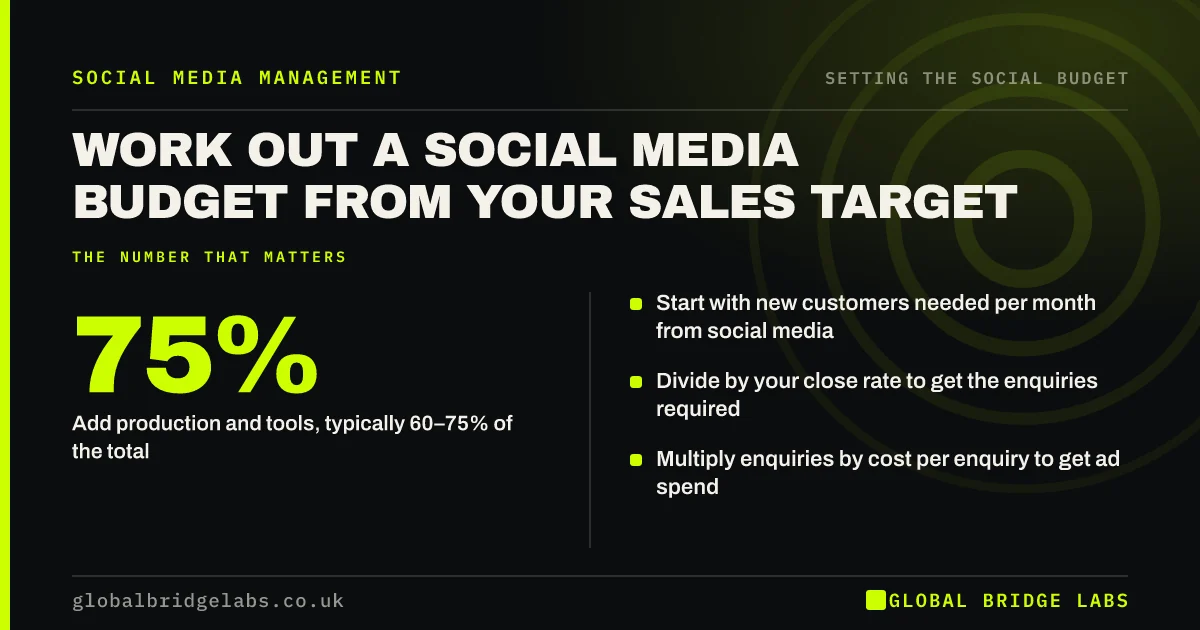
Your maximum cost per lead is gross profit per sale times close rate. Illustrative examples: a £12,000 kitchen with £3,600 gross profit and a 20% close rate allows £720 per lead; a £30 product with £12 gross profit and a 3% conversion rate allows only 36p per visitor.
How should a high-ticket budget be spent?
More on content that builds trust: case stories, before and after work, explanations of process and price, and retargeting that keeps proof in front of people for weeks. Expect months, not days, before results settle. Judge on enquiries and sales over a quarter.
Send us your average order value on WhatsApp and we will discuss your requirements.
Chat on WhatsApp →How should a low-ticket budget be spent?
More on ads that sell quickly: clear product, clear price, simple checkout. Margins are thin, so costs must stay low and creative must be refreshed often. Bundles and repeat purchases raise what you can afford per customer.
What about businesses selling both?
Treat them as separate budgets with separate measures. A low-ticket entry offer can feed the high-ticket service, but judge each on its own numbers so a cheap product's quick sales do not hide a slow, valuable pipeline.
What does this look like in practice?
A pattern we see: a high-ticket firm judges ads after two weeks as if it sold a £30 product, and stops before buyers finish researching. Measuring over a quarter and adding retargeting with proof usually shows the true cost per sale.
Price point checklist
- Calculate your maximum cost per lead.
- Set the time frame to match decision length.
- Lean high-ticket budgets towards proof content.
- Lean low-ticket budgets towards fast-selling ads.
- Measure mixed offers separately.
Next step
Work out your maximum cost per lead and your typical decision time. Set the review period for your ads to match.
Message us on WhatsApp with your figures, or book a 30-minute consultation.
Chat on WhatsApp →Sources and further reading
- Meta Business Help Centre · Meta
- About key events · Google Analytics Help
Frequently asked questions
How much should I spend to sell high-ticket services on social media?
Work from your maximum cost per lead: gross profit per sale times close rate. High-ticket services can often afford hundreds of pounds per lead, but need more spent on proof content and retargeting, and results take weeks or months. Judge over a quarter.
Can low-priced products be sold profitably with ads?
Yes, if margins allow and creative sells quickly. Raise order value with bundles, encourage repeat purchases, and watch break-even ROAS closely. Products with very low margins often need organic content and repeat buyers rather than relying on paid acquisition. Review it each quarter against your enquiries and sales, and adjust in small steps.
How long do high-ticket social campaigns take to work?
Often two to three months before results are reliable, because buyers research, compare and discuss before enquiring. Keep proof in front of them with retargeting and regular content, and judge on enquiries and sales over a quarter rather than weeks.
Written by

Global Bridge Labs (GBL) is a UK–Sri Lanka partner for social media, websites and BPO. Everything here comes from client delivery, not theory.