On this page
- 01Key takeaways
- 02Which platform suits high-ticket services?
- 03What content builds enough trust?
- 04Why does publishing price ranges help?
- 05How should you measure a long cycle?
- 06What should you stop doing?
- 07What does this look like in practice?
- 08Who inside the business should post?
- 09Next step
- 10Sources and further reading
- 11Frequently asked questions
Key takeaways
High-ticket services are bought on trust built over months, so choose channels with memory rather than reach. LinkedIn and YouTube work because both let a buyer research you privately and thoroughly before they ever make contact.
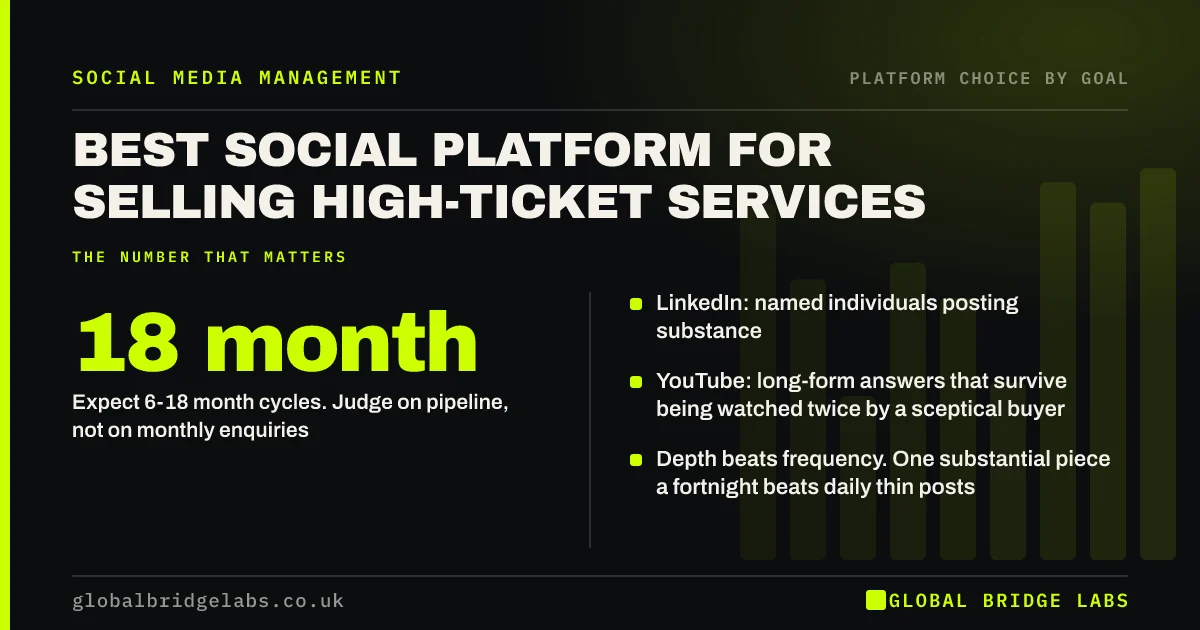
- LinkedIn: named individuals posting substance. The buyer researches you privately.
- YouTube: long-form answers that survive being watched twice by a sceptical buyer.
- Expect 6-18 month cycles. Judge on pipeline, not on monthly enquiries.
- Depth beats frequency. One substantial piece a fortnight beats daily thin posts.
- Publish price ranges. High-ticket buyers screen out opacity before they call.
Selling a high-value service? We will plan the trust-building content on WhatsApp.
Chat on WhatsApp →Which platform suits high-ticket services?
LinkedIn for reaching the buyer and YouTube for convincing them, because a high-value purchase involves weeks of private research that no feed captures.
The decisive property is memory. A buyer considering a £40,000 commitment will read your last twenty posts, watch a video twice, check your team page and ask two people about you. Channels where content persists and can be reviewed serve that behaviour. Channels where content vanishes in 48 hours do not.
What content builds enough trust?
Specific, unflattering and detailed. Generic thought leadership does nothing at this price point because every competitor has it.
- Worked examples with real numbers, anonymised where necessary.
- What goes wrong on projects like this, and how you handle it when it does.
- The actual process, step by step, including the parts clients find difficult.
- Price ranges and what moves a project to the top or bottom of the range.
- The people who would do the work, by name, with their real experience.
Why does publishing price ranges help?
Because high-value buyers screen out opacity early. Someone with a £30,000 budget will not book a call to discover whether you are a £5,000 or a £200,000 supplier, so opacity loses you the enquiry before any conversation happens.
Ranges with the variables named work better than a single figure: projects of this type typically run from X to Y, with scope, integrations and timescale being what moves it. That disqualifies the wrong buyers and pre-qualifies the right ones, which is exactly what you want when each sale takes months.
We will help you publish ranges without giving away your pricing model. Ask on WhatsApp.
Chat on WhatsApp →How should you measure a long cycle?
On pipeline entry rather than closed revenue, because a channel judged on closed deals in a six to eighteen month cycle will always look like a failure at review time.
Track three things: qualified conversations started, the share of enquiries that arrive already knowing your price range, and how many touchpoints a buyer had before contact. That last one is only available by asking, and it is the most informative number in high-ticket marketing.
What should you stop doing?
Three things that actively harm high-ticket positioning. Posting daily thin content, which signals that you have time on your hands. Chasing engagement with questions and polls, which attracts an audience that will never buy. And templated outreach, which at this price point is close to disqualifying.
The harder discipline is patience. A fortnightly substantial post that a buyer screenshots and forwards to a colleague is worth more than twenty posts that scroll past, and the metrics will disagree with you for two quarters.
What does this look like in practice?
A UK systems integration firm selling projects between £30,000 and £250,000 posted daily on a professional network and generated steady engagement from other suppliers and almost no buyers.
Moving to one substantial post a fortnight, each describing a real project including what went wrong and roughly what it cost, cut output by 80%. Engagement dropped. Two enquiries arrived in the following quarter from buyers who had read everything and arrived knowing the price range, which is worth more than a year of likes at that deal size.
Who inside the business should post?
The person who does the work, not the marketing function. At this price point buyers are evaluating judgement, and judgement is visible only when the person who exercises it is writing.
That is uncomfortable for busy senior people and it is the whole job. One substantial post a fortnight from a director or lead practitioner is worth more than daily output from anyone else, because the buyer is trying to work out whether they want this specific person on their project.
If that person genuinely cannot write, have someone interview them for twenty minutes a fortnight and edit the transcript. The words can be shaped by somebody else; the judgement has to be theirs, and buyers can tell the difference.
Next step
Ask your last three clients what they read or watched before contacting you, and how long they had been aware of you. The answers will tell you which channel deserves the effort and how far ahead of the enquiry your content needs to exist.
Message us on WhatsApp and we will plan content for your buying cycle length.
Chat on WhatsApp →Sources and further reading
- LinkedIn Pages best practices · LinkedIn
- Create a YouTube channel · YouTube Help
Frequently asked questions
Which social platform works best for high-value services?
LinkedIn for reaching the buyer and YouTube for convincing them. Both let a buyer research you privately and thoroughly over several weeks, which is how high-ticket purchases actually happen, rather than through any single interaction in a feed.
Should you publish prices for high-ticket services?
Publish ranges with the variables named. Buyers with a budget screen out opacity before booking a call, so hiding price loses enquiries rather than protecting margin. Ranges disqualify the wrong buyers and pre-qualify the right ones.
How do you measure social media on a long sales cycle?
On pipeline entry rather than closed revenue: qualified conversations started, the share of enquiries that already know your price range, and how many touchpoints preceded contact. Judging a six to eighteen month cycle on monthly closed deals will always show failure.
How often should you post when selling expensive services?
Depth beats frequency at this price point. One substantial piece a fortnight that a buyer screenshots and forwards to a colleague outperforms daily thin posts, which signal spare capacity and attract an audience of suppliers rather than actual buyers.
Written by

Global Bridge Labs (GBL) is a UK–Sri Lanka partner for social media, websites and BPO. Everything here comes from client delivery, not theory.