On this page
Key takeaways
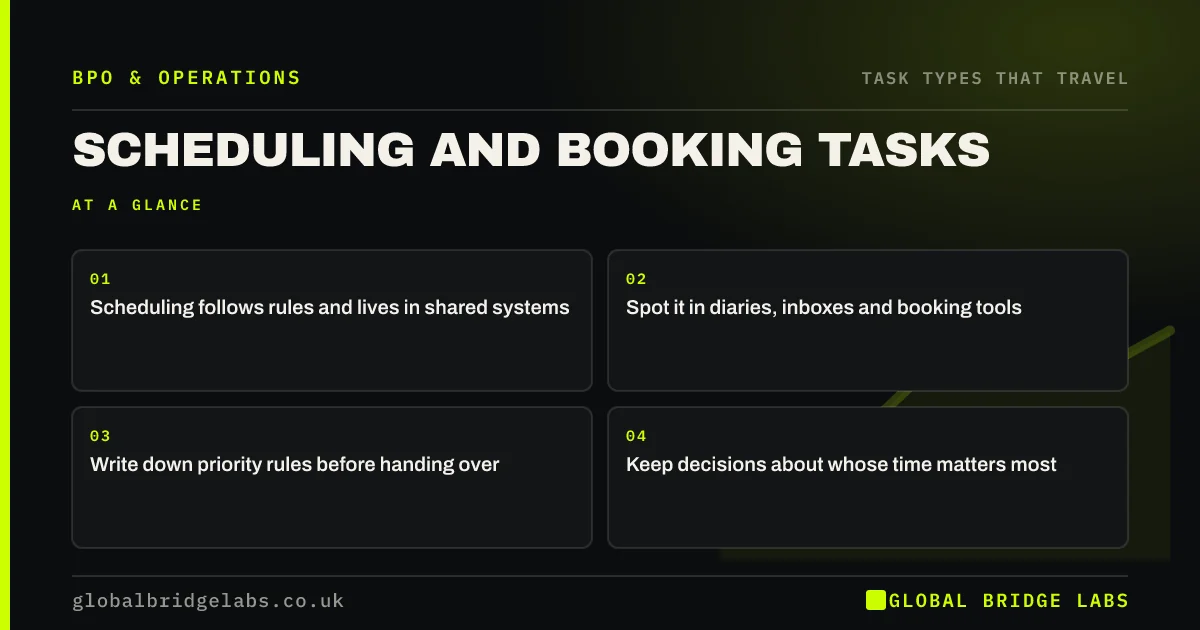
Scheduling tasks to outsource include booking appointments, arranging meetings, scheduling deliveries and jobs, and building rotas from agreed rules. They are easy to spot in diaries and inboxes and easy to move because they follow rules and live in shared systems. The rules about priorities stay with you; the arranging can go.
- Scheduling follows rules and lives in shared systems.
- Spot it in diaries, inboxes and booking tools.
- Write down priority rules before handing over.
- Keep decisions about whose time matters most.
Want your scheduling tasks listed and sized? Message us on WhatsApp.
Chat on WhatsApp →Why is scheduling so suitable?
Scheduling is a set of rules applied to a calendar: which slots, how long, how much notice, who must attend. Once those rules are written down, anyone with access can apply them. The work is frequent, interrupt-driven and screen-based, which makes it costly for skilled people and simple to move.
Which scheduling tasks are common candidates?
These recur in most service businesses.
- Customer appointments, changes and confirmations.
- Internal and external meetings across diaries.
- Field jobs, deliveries and collections.
- Interview slots for candidates.
- Staff rotas built from availability and rules.
What must you decide before handing scheduling over?
The rules. Which customers get priority, how much notice is needed, which slots are protected, when double-booking is allowed and who can approve exceptions. Without them, the provider asks every time or guesses. With them, scheduling becomes one of the quickest tasks to hand over.
What does this look like in practice?
A pattern we see: a service firm's managers each spend time every week arranging appointments and rebooking. With written priority rules and shared calendar access, an outside team takes all booking and rebooking, and managers only see exceptions.
Scheduling task checklist
- List every type of booking the business makes.
- Write the rules for each type.
- Give access to shared calendars or booking tools.
- Define which exceptions come back to you.
- Track rebooking and no-show rates.
Next step
Write down the rules for your most common booking type this week. If they fit on half a page, the task is ready to move.
Message us on WhatsApp for scheduling rule templates, or book a 30-minute consultation.
Chat on WhatsApp →Sources and further reading
- Consumer Contracts (Information, Cancellation and Additional Charges) Regulations 2013 · legislation.gov.uk
- Controllers and processors · Information Commissioner's Office
Frequently asked questions
What scheduling tasks can be outsourced?
Booking customer appointments, arranging meetings, scheduling field jobs and deliveries, setting interview slots and building rotas from agreed rules. The provider needs access to the relevant calendars or booking system and a written set of priority rules and exceptions.
How does an outside team know my priorities?
You write them down: which customers or meetings come first, how much notice is needed, which slots are protected and which exceptions must come back to you. Start with the common cases and add rules as new situations arise.
Will customers notice scheduling is outsourced?
Not if it is done well. Bookings are confirmed faster, reminders go out on time and rebooking is quicker. Use your own email address or booking system for messages and agree a tone guide, so customers experience one consistent service.
Written by

Global Bridge Labs (GBL) is a UK–Sri Lanka partner for social media, websites and BPO. Everything here comes from client delivery, not theory.