On this page
Key takeaways
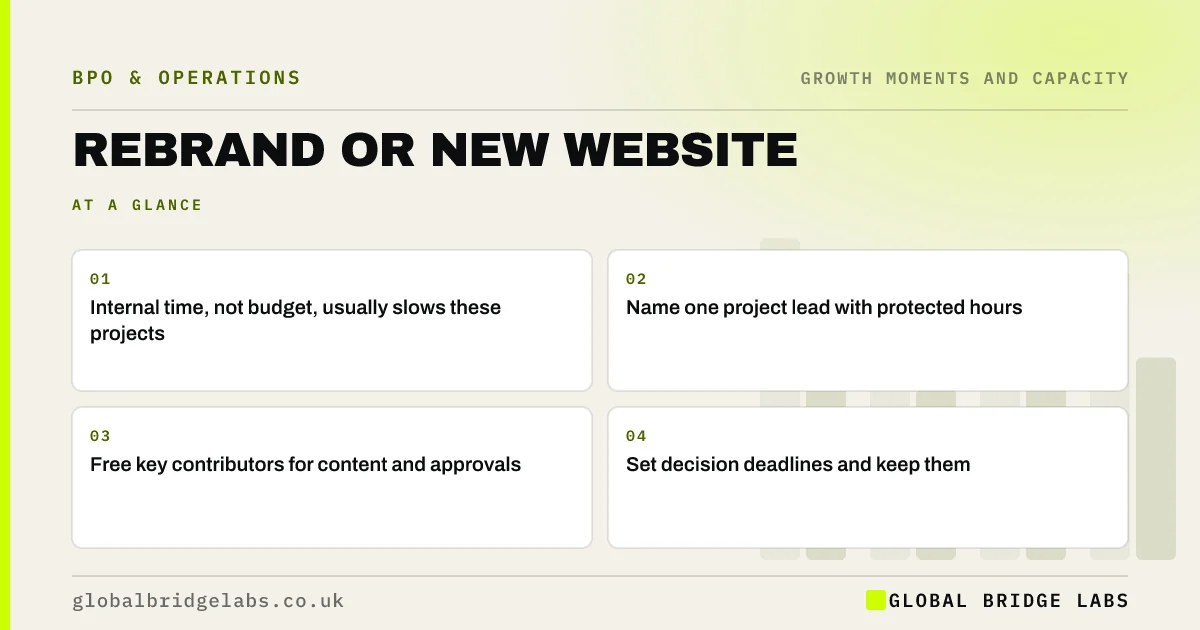
Rebrands and new websites fail more often from lack of internal time than lack of budget. Agencies need decisions, content and approvals, and the people who can give them are busy with routine work. Free the project lead and key contributors from routine admin for the project's duration so decisions happen on time.
- Internal time, not budget, usually slows these projects.
- Name one project lead with protected hours.
- Free key contributors for content and approvals.
- Set decision deadlines and keep them.
Want to plan team capacity for a rebrand? Message us on WhatsApp.
Chat on WhatsApp →Why do rebrands and website projects drag?
They drag because the agency waits on the client: for feedback, content, approvals and decisions. Those depend on people inside the business who already have full weeks. A six-week project becomes six months because each round of feedback waits for a quiet moment.
Who needs time?
- Project lead: coordinates, decides and keeps deadlines.
- Content contributors: service descriptions, case studies and FAQs.
- Approvers: usually the owner or directors.
- Customer-facing staff: to brief the change to customers.
What can move out during the project?
The project lead's routine admin and some of the contributors' routine tasks. Content production support, such as formatting and image preparation, can also be bought in. Check ownership of new brand assets and consider registering your new trade mark.
When is the timing wrong?
During your peak season, a major system change or a large client onboarding. Schedule the project when the team can give it attention, or free the time deliberately.
What does this look like in practice?
A pattern we see: a rebrand stalls for four months waiting for content. Moving the marketing manager's routine reporting and scheduling to a managed team frees two days a week, and the website launches within six weeks.
Project capacity checklist
- Name a project lead with protected hours.
- List contributors and their time needs.
- Move routine admin from the lead.
- Set decision deadlines.
- Avoid peak periods.
Next step
Before signing with an agency, write down who will give feedback and approvals, and how many hours a week they will need.
Message us on WhatsApp to plan project capacity, or book a 30-minute consultation.
Chat on WhatsApp →Sources and further reading
- How copyright protects your work · GOV.UK
- Register a trade mark · GOV.UK
Frequently asked questions
How long does a small business rebrand take?
The design work itself often takes six to twelve weeks. Projects usually take longer because of internal delays in feedback, content and approvals. Naming a project lead with protected time and setting decision deadlines keeps the timeline realistic. Agree feedback deadlines with the agency at the start and keep a record of decisions.
Why do website projects take so long?
Most delays come from the client side: waiting for content, feedback and approvals from busy people. Agencies can only move as fast as decisions are made. Freeing the people involved from routine work for the project's duration is often the fastest fix.
Who should lead a rebrand in a small business?
One person with authority to make day-to-day decisions and protected time to coordinate, usually a marketing lead or a director. The owner should approve key decisions but not manage every detail. Clear roles prevent rounds of conflicting feedback. Agree upfront who has the final say so feedback does not loop between directors.
Written by

Global Bridge Labs (GBL) is a UK–Sri Lanka partner for social media, websites and BPO. Everything here comes from client delivery, not theory.