On this page
- 01Key takeaways
- 02Why answer questions before a redesign?
- 03What are the ten questions?
- 04Which question gets skipped most?
- 05Why does content ownership matter so much?
- 06How do these answers help with suppliers?
- 07What if the answers say not to redesign?
- 08How long should the answers take?
- 09What does this look like in practice?
- 10Pre-redesign checklist
- 11Next step
- 12Sources and further reading
- 13Frequently asked questions
Key takeaways
Answer ten questions internally before approaching any supplier: why now, what success looks like, who the buyers are, what they ask, what works today, what must change, who writes content, who owns what, what the budget is, and when it must launch. Clear answers produce better briefs, closer quotes and fewer surprises.
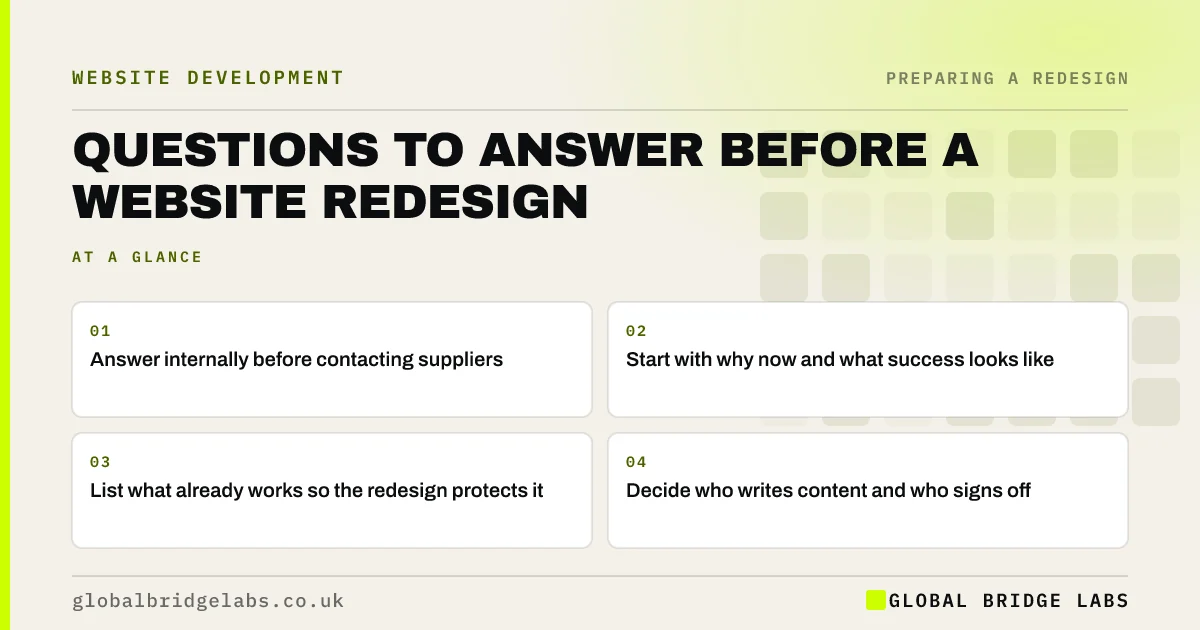
- Answer internally before contacting suppliers.
- Start with why now and what success looks like.
- List what already works so the redesign protects it.
- Decide who writes content and who signs off.
Want to work through these questions together? Ask us on WhatsApp.
Chat on WhatsApp →Why answer questions before a redesign?
Answering key questions before a website redesign turns a vague wish for a new site into a clear brief. It helps suppliers quote accurately, stops the project drifting, and ensures the business agrees on goals and responsibilities before money is spent.
What are the ten questions?
Write short answers to each. If you cannot answer one, that is the first job.
- 1. Why redesign now, and what happens if we wait?
- 2. What single result will show it worked?
- 3. Who are the buyers we most want?
- 4. What do they ask before enquiring?
- 5. Which pages and features work today?
- 6. What must change, and what evidence says so?
- 7. Who will write and approve content?
- 8. Who owns the domain, hosting and accounts?
- 9. What is the budget, including maintenance?
- 10. When must it launch, and what dates must it avoid?
Stuck on one of these? We will help you answer it on WhatsApp.
Chat on WhatsApp →Which question gets skipped most?
'What works today?' Owners focus on what is wrong and forget the pages that rank, the form that converts and the case study buyers mention. Listing them protects them, because a redesign that breaks what works is the most common way to lose enquiries.
Why does content ownership matter so much?
Content is the most common cause of delay. If nobody is named to write or approve it, projects stall waiting for text. Decide whether you will write it, the supplier will, or a copywriter will, and budget time accordingly.
How do these answers help with suppliers?
They let you compare quotes on the same basis and ask better questions. A supplier who responds to your goals and evidence, and challenges assumptions, is usually a better fit than one who only talks about design.
What if the answers say not to redesign?
Then the questions have saved you money. If 'why now' has no answer, the evidence for change is thin, or the budget does not cover content and maintenance, fix the biggest problems in place and revisit in six months.
How long should the answers take?
A focused two-hour session is usually enough for a small business, with the owner, the person who handles enquiries and whoever will approve the budget in the room. Bring 12 months of enquiry data, the current site on a screen and a list of what customers ask.
Write the answers in plain language as you go and circulate them the same day for correction. Questions that cannot be answered in the session become actions with names and dates, such as setting up tracking or confirming who holds the domain.
- Book two hours with the key people.
- Bring enquiry data and customer questions.
- Write answers as you go.
- Turn unanswered questions into named actions.
What does this look like in practice?
A pattern in UK logistics: three directors each want a different website. Working through the ten questions in a single meeting reveals they agree on the buyer and the goal, and disagree only on the look. The brief that follows gets consistent quotes and a project that runs to plan.
Pre-redesign checklist
Complete before contacting suppliers.
- Write answers to all ten questions.
- Agree them with everyone who will sign off.
- List what works today.
- Name the content owner.
- Confirm account ownership.
- Turn the answers into a brief.
Next step
If you are preparing for a redesign, we will work through the ten questions with you in a 30-minute call.
Message us on WhatsApp to prepare for your redesign, or book a 30-minute consultation.
Chat on WhatsApp →Sources and further reading
- User research · GOV.UK Service Manual
- Google Search Console · Google
- About key events · Google Analytics Help
Frequently asked questions
What should I think about before redesigning my website?
Why now, what success looks like, who your buyers are and what they ask, what works today, what must change, who writes content, who owns the accounts, the full budget including maintenance, and when it must launch. Write short answers and agree them internally.
How do I prepare for a website redesign?
Record a baseline of enquiries and traffic, audit existing content, answer the key planning questions internally, confirm ownership of the domain and accounts, name a content owner, and turn it all into a brief before approaching suppliers. It saves time and money once work starts.
What information does a web designer need from me?
Your goals, target buyers, services, what works on the current site, content and brand assets, account access, budget and launch timing. A clear brief with these lets them quote accurately and design around your real needs. Share it with every supplier you ask to quote.
Who should be involved in a website redesign?
Whoever signs off the budget, whoever will write or approve content, and whoever handles enquiries, because they know what buyers ask. Keep the group small and agree who has the final say before the project starts. Agree who has the final say at the start.
Written by

Global Bridge Labs (GBL) is a UK–Sri Lanka partner for social media, websites and BPO. Everything here comes from client delivery, not theory.