On this page
Key takeaways
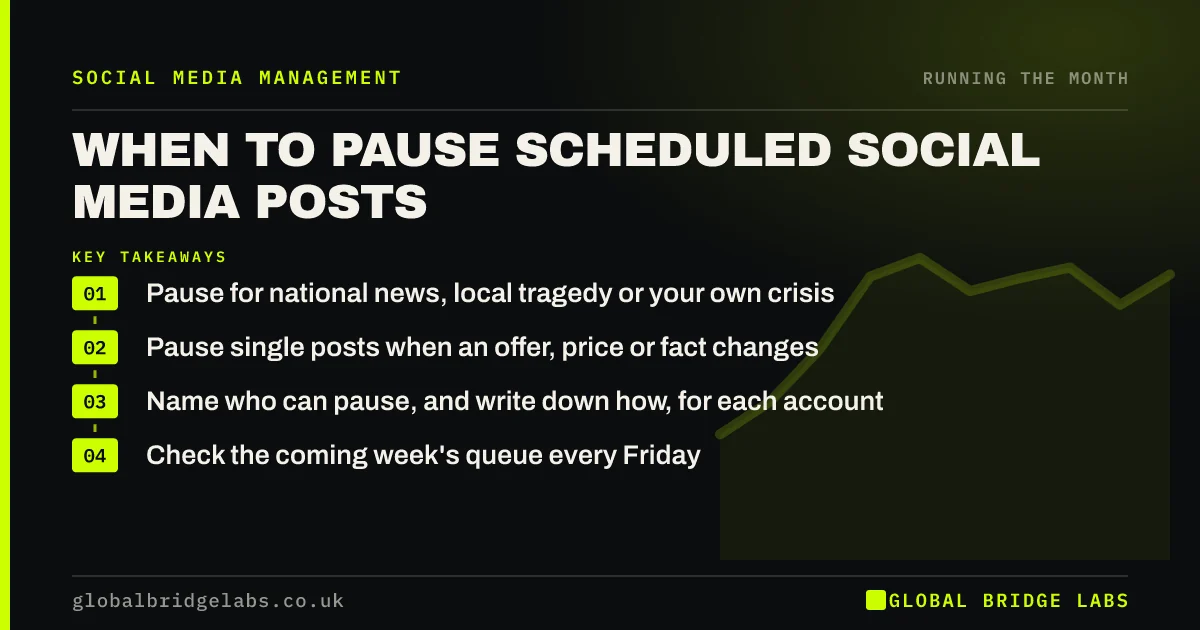
Pause scheduled social media posts when a cheerful or promotional post would look careless: major national news or mourning, a local tragedy, a crisis in your own business, or a change that makes a post wrong, such as an ended offer or a new price. Know in advance who decides and how to pause every account in two minutes. Resume once normal posting feels appropriate.
- Pause for national news, local tragedy or your own crisis.
- Pause single posts when an offer, price or fact changes.
- Name who can pause, and write down how, for each account.
- Check the coming week's queue every Friday.
Want a pause plan written for your accounts? Message us on WhatsApp.
Chat on WhatsApp →When should you pause everything?
Pause everything when something serious is dominating attention and your scheduled posts would look careless beside it: a major national event or period of mourning, a disaster or tragedy in your area, or a crisis involving your own business, such as a serious complaint going public. In those moments silence is safer than a cheerful promotion.
When should you pause a single post?
Pause or edit a single post when it is no longer right: an offer has ended or changed, a price has moved, a product is out of stock, a person featured has asked not to be shown, or the post's tone clashes with something that happened this week. A Friday check of next week's queue catches most of these.
How do you pause quickly?
Write down, for each account and tool, exactly how to pause or unschedule posts, and make sure at least two people know. In Meta Business Suite and LinkedIn, scheduled posts can be rescheduled or deleted; most scheduling tools have a pause-queue option. Test it once so it is not learned under pressure.
When do you resume?
Resume when normal posting feels appropriate again, usually after a few days for national events and once your own issue is resolved or responded to. Start with useful or neutral posts before offers. Move paused posts back into later slots rather than publishing them all at once.
When is pausing an overreaction?
It is an overreaction for ordinary news that does not dominate attention or affect your customers. Pausing for every headline means the account is often silent. The test is whether your post would look careless or hurtful next to what people are thinking about today.
What does this look like in practice?
A pattern we see: a scheduled 'big sale' post goes out on a day of serious local news, and the comments turn against the business. A named person with the authority to pause, and a written two-minute method, usually prevents it.
Pause plan checklist
- Name who can pause posts.
- Write how to pause each account and tool.
- Test pausing once.
- Check next week's queue every Friday.
- Resume with neutral posts before offers.
Next step
Write a three-line pause note for each account: where scheduled posts live, how to pause them and who can do it. Share it with two people.
Message us on WhatsApp and we will write your pause plan, or book a 30-minute consultation.
Chat on WhatsApp →Sources and further reading
- Meta Business Help Centre · Meta
- LinkedIn Pages best practices · LinkedIn
Frequently asked questions
When should a business pause its social media?
When a scheduled post would look careless beside what people are thinking about: major national events or mourning, a local tragedy, or a crisis in your own business. Also pause individual posts when an offer, price or fact has changed.
How do I pause scheduled posts?
In Meta Business Suite and LinkedIn you can reschedule or delete scheduled posts, and most scheduling tools have a pause option for the whole queue. Write down the steps for each account and make sure two people know them.
How long should I pause social media after bad news?
Usually a few days for major national events, or until your own issue has been responded to. Resume with useful or neutral posts before promotional ones, and move paused posts into later slots.
Written by

Global Bridge Labs (GBL) is a UK–Sri Lanka partner for social media, websites and BPO. Everything here comes from client delivery, not theory.