On this page
- 01Key takeaways
- 02Why do published benchmarks mislead?
- 03What benchmarks should you use?
- 04How do you set an organic target?
- 05How do you set a paid target?
- 06Are there any useful market ranges?
- 07What does this look like in practice?
- 08Benchmark checklist
- 09Next step
- 10Sources and further reading
- 11Frequently asked questions
Key takeaways
Published social media benchmarks rarely fit a UK small business, because they mix sectors, sizes and countries. The most useful benchmark is your own past performance, followed by targets worked back from customer value. Use market figures only as rough guides: a paid test of £300 to £500 a month, and organic results judged over three months or more.
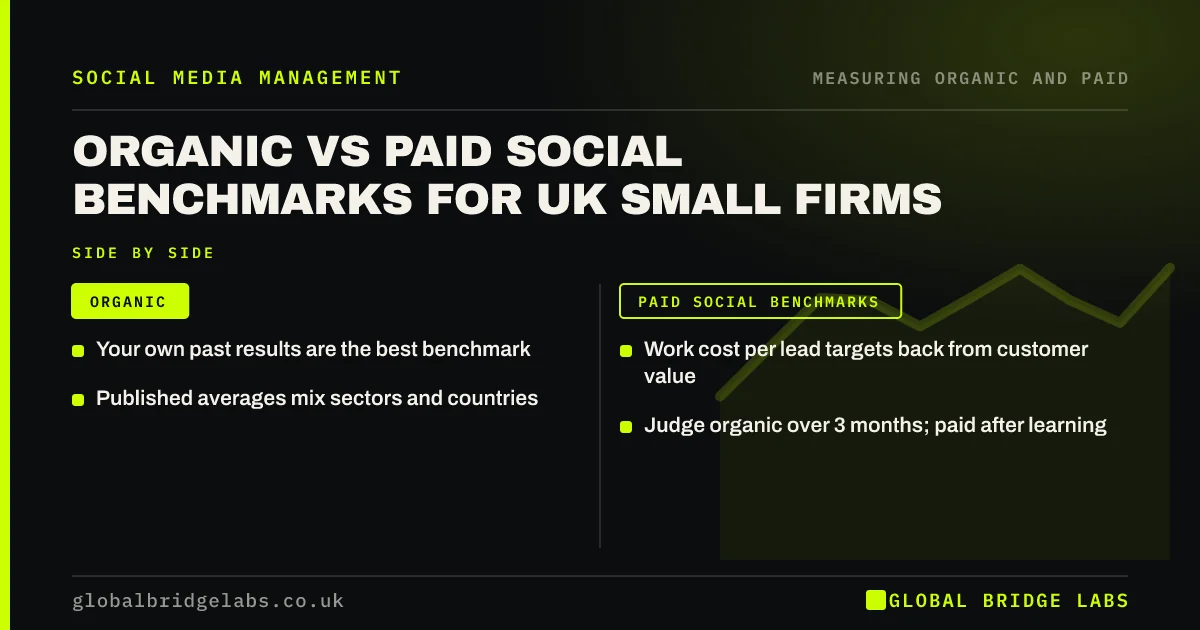
- Your own past results are the best benchmark.
- Work cost per lead targets back from customer value.
- Published averages mix sectors and countries.
- Judge organic over 3 months; paid after learning.
Want realistic targets for your social media? Message us on WhatsApp.
Chat on WhatsApp →Why do published benchmarks mislead?
Published benchmarks average very different businesses, often large brands and US accounts, across sectors with different prices and buying cycles. A local plumber and a national retailer will never have comparable engagement or cost per lead. Comparing against them leads to poor decisions.
What benchmarks should you use?
Use benchmarks that reflect your business.
- Your own last three to six months.
- Cost per lead you can afford, from customer value.
- Results from earlier campaigns on the same platform.
- Sector peers of similar size, if you can find honest data.
How do you set an organic target?
Set organic targets as trends: rising engaged reach, more saves and messages, and more enquiries mentioning social over a quarter. Start from your current baseline and aim for steady improvement rather than a published number.
How do you set a paid target?
Work back from customer value: average profit per customer multiplied by the share of leads that become customers gives the most you can pay per lead. Track paid results as GA4 key events or platform conversions and compare against that figure.
Are there any useful market ranges?
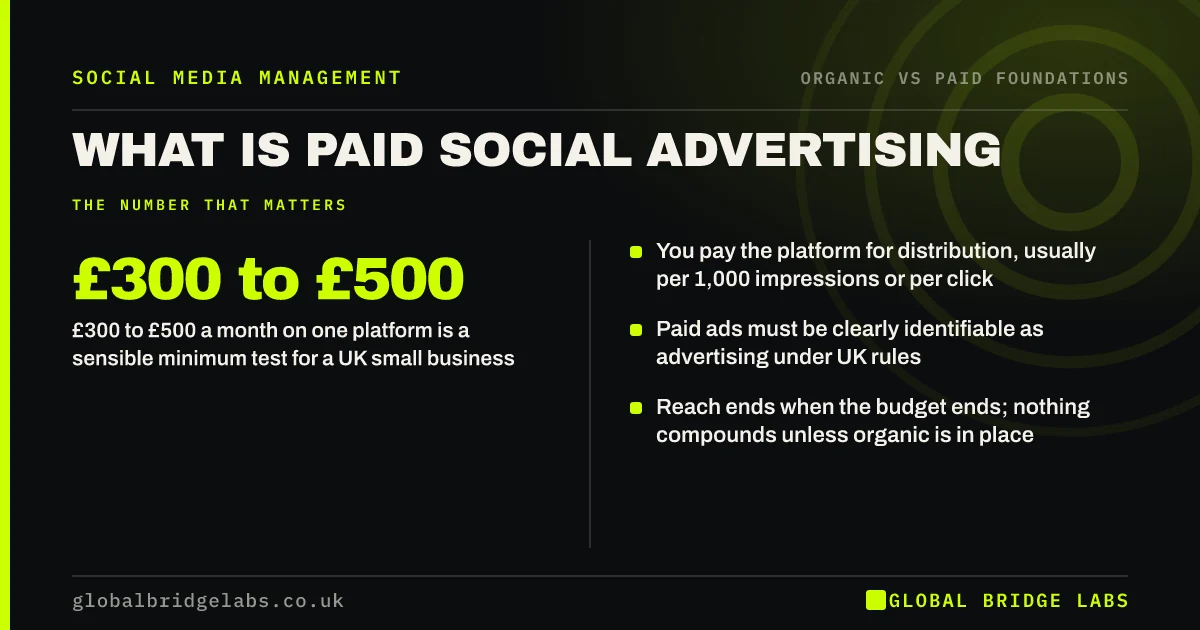
A few indicative ranges help with planning: £300 to £500 a month is a sensible minimum paid test on one platform, and agency management for paid typically runs £300 to £1,000 a month. Most UK businesses are small, so budgets for large firms are a poor guide.
What does this look like in practice?
A pattern we see: a boutique hotel compared its Instagram engagement with a global travel brand benchmark and thought it was failing. Comparing against its own previous year showed engagement and direct booking enquiries had both risen steadily, which was the result that mattered.
Benchmark checklist
- Record your current baseline for each KPI.
- Work out the cost per lead you can afford.
- Compare against your own history first.
- Treat published averages as rough guides.
- Set trend targets for organic.
- Set cost targets for paid.
Next step
Write down your last three months of organic and paid results as a baseline, then set targets for next quarter as improvements on those figures.
Message us on WhatsApp for a target-setting sheet, or book a 30-minute consultation.
Chat on WhatsApp →Sources and further reading
- Meta Business Help Centre · Meta
- About key events · Google Analytics Help
- Business population estimates for the UK and regions 2025 · Department for Business and Trade
Frequently asked questions
What is a good engagement rate for a small business?
There is no reliable single figure, because engagement varies by platform, sector, audience size and how it is calculated. Compare your posts against your own average and look for improvement over time. Engagement from the right local or sector audience matters more than the rate itself.
What is a good cost per lead from social media ads in the UK?
It depends on what a customer is worth and how many leads convert. Work it out from your own numbers: if a customer brings £500 profit and one in five leads buys, you can afford up to about £100 per lead. Published averages are a poor guide.
Should I compare my social media with competitors?
Looking at competitors can give ideas, and Meta's Ad Library shows their active ads. But you cannot see their costs or results, so comparing performance is guesswork. Focus on improving your own results against your baseline and your customer value.
Written by

Global Bridge Labs (GBL) is a UK–Sri Lanka partner for social media, websites and BPO. Everything here comes from client delivery, not theory.