On this page
- 01Key takeaways
- 02Why use one calendar for several platforms?
- 03How do you plan the main platform and the rest?
- 04What changes when you adapt a post?
- 05How many platforms can a small business run?
- 06When should platforms have separate plans?
- 07What does this look like in practice?
- 08Multi-platform checklist
- 09Next step
- 10Sources and further reading
- 11Frequently asked questions
Key takeaways
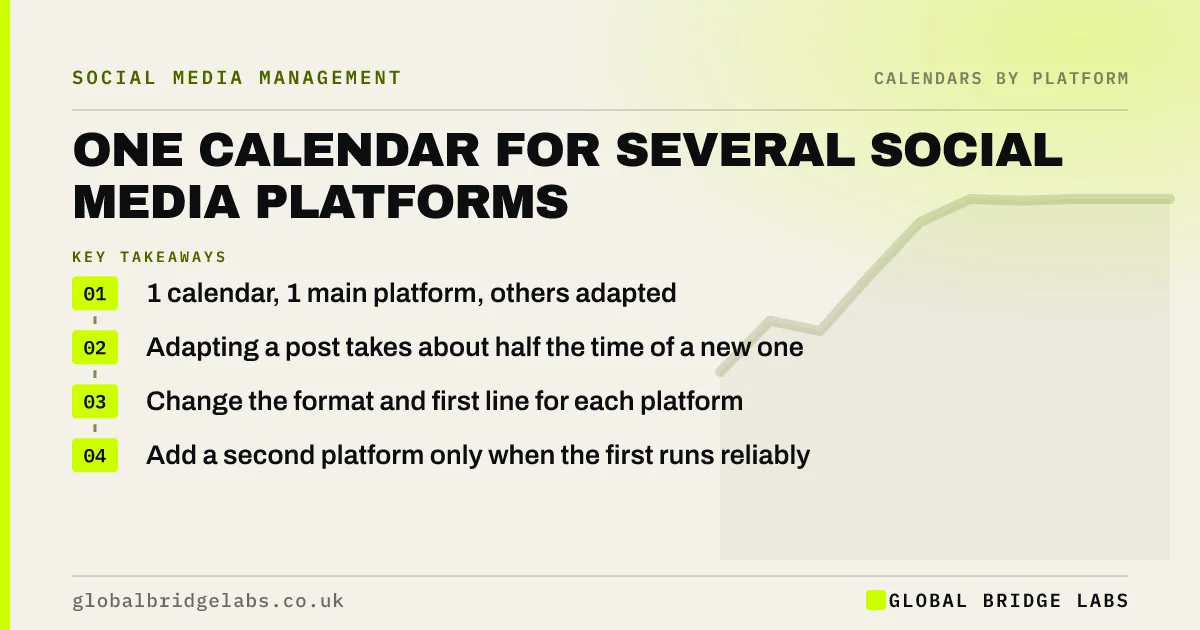
A multi platform content calendar works best as one calendar with a platform column, not a separate plan for each channel. Plan your main platform in full, then decide which posts are adapted for a second platform and which are not worth moving. Adapting a post takes roughly half the time of making a new one; copying it unchanged usually underperforms.
- 1 calendar, 1 main platform, others adapted.
- Adapting a post takes about half the time of a new one.
- Change the format and first line for each platform.
- Add a second platform only when the first runs reliably.
Want one calendar for all your channels? Message us on WhatsApp.
Chat on WhatsApp →Why use one calendar for several platforms?
One calendar shows the whole month in one place, so ideas are planned once, offers land on every channel at the same time and nothing is duplicated by accident. Separate calendars per platform usually mean the same idea is planned twice by different people, or one channel is forgotten.
How do you plan the main platform and the rest?
Build the full set of slots for the platform your buyers use most. Then go down the list and mark each post 'adapt for' a second platform, or 'main only'. Proof and help posts usually travel well; local or format-specific posts often do not. The second platform might get half as many posts, which is fine.
What changes when you adapt a post?
Change the format, the first line and the call to action to suit the platform. A carousel on Instagram might become a text post with one image on LinkedIn, and a short video might need a different hook on TikTok. Native features matter: posting the same file with the same caption everywhere tends to look out of place.
How many platforms can a small business run?
Most small businesses do well on one main platform and one secondary. A third is possible with a dedicated person or an agency. Add a platform only when the first one runs at over 90% of plan and replies are covered, because every new platform also adds messages to answer.
When should platforms have separate plans?
Use separate plans when the audiences and owners are completely different, such as a LinkedIn page run by the founder for B2B buyers and an Instagram account run by the shop team for consumers. Even then, keep them in the same file so dates and offers stay in sync.
What does this look like in practice?
A pattern we see: four platforms with four separate plans, each half-finished, and the same post copied everywhere in the same format. Moving to one calendar, one main platform and one adapted secondary usually produces fewer posts but better results on both.
Multi-platform checklist
- Keep one calendar with a platform column.
- Plan the main platform in full.
- Mark each post 'adapt for' or 'main only'.
- Change format, first line and CTA when adapting.
- Add platforms only when the first runs reliably.
Next step
Add a platform column to your calendar and mark next month's posts 'main only' or 'adapt for'. Count how many reach the second platform.
Message us on WhatsApp and we will set up one calendar for your channels, or book a 30-minute consultation.
Chat on WhatsApp →Sources and further reading
- Meta Business Help Centre · Meta
- LinkedIn Pages best practices · LinkedIn
Frequently asked questions
How do I plan content for multiple social media platforms?
Use one calendar with a platform column. Plan your main platform in full, then adapt the posts that suit a second platform by changing the format, first line and call to action. Leave out posts that do not fit.
Should I post the same content on every platform?
Not unchanged. The same idea can work on several platforms, but the format, opening line and call to action should suit each one. Identical posts everywhere often perform worse and can look automated.
How many social media platforms should a small business use?
One main platform and, if you have time, one secondary is right for most small businesses. Add more only when the first is running reliably and someone can reply to messages on every channel.
Written by

Global Bridge Labs (GBL) is a UK–Sri Lanka partner for social media, websites and BPO. Everything here comes from client delivery, not theory.