On this page
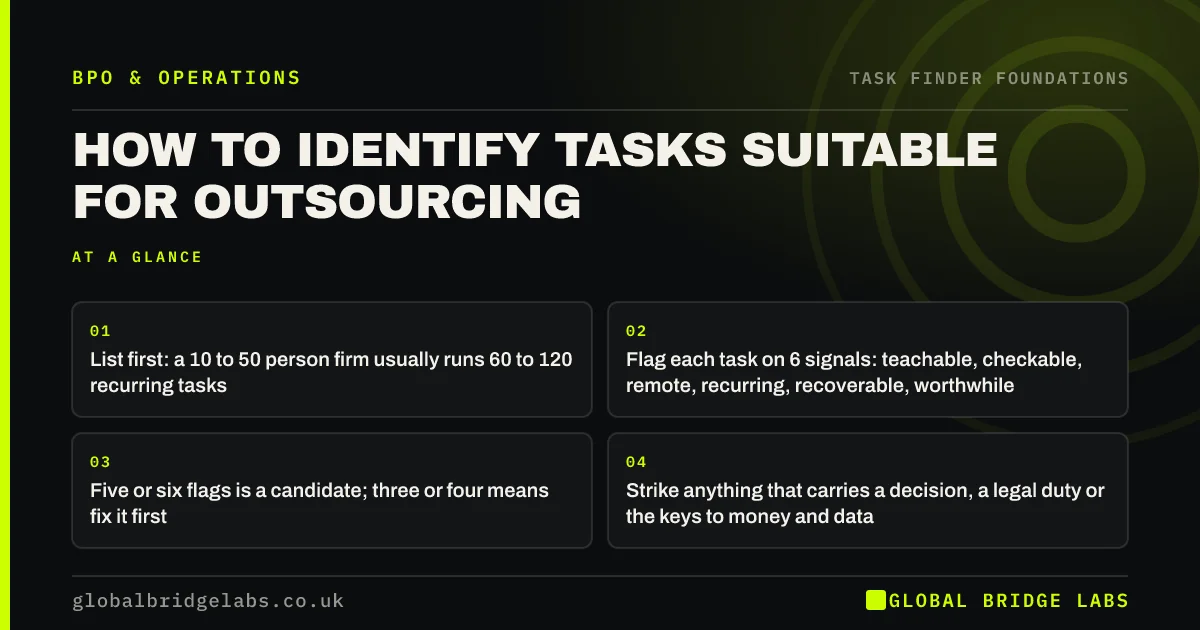
Key takeaways
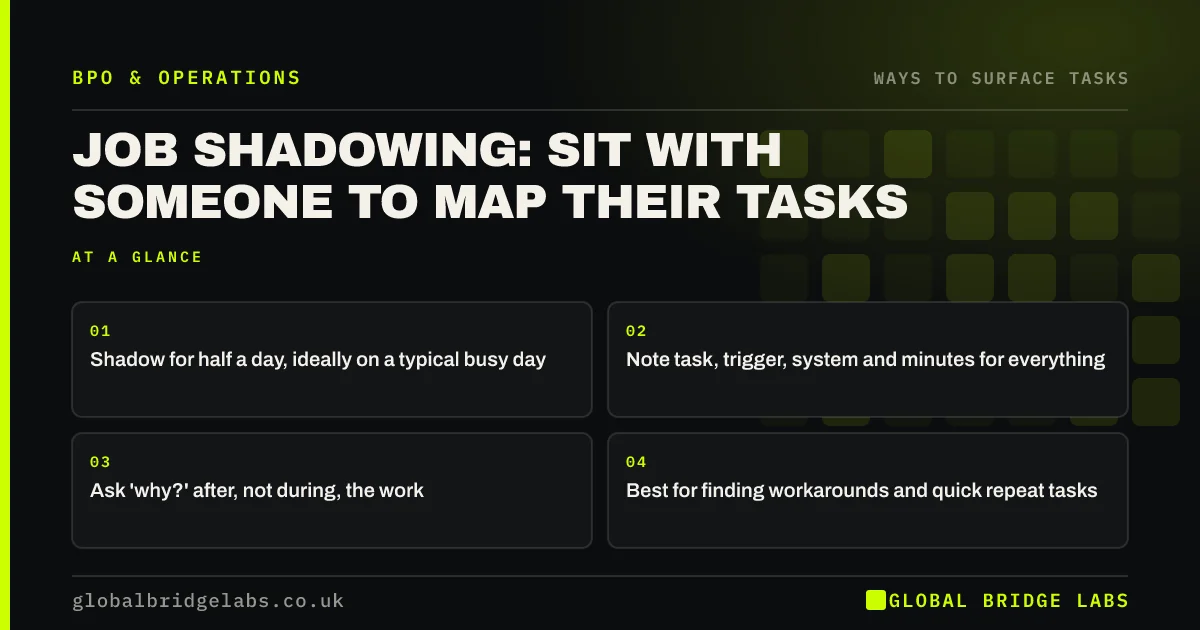
Job shadowing to map tasks means sitting with someone for half a day while they work, noting every task, what triggered it, which systems they used and how long it took. It finds the quick, automatic tasks that records and interviews miss: the two-minute lookups, the workarounds and the corrections. Use it for the roles with the most suspected admin.
- Shadow for half a day, ideally on a typical busy day.
- Note task, trigger, system and minutes for everything.
- Ask 'why?' after, not during, the work.
- Best for finding workarounds and quick repeat tasks.
Want a shadowing sheet for your managers? Message us on WhatsApp.
Chat on WhatsApp →What does shadowing find that other methods miss?
Shadowing catches what people do without thinking. Ask a coordinator about their day and they mention orders and calls; watch them and you see them copy an address from email to the shop system, check a spreadsheet, fix a postcode, and do it again forty times. Those small, automatic tasks are often the most outsourceable.
How do you shadow someone well?
Treat it as learning about the work, not judging the person.
- 1. Explain the purpose: to find work that could move off their plate.
- 2. Pick a typical day, not a quiet one.
- 3. Note each task: trigger, steps, systems, minutes.
- 4. Save questions for breaks or the end.
- 5. Review the notes together and add tasks to the long list.
What are the limits of shadowing?
Half a day shows daily tasks, not weekly or monthly ones, and people work differently when watched. It also takes a manager's time. Use shadowing for two or three roles where admin is heaviest, and rely on records, such as diaries and system logs, for the less frequent tasks.
What does this look like in practice?
A pattern we see: half a day shadowing an accounts assistant records far more distinct tasks than their own list. Several never appeared on it, including re-keying remittance details and checking supplier bank changes by phone. The re-keying is a strong candidate; the bank check stays inside as a control.
Job shadowing checklist
- Explain the purpose before you start.
- Pick a typical busy half day.
- Note task, trigger, system and minutes.
- Ask questions after, not during.
- Review the notes together.
Next step
Choose the role where you suspect most hidden admin and book a half-day shadow this week. Agree the purpose with the person first.
Message us on WhatsApp for the shadowing sheet, or book a 30-minute consultation.
Chat on WhatsApp →Sources and further reading
- User research · GOV.UK Service Manual
- Employment information · Information Commissioner's Office
Frequently asked questions
How does job shadowing help find tasks to outsource?
Watching someone work for half a day shows the quick, automatic tasks they would never list: lookups, corrections, copying data between systems and workarounds. Those small repeat tasks often add up to hours a week and are frequently good outsourcing candidates.
How long should job shadowing last?
Half a day on a typical busy day is usually enough to see the daily pattern. Weekly and monthly tasks will not appear, so combine shadowing with diaries, inboxes and system data to capture those.
Will staff feel watched?
They may, so explain clearly that the aim is to find work that could move off their plate, not to assess their performance. Ask permission, share your notes with them, and let them correct anything. Most people welcome a chance to show what slows them down.
Written by

Global Bridge Labs (GBL) is a UK–Sri Lanka partner for social media, websites and BPO. Everything here comes from client delivery, not theory.