On this page
- 01Key takeaways
- 02Which is better for business, Instagram or Facebook?
- 03What does each platform reach in the UK?
- 04Which costs more time to run properly?
- 05Where do Facebook groups beat everything else?
- 06When is Instagram clearly the right first choice?
- 07Do you have to choose at all?
- 08What does this look like in practice?
- 09What does the paid side change?
- 10Next step
- 11Sources and further reading
- 12Frequently asked questions
Key takeaways
Facebook wins for local service businesses because of community groups and recommendation threads. Instagram wins where the work is visual and the buyer is choosing on taste. If you serve a postcode radius, start with Facebook. If people buy with their eyes, start with Instagram.
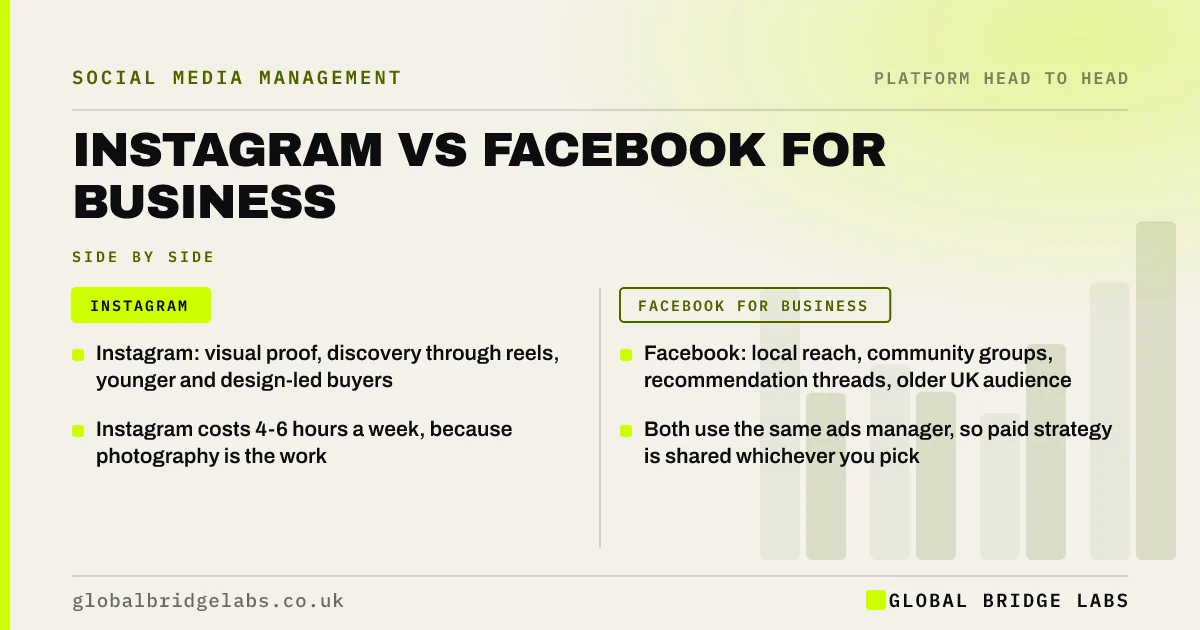
- Instagram: visual proof, discovery through reels, younger and design-led buyers.
- Facebook: local reach, community groups, recommendation threads, older UK audience.
- Instagram costs 4-6 hours a week, because photography is the work. Facebook costs 2-4.
- Both use the same ads manager, so paid strategy is shared whichever you pick.
- Hospitality and retail: Instagram first. Trades and local services: Facebook first.
Tell us your sector and service area on WhatsApp and we will tell you which to start with.
Chat on WhatsApp →Which is better for business, Instagram or Facebook?
For a UK local service business, Facebook, because local community groups and recommendation threads produce genuine enquiries that no Instagram feature matches. For a business selling on appearance, Instagram, because the grid is the credibility check people perform before they book.
The honest framing is that they answer different questions. Facebook answers who near me does this and is anyone recommending them. Instagram answers does their work look like what I want. Pick the platform that answers the question your buyer is actually asking.
What does each platform reach in the UK?
Ofcom's Online Nation research shows both platforms retain wide UK reach, but with different centres of gravity and very different behaviour once people are there.
- Facebook: broad adult reach with an older centre of gravity than a decade ago.
- Instagram: strong in the 18-44 bands, with visual and lifestyle categories over-indexed.
- Facebook groups: the highest-intent surface either platform offers a local business.
- Instagram reels: the strongest discovery surface for reaching people who do not follow you.
- Both: direct messages are where enquiries actually arrive, not comments.
Which costs more time to run properly?
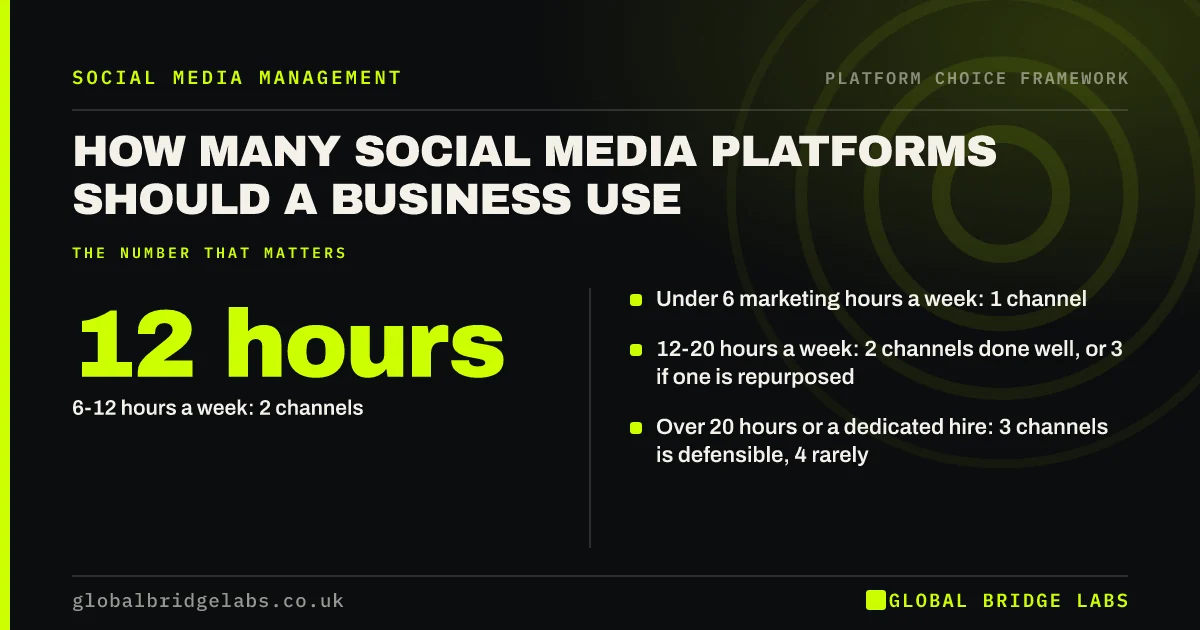
Instagram, by a meaningful margin, because the production standard is higher and the format is unforgiving. Budget 4-6 hours a week for Instagram against 2-4 for Facebook, and note that the Facebook hours are mostly conversation rather than production.
That difference matters more than any reach statistic for a business with one person on marketing. A channel you can sustain at a mediocre standard beats a channel you sustain brilliantly for six weeks and then abandon.
We will cost both options in weekly hours for your team. Message us on WhatsApp.
Chat on WhatsApp →Where do Facebook groups beat everything else?
In the moment when a neighbour asks who can recommend a plumber, a photographer or a cleaner. That is the highest-intent moment either platform produces, and it happens in local groups rather than on your page.
Being useful in those threads, and being tagged by satisfied customers, produces more enquiries per hour than page posting for most UK trades and local services. It also cannot be bought, which is why it remains valuable. The work is turning up consistently and answering questions without pitching.
When is Instagram clearly the right first choice?
When your buyer is choosing between options on appearance and your work photographs well. Hospitality, retail, salons, fitness, interiors, food, events and property all fall here, because the purchase decision genuinely turns on what it looks like.
Instagram is also the better first choice when your audience skews under 40 and when you can realistically produce short vertical video, because reels remain the most effective way to reach people who have never heard of you.
Do you have to choose at all?
Eventually no, since the two share an ads manager and a large share of content can be adapted rather than remade. But you should choose which one gets the effort, because treating both as primary is how a small team ends up doing both badly.
The practical structure is one primary and one secondary. Run the primary properly with replies inside four working hours, and keep the secondary current with adapted content and a clear bio. Do not cross-post identical assets: the crops differ, the captions should differ, and audiences notice.
What does this look like in practice?
A UK domestic electrician spent a year on Instagram producing well-shot photographs of consumer units and finished installations. Engagement was reasonable, enquiries were close to zero, and the audience was mostly other electricians.
Moving the effort to Facebook, specifically to three local community groups and a page with a clear service area, changed the result within about six weeks. The content was worse photographically and better commercially, because it reached homeowners in the right postcodes rather than tradespeople nationally.
What does the paid side change?
Very little about the choice, because both run through the same ads manager and the same targeting. You can advertise on Facebook without maintaining a Facebook page presence, and vice versa, which means paid strategy does not have to follow organic strategy.
The practical consequence is useful for a small team. Run organic effort on the one platform you can sustain, then let paid placements run across both and let the system find the cheaper impressions. What you must not do is treat a paid presence as a reason to keep an organic profile you cannot maintain.
Next step
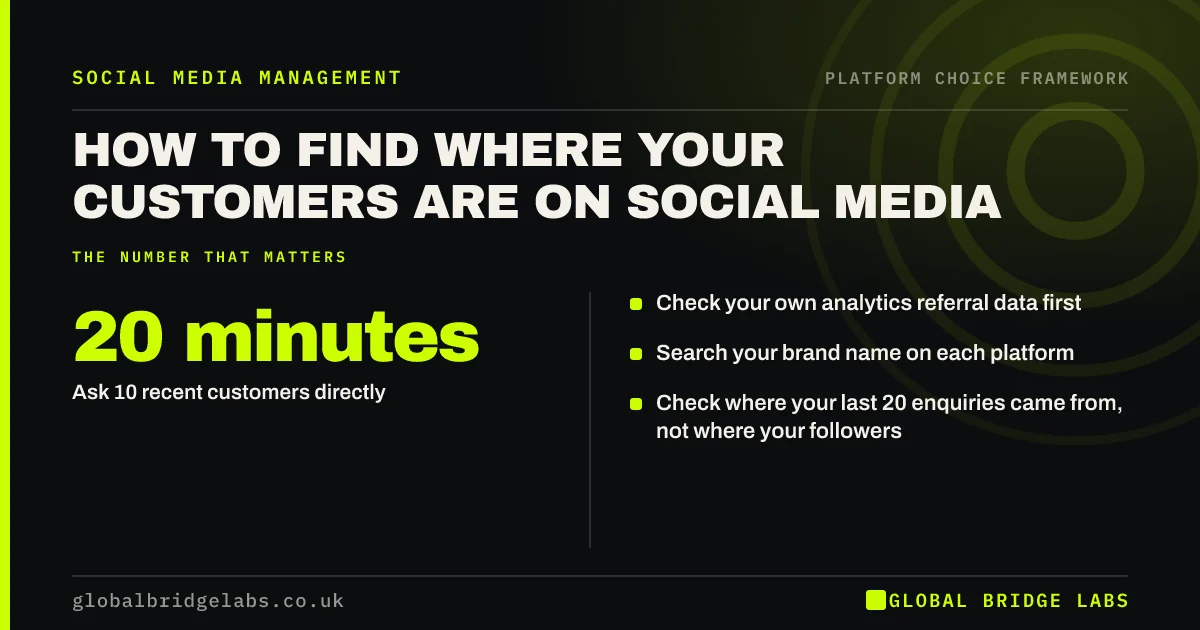
Ask your last ten customers which of the two they use to check a local supplier. If eight say one platform, the decision is made. If the answers split, choose the one you can produce for every week, because consistency will beat marginal reach advantages every time.
Message us on WhatsApp and we will pick between Instagram and Facebook with you.
Chat on WhatsApp →Sources and further reading
Frequently asked questions
Should a small business use Instagram or Facebook first?
Facebook first for local service businesses, because community groups and recommendation threads produce real enquiries from people nearby. Instagram first where the work is visual and buyers choose on appearance, such as hospitality, retail, salons and interiors, and where reels can reach people who do not follow you.
Is Facebook still worth it for UK businesses?
Yes for local consumer services, where groups and recommendations drive genuine enquiries. It is weaker for reaching under-25s and for most formal B2B. Judge it on enquiries from your service area rather than on page follower growth.
Can I post the same content to Instagram and Facebook?
You can, but it performs worse and it looks it. Crops, caption length and audience expectations all differ, and identical cross-posts are visibly automated to both the platform and the reader. Adapt rather than duplicate: same asset, different crop, different first line, same fifteen minutes.
Which platform is cheaper to advertise on?
They share one ads manager, so budgets and targeting work the same way and costs depend on your audience and competition rather than the platform. Choose the placement by where your buyers are, then let the system optimise across both.
Written by
Global Bridge Labs (GBL) is a UK–Sri Lanka partner for social media, websites and BPO. Everything here comes from client delivery, not theory.