On this page
- 01Key takeaways
- 02What do guests check before booking?
- 03Should you show your food hygiene rating?
- 04What content builds the most trust?
- 05What costs a hospitality site credibility?
- 06What does this look like in practice?
- 07Hospitality website checklist
- 08Next step
- 09Sources and further reading
- 10Frequently asked questions
Key takeaways
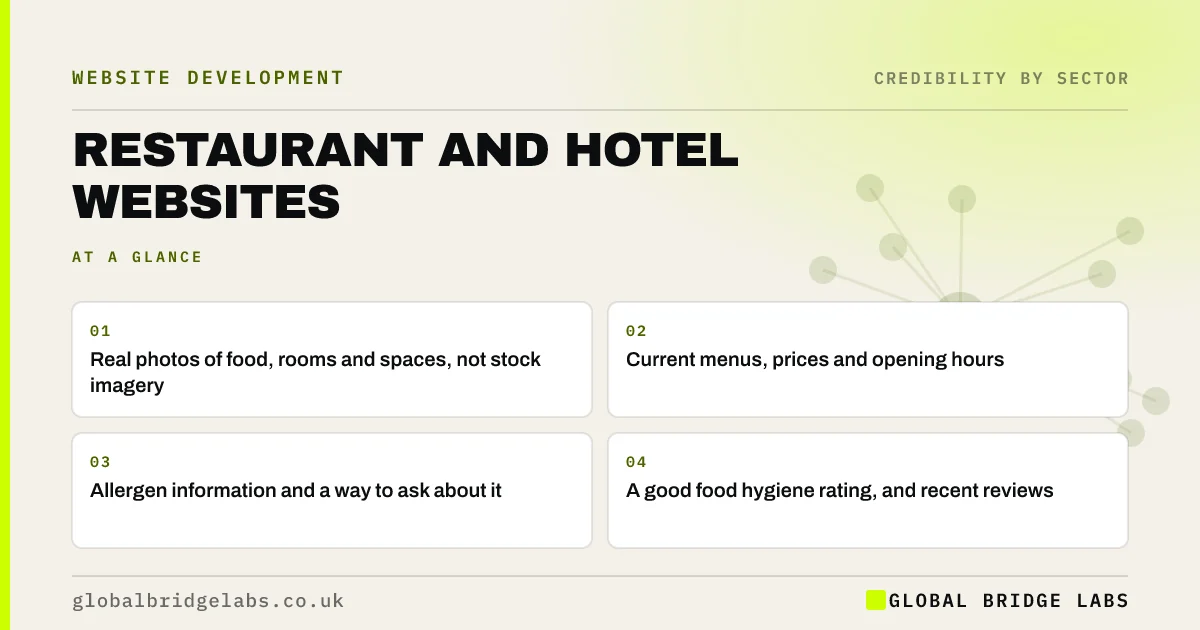
Guests judge a restaurant or hotel website on whether it looks like the real experience and whether the information is current. Real photos of food, rooms and spaces, current menus and prices, accurate opening hours, allergen information, a hygiene rating where you have a good one and recent reviews do most of the work. Out-of-date details cost bookings.
- Real photos of food, rooms and spaces, not stock imagery.
- Current menus, prices and opening hours.
- Allergen information and a way to ask about it.
- A good food hygiene rating, and recent reviews.
Want your hospitality site checked for credibility? Message us on WhatsApp.
Chat on WhatsApp →What do guests check before booking?
Guests check what it will look like, what it will cost, whether it is open and whether others enjoyed it. They compare your website photos with reviews and maps, so inconsistencies are noticed. A menu from last season or wrong opening hours suggests the place may not be well run.
Should you show your food hygiene rating?
Food hygiene ratings are public on the Food Standards Agency's website, so guests can check them anyway. Display at premises is mandatory in Wales and Northern Ireland and voluntary in England. Showing a good rating on your website, linked to the official listing, turns a public record into a visible credibility signal.
What content builds the most trust?
Guests want an accurate picture.
- Recent, real photos of dishes, rooms and spaces.
- Menus as web pages, not only PDFs, with prices.
- Allergen information and a contact for dietary questions.
- Accurate hours, including seasonal changes.
- Recent reviews linked to Google or TripAdvisor.
- Website photography cost in the UK: what a shoot buys
- Showing Google reviews on your website, the right way
Want your menus, photos and booking path refreshed? Message us on WhatsApp and we will discuss your requirements.
Chat on WhatsApp →What costs a hospitality site credibility?
Stock food photos, last year's menu, prices that differ from the bill, opening hours that differ from Google, broken booking widgets and photos that flatter the room. Guests who feel misled leave reviews saying so, which then undermines the website for everyone else.
What does this look like in practice?
A pattern we see: a restaurant's website menu is a PDF from two seasons ago, with prices now 15% lower than the bill. Guests mention it in reviews. Moving the menu to an editable web page that staff update with each change removes the complaint.
Hospitality website checklist
- Real, recent photos.
- Current menus and prices as web pages.
- Allergen information and contact.
- Hours matching Google Business Profile.
- Hygiene rating linked to the FSA listing.
- A working booking route tested weekly.
Next step
Compare your website menu and hours with what is on the table and on Google today. Fix any difference first.
Message us on WhatsApp for a hospitality website review, or book a 30-minute consultation.
Chat on WhatsApp →Sources and further reading
- Food hygiene ratings · Food Standards Agency
- Allergen guidance for food businesses · Food Standards Agency
- How online reviews influence sales · Spiegel Research Center, Northwestern University
Frequently asked questions
Should restaurants show prices on their website?
Yes. Guests use menus with prices to decide whether to book, and missing or outdated prices cause disappointment and complaints. Keep menus as web pages that staff can update easily, rather than old PDFs.
Should I put my food hygiene rating on my website?
If it is good, yes. Ratings are public on the Food Standards Agency website anyway, so linking to your official listing turns a public record into a visible credibility signal. Display at premises is mandatory in Wales and Northern Ireland.
Do hotel and restaurant websites need real photos?
Yes. Guests compare website photos with reviews and their own visit. Real, recent photos set accurate expectations and build trust. Stock images or heavily flattering shots lead to disappointment and critical reviews.
Written by

Global Bridge Labs (GBL) is a UK–Sri Lanka partner for social media, websites and BPO. Everything here comes from client delivery, not theory.