On this page
- 01Key takeaways
- 02Should a gym use organic or paid social?
- 03What organic content works for gyms?
- 04When are paid ads worth it for gyms?
- 05What rules apply to gym ads?
- 06How should a gym combine both?
- 07What does this look like in practice?
- 08Gym checklist
- 09Next step
- 10Sources and further reading
- 11Frequently asked questions
Key takeaways
For gyms and studios, organic social keeps members engaged and attracts locals through real community content: classes, members' progress and coaches. Paid social drives new member sign-ups at key moments, such as January, summer and new class launches, targeted to a short travel distance. Organic builds the community; paid fills it at peak times.
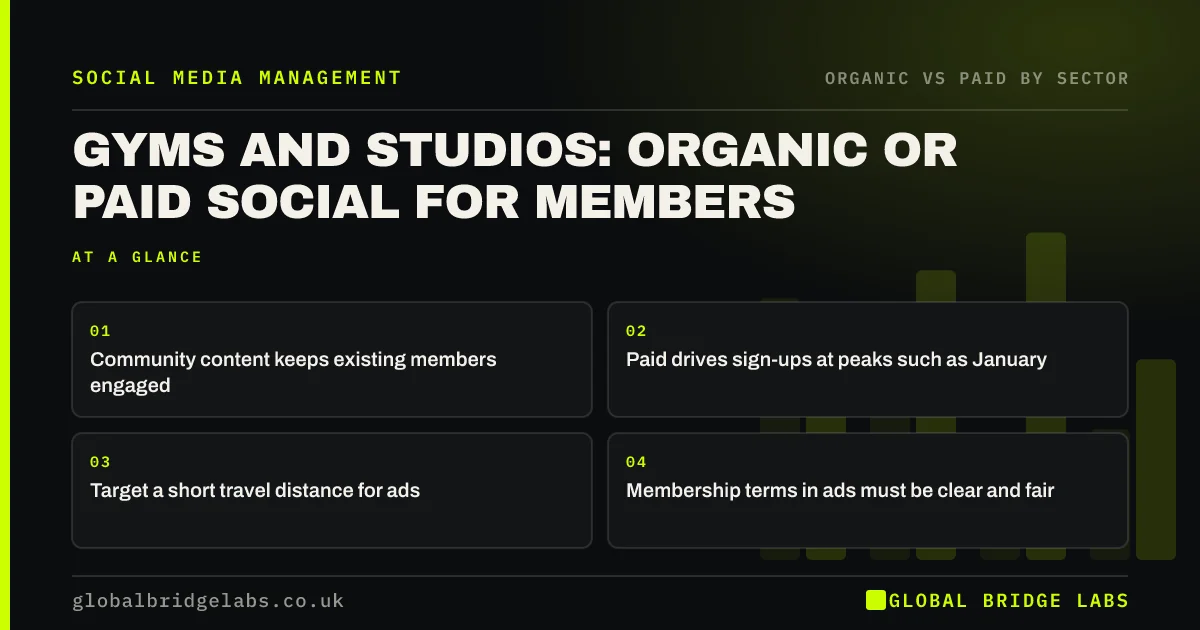
- Community content keeps existing members engaged.
- Paid drives sign-ups at peaks such as January.
- Target a short travel distance for ads.
- Membership terms in ads must be clear and fair.
Want more members? Message us on WhatsApp.
Chat on WhatsApp →Should a gym use organic or paid social?
A gym should post organically all year to keep members engaged and show the community, and use paid at sign-up peaks and for launches. People join gyms they can picture themselves in, so real content matters more than polished adverts.
What organic content works for gyms?
What works is real people and real energy.
- Class clips and timetables.
- Member progress stories, with consent.
- Coach introductions and tips.
- Events and challenges.
When are paid ads worth it for gyms?
Paid ads are worth it in January, late spring before summer, around new class launches and when opening. Target people within a short travel distance and use your best organic class or member videos as ads. Free trial offers often work well.
What rules apply to gym ads?
Health and weight-loss claims need evidence under the CAP Code. Membership terms, minimum periods and cancellation must be clear; consumer law, including the Consumer Contracts Regulations for online sign-ups, applies.
How should a gym combine both?
Post several times a week, feature members and coaches, then put ad budget behind your most engaging content at sign-up peaks. Retarget people who engaged with posts or visited the membership page.
What does this look like in practice?
A pattern we see: a boutique cycling studio ran generic January ads with stock images. Using its own class videos and a member's story as ads, and posting organically every day in December to build anticipation, brought more trial bookings and a better trial-to-member rate.
Gym checklist
- Post class and member content weekly.
- Get consent for member stories.
- Plan paid for January and early summer.
- Target a short travel distance.
- Make membership terms clear in ads.
- Retarget engaged followers at peaks.
Next step
Film two class clips and one member story this month. Plan your January ad budget now, using the best-performing of these as the creative.
Message us on WhatsApp for a gym social plan, or book a 30-minute consultation.
Chat on WhatsApp →Sources and further reading
Frequently asked questions
When should gyms advertise on social media?
Peaks are usually January, late spring before summer and September. Start organic build-up a few weeks before each peak and concentrate ad spend during it. New class launches and openings also justify ads. Organic posting should continue all year, because it keeps current members engaged and gives ad viewers a lively profile to check.
What should gyms post on Instagram?
Post class clips, member progress stories with consent, coach introductions and tips, timetable updates and events. Real people and real energy help prospective members picture themselves there. Avoid relying on stock images or heavily edited transformation photos, which feel generic and can mislead. Short, real clips filmed during classes usually perform best.
Can gyms make weight loss claims in ads?
Only with robust evidence and responsible wording. The CAP Code restricts weight-loss and health claims, and the ASA has ruled against misleading fitness ads. Focus your ads on experiences, classes, coaching and community rather than promising specific results, and keep any claims you do make modest, typical and fully supported by evidence.
Written by

Global Bridge Labs (GBL) is a UK–Sri Lanka partner for social media, websites and BPO. Everything here comes from client delivery, not theory.