On this page
- 01Key takeaways
- 02What should a founder post on LinkedIn?
- 03How do you plan it in 30 minutes a month?
- 04Why do comments matter as much as posts?
- 05Can someone else write a founder's posts?
- 06When should a founder not post?
- 07What does this look like in practice?
- 08Founder LinkedIn checklist
- 09Next step
- 10Sources and further reading
- 11Frequently asked questions
Key takeaways
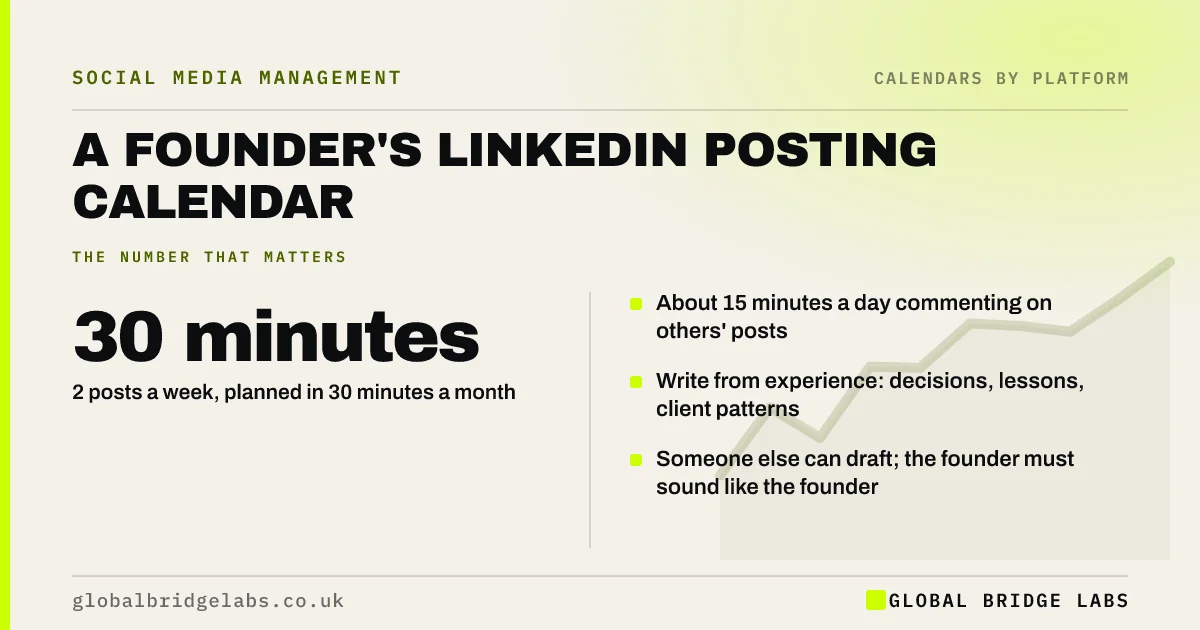
A founder LinkedIn posting plan has to survive a busy diary, so keep it small: two posts a week drawn from your own experience, planned in one 30-minute session a month, plus about 15 minutes a day commenting on other people's posts. Founders' posts usually reach further than company page posts, and buyers respond to a person more than a logo.
- 2 posts a week, planned in 30 minutes a month.
- About 15 minutes a day commenting on others' posts.
- Write from experience: decisions, lessons, client patterns.
- Someone else can draft; the founder must sound like the founder.
Want your LinkedIn posts planned around your diary? Message us on WhatsApp.
Chat on WhatsApp →What should a founder post on LinkedIn?
Post what only you can say: lessons from running the business, patterns you see in clients' problems (anonymised), decisions you made and why, mistakes and what changed, and views on your industry. Mix in occasional proof and hiring posts from the company page. Avoid generic motivation; buyers can find that anywhere.
How do you plan it in 30 minutes a month?
Keep a running note of ideas from client calls, team meetings and things you explain often. Once a month, pick eight and write one line for each: the point and the example. Draft or record them in one sitting, or have someone draft from your notes, then schedule. The note is what makes 30 minutes enough.
Why do comments matter as much as posts?
Thoughtful comments on posts by clients, prospects and peers put you in front of their networks and start relationships that posts alone do not. Fifteen minutes a day is enough. Reply to comments on your own posts quickly too, especially in the first hour, which matters on LinkedIn.
Can someone else write a founder's posts?
Yes, if the ideas and voice are the founder's. A ghostwriter or team member can turn notes or a recorded voice memo into posts, but the founder should approve each one and reply to comments personally. Posts that sound like a marketing department lose what makes founder posts work.
When should a founder not post?
A founder should not post on a schedule they cannot keep up with in replies, about client details without permission, or on topics outside their expertise to chase reach. Regulated founders, such as solicitors and financial advisers, should check posts against their professional rules.
What does this look like in practice?
A pattern we see: a founder who is brilliant in client meetings but posts once a quarter because each post takes an evening. A running idea note, a monthly 30-minute session and help with drafting usually turns that into two posts a week in the founder's own voice.
Founder LinkedIn checklist
- Keep a running note of ideas.
- Plan eight posts in 30 minutes a month.
- Write from experience, not motivation.
- Comment for 15 minutes a day.
- Approve every post and reply personally.
Next step
Start a note on your phone called 'LinkedIn ideas' and add one line every time you explain something to a client. In a month you will have enough for the next.
Message us on WhatsApp and we will help plan your LinkedIn month, or book a 30-minute consultation.
Chat on WhatsApp →Sources and further reading
- LinkedIn Pages best practices · LinkedIn
- LinkedIn relevance: optimising the member experience · LinkedIn Help
Frequently asked questions
How often should a founder post on LinkedIn?
Twice a week is a sustainable level for most busy founders, planned in a short monthly session, plus around 15 minutes a day commenting on other people's posts. Consistency over months matters more than frequency.
What should a business owner post on LinkedIn?
Lessons from running the business, anonymised patterns from client work, decisions and why you made them, mistakes and what changed, and views on your industry. Posts based on real experience work far better than generic advice.
Is it OK to have someone else write my LinkedIn posts?
Yes, if the ideas and voice are yours. Have them draft from your notes or voice memos, approve each post yourself, and reply to comments personally so the conversations stay genuine.
Written by

Global Bridge Labs (GBL) is a UK–Sri Lanka partner for social media, websites and BPO. Everything here comes from client delivery, not theory.