On this page
Key takeaways
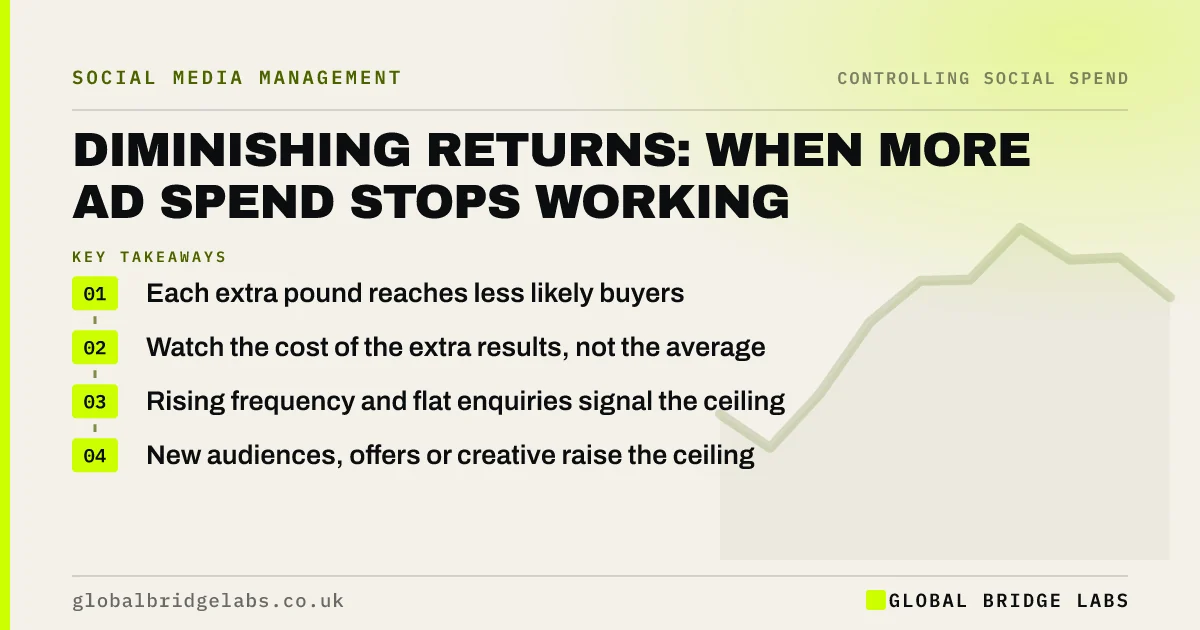
Diminishing returns on ad spend means each extra pound buys fewer results than the last. Platforms show ads to the most likely buyers first, so as spend grows they reach less likely people at higher cost. The ceiling shows as rising cost per result, rising frequency and flat enquiries despite more spend.
- Each extra pound reaches less likely buyers.
- Watch the cost of the extra results, not the average.
- Rising frequency and flat enquiries signal the ceiling.
- New audiences, offers or creative raise the ceiling.
Think you have hit the ceiling? Message us on WhatsApp.
Chat on WhatsApp →Why do returns fall as spend rises?
At low spend, platforms show your ad to the people most likely to respond. As budget grows, they move further down the list to people less interested, or show the ad to the same people more often. Both raise the cost of each extra enquiry.
How do you spot the ceiling?
Compare the extra enquiries with the extra spend. Illustrative example: £500 a month brings 25 enquiries at £20; £800 brings 31. The extra £300 bought six enquiries at £50 each, even though the average only rose to about £26. That marginal cost is the real signal.
- Average cost per enquiry rising week on week.
- Frequency climbing above three or four a week.
- Enquiries flat while spend increases.
- Marginal cost far above your target.
Send us your spend and enquiries for the last three months on WhatsApp and we will discuss your requirements.
Chat on WhatsApp →What raises the ceiling?
New audiences, such as a wider area or a new customer type; new offers that appeal to people who ignored the first; fresh creative that wins attention again; and better conversion on your website so each click is worth more. More budget alone does not.
When should you stop adding budget?
When the marginal cost per enquiry passes your target, or when you cannot handle the extra work. Hold spend at the last level where marginal cost was acceptable, and put effort into raising the ceiling rather than pushing past it.
What does this look like in practice?
A pattern we see: a local campaign is scaled from £15 to £50 a day, and average costs look only slightly worse, so spend stays high. Working out the marginal cost usually shows the last £20 a day was buying very little, and that money is better used on new creative.
Diminishing returns checklist
- Record spend and results at each budget level.
- Calculate marginal cost when spend rises.
- Watch weekly frequency.
- Hold spend where marginal cost hits target.
- Invest in new audiences, offers and creative.
Next step
Find two months with different ad spend. Divide the change in spend by the change in enquiries to get your marginal cost per enquiry.
Message us on WhatsApp with the result, or book a 30-minute consultation.
Chat on WhatsApp →Sources and further reading
Frequently asked questions
Why do my ads get more expensive when I spend more?
Because platforms show ads to the most responsive people first. As you spend more, they reach less interested people or show the same people your ad more often, both of which raise the cost of each extra result. That is diminishing returns, and it is normal.
What is marginal cost per lead?
It is the cost of the extra leads you gain by spending more. Divide the change in spend by the change in leads between two budget levels. It is often much higher than the average cost per lead, and it is the better guide to whether more spend is worthwhile.
How can I scale without diminishing returns?
You cannot avoid them entirely, but you can push the ceiling higher. Add new audiences and offers, refresh creative regularly, improve your landing page conversion and, for local businesses, extend the service area where you can serve customers profitably. Review it each quarter against your enquiries and sales, and adjust in small steps.
Written by

Global Bridge Labs (GBL) is a UK–Sri Lanka partner for social media, websites and BPO. Everything here comes from client delivery, not theory.