On this page
- 01Key takeaways
- 02Why is support duty costly for developers?
- 03What can a support team handle?
- 04How do developers stay connected to customers?
- 05When should developers keep handling support?
- 06What does this look like in practice?
- 07Developer support checklist
- 08Next step
- 09Sources and further reading
- 10Frequently asked questions
Key takeaways
In software businesses, developers often handle customer support because they know the product best. Each interruption breaks concentration, and features slip. Outsourcing first-line support and triage, with clear escalation rules, gives developers back product time while customers still get fast answers. Developers then handle only genuine technical issues.
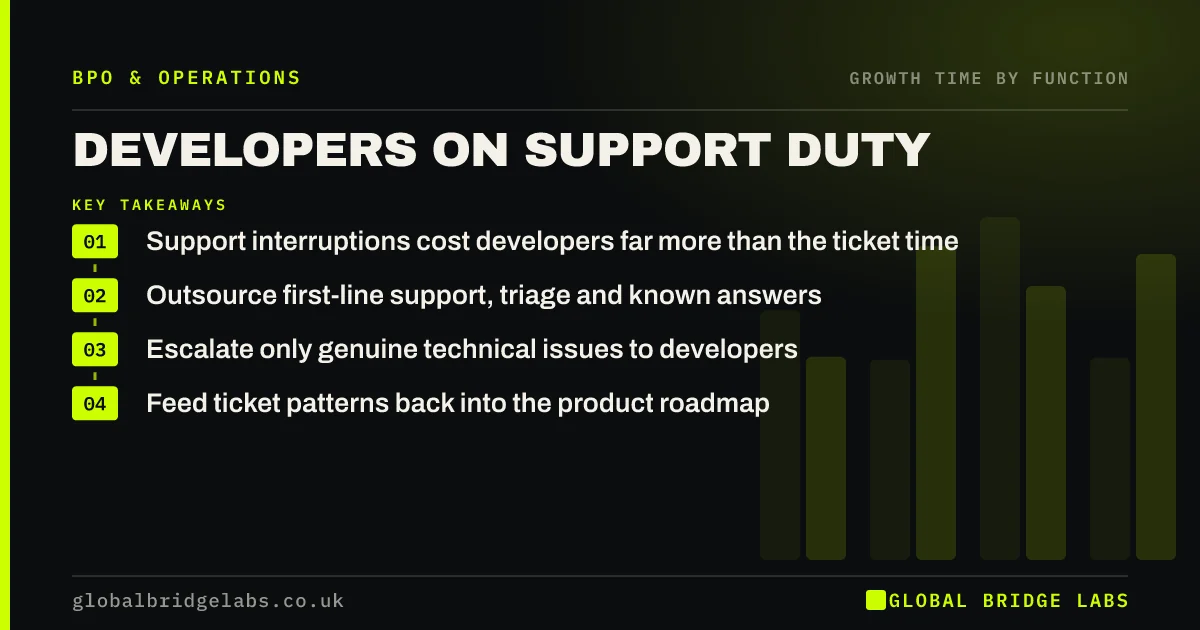
- Support interruptions cost developers far more than the ticket time.
- Outsource first-line support, triage and known answers.
- Escalate only genuine technical issues to developers.
- Feed ticket patterns back into the product roadmap.
Want to free your developers from support? Message us on WhatsApp.
Chat on WhatsApp →Why is support duty costly for developers?
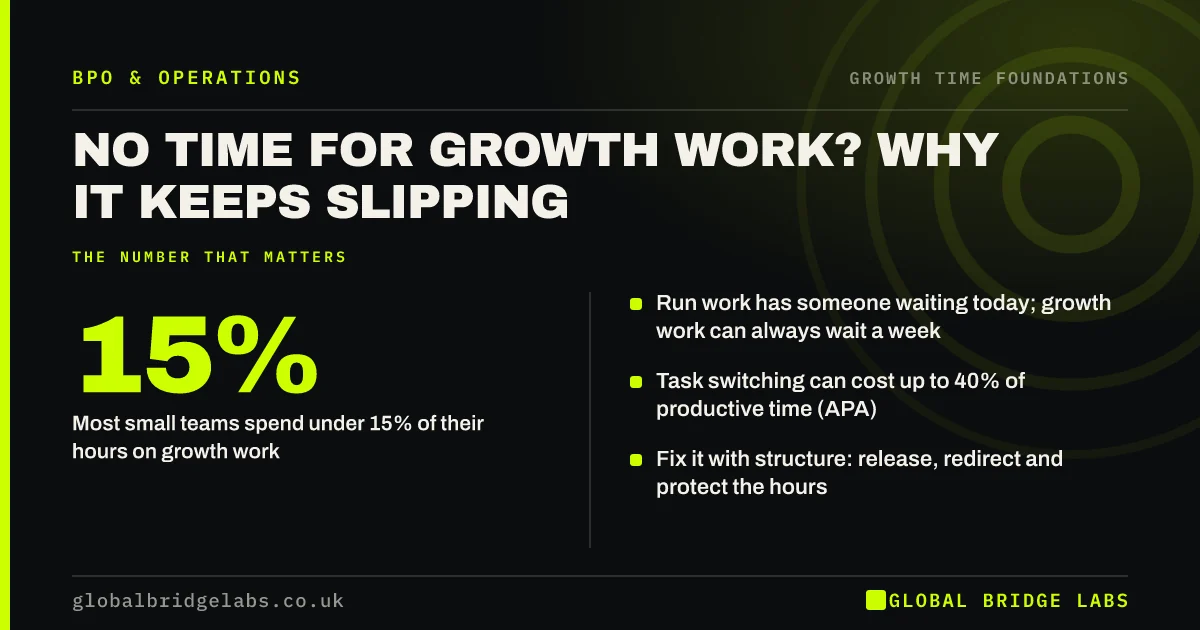
Support duty is costly because development needs long stretches of concentration. A developer interrupted every hour by a customer question loses far more than the minutes spent answering. The American Psychological Association notes that task switching can cost as much as 40% of productive time.
What can a support team handle?
Customer data access must be controlled; agree what the support team can see and record it in your processor contract.
- Account and billing questions.
- How-to questions covered by the help centre.
- Known issues with documented workarounds.
- Triage: reproducing and categorising bug reports.
- Escalation of genuine defects with full details.
How do developers stay connected to customers?
Review ticket categories monthly as a team, rotate one developer through escalations each week, and turn the top recurring issues into roadmap items. This keeps the customer view without constant interruptions.
When should developers keep handling support?
In very early products with few customers, when every conversation shapes the product. Once ticket volume is steady, first-line support should move.
What does this look like in practice?
A pattern we see: a six-developer software company rotates support between all developers. Moving first-line support to a managed team, with one developer on escalation each week, frees most of the team's product time and speeds up releases.
Developer support checklist
- Measure developer time on support.
- Outsource first-line and triage.
- Define clear escalation rules.
- Rotate one developer for escalations.
- Review ticket patterns monthly.
Next step
Count last month's tickets that a well-briefed support team could have answered. That is your first-line scope.
Message us on WhatsApp to plan developer support cover, or book a 30-minute consultation.
Chat on WhatsApp →Sources and further reading
- Multitasking: switching costs · American Psychological Association
- Controllers and processors · Information Commissioner's Office
Frequently asked questions
Should developers do customer support?
In very early products, yes, because every conversation shapes the product. As volume grows, constant interruptions slow development. Most software firms then outsource first-line support and triage, keeping developers for escalated technical issues and a regular review of ticket patterns.
How do you reduce support interruptions for engineers?
Set up a first-line support team with good documentation, define clear escalation rules, rotate one engineer through escalations each week and batch non-urgent questions. Review recurring issues monthly and fix the root causes in the product. Revisit the answer each quarter, because team capacity and priorities change as the business grows.
Can technical support be outsourced?
First-line and much second-line technical support can be, with good documentation and escalation rules. Complex defects and product decisions stay with your developers. Control data access carefully and record the arrangement in a written processor contract. Start with one well-documented bundle of work, check the first month closely and widen the scope once quality is steady.
Written by

Global Bridge Labs (GBL) is a UK–Sri Lanka partner for social media, websites and BPO. Everything here comes from client delivery, not theory.