On this page
- 01Key takeaways
- 02Why should goals be set inside the business?
- 03How do you set company goals?
- 04Which parts of goal management can be outsourced?
- 05What goes wrong with goal setting?
- 06What does this look like in practice?
- 07Goal setting checklist
- 08Next step
- 09Sources and further reading
- 10Frequently asked questions
Key takeaways
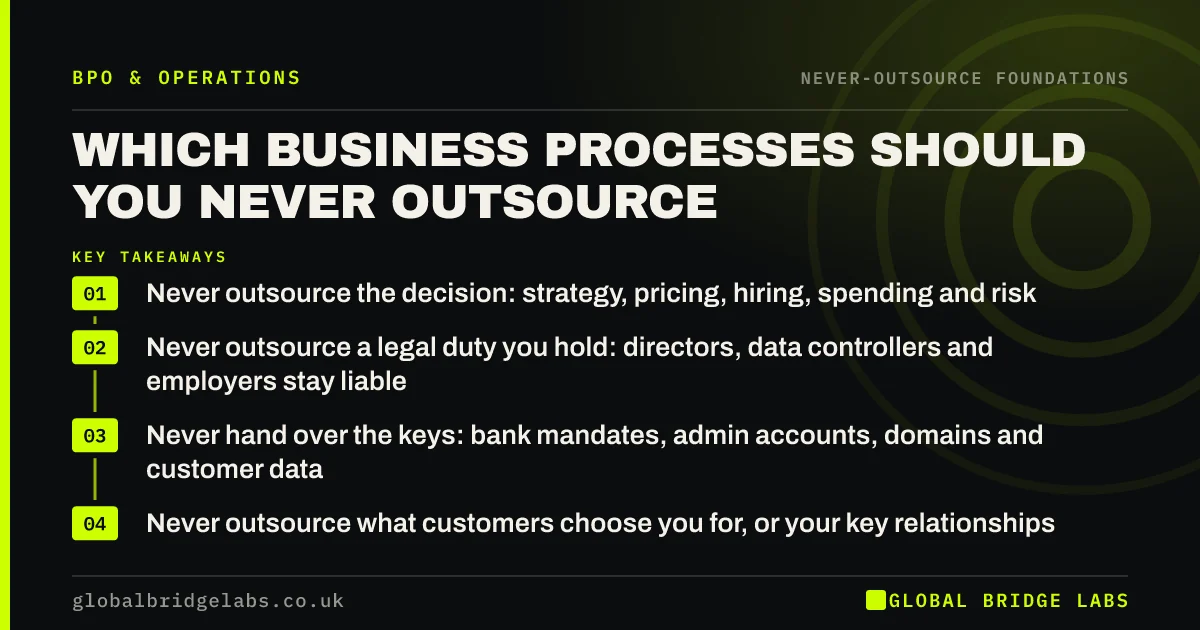
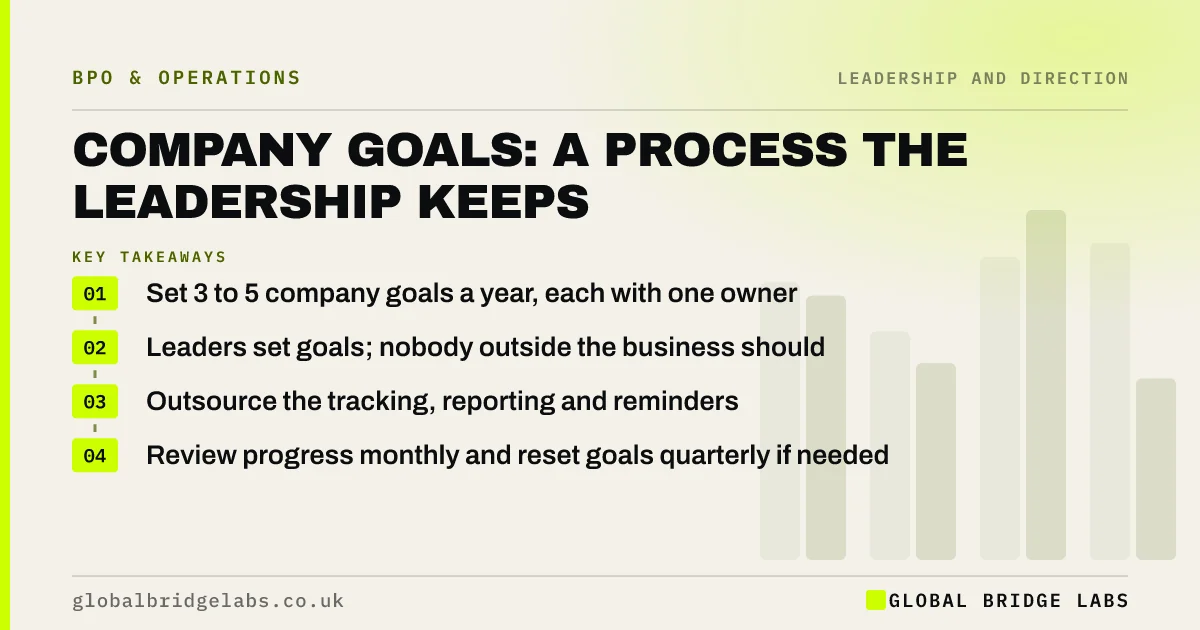
A company goal setting process decides the three to five results the business will focus on this year and who owns each. The leadership must set them, because goals decide where money and people go. What can be outsourced is the tracking: collecting the numbers, building the dashboard and preparing the monthly progress pack.
- Set 3 to 5 company goals a year, each with one owner.
- Leaders set goals; nobody outside the business should.
- Outsource the tracking, reporting and reminders.
- Review progress monthly and reset goals quarterly if needed.
Want your goal tracking run for you each month? Message us on WhatsApp.
Chat on WhatsApp →Why should goals be set inside the business?
Goals are a promise from leaders to the team about what matters. They depend on knowing the business's capacity, its people and its customers. A goal set by an outsider, however well meant, lacks ownership: nobody fights for it when it gets difficult. Setting goals is also how leaders decide what not to do.
How do you set company goals?
Start from the strategy and last year's results, then agree a short list. Each goal needs a measure, a target, a deadline and one owner.
- Review last year's results and lessons.
- Pick 3 to 5 goals that serve the strategy.
- Give each a measure, target and deadline.
- Name one owner per goal.
- Agree how progress will be reported.
Which parts of goal management can be outsourced?
The routine around the goals: pulling numbers from systems each month, updating a dashboard, chasing owners for updates and producing a one-page progress report. This keeps goals visible without leaders spending hours on spreadsheets.
- Data reporting: outsource the build and the monthly refresh
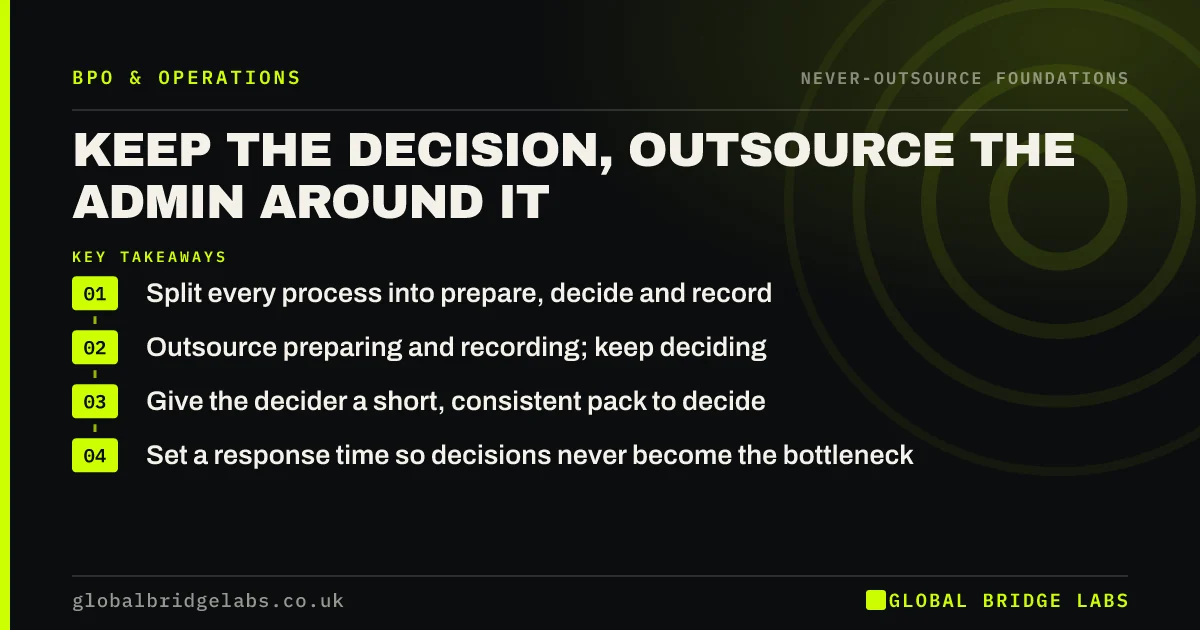
- Keep the decision, outsource the admin around it
Want a monthly goal report prepared for you? Message us on WhatsApp.
Chat on WhatsApp →What goes wrong with goal setting?
Too many goals, goals without owners and goals nobody looks at after January. A short list reviewed monthly beats a long list reviewed once. Goals that cannot be measured also drift, so define the number before the year starts.
What does this look like in practice?
A pattern we see: an SME sets twelve goals in a planning session and loses track by spring. Cutting to four, each with an owner and a monthly one-page report prepared by an outsourced analyst, keeps the leadership meeting focused on decisions rather than gathering numbers.
Goal setting checklist
- Agree 3 to 5 goals from the strategy.
- Give each a measure, target, deadline and owner.
- Set up a monthly one-page progress report.
- Review progress in a monthly leadership meeting.
- Reset goals quarterly if circumstances change.
Next step
Write this year's goals on one page. If there are more than five, or any lacks an owner, that is the first fix.
Message us on WhatsApp, or book a 30-minute consultation.
Chat on WhatsApp →Sources and further reading
- Companies Act 2006, Part 10, Chapter 2: general duties of directors · legislation.gov.uk
- Labour productivity · Office for National Statistics
Frequently asked questions
Who should set goals in a small business?
The owners or leadership team, using the strategy and the previous year's results. Managers should help shape goals for their areas, but company-level goals must be set by the people accountable for the business, so that each goal has real ownership.
How many goals should a small business have?
Three to five company goals a year is a practical number for most SMEs. Each should have a clear measure, a target, a deadline and one owner. More than five usually means none get proper attention.
Can goal tracking be outsourced?
Yes. Collecting numbers from your systems, updating a dashboard, chasing goal owners for updates and producing a monthly progress report are routine tasks a provider can handle. Leaders keep the goals and the decisions about what to do when progress falls behind.
Written by

Global Bridge Labs (GBL) is a UK–Sri Lanka partner for social media, websites and BPO. Everything here comes from client delivery, not theory.