On this page
- 01Key takeaways
- 02What is cold calling?
- 03Is cold calling legal in the UK?
- 04What does each approach cost?
- 05How do the results differ?
- 06What is social selling?
- 07When does cold calling still make sense?
- 08When is it the wrong choice?
- 09How do the two work together?
- 10What does this look like in practice?
- 11Next step
- 12Sources and further reading
- 13Frequently asked questions
Key takeaways
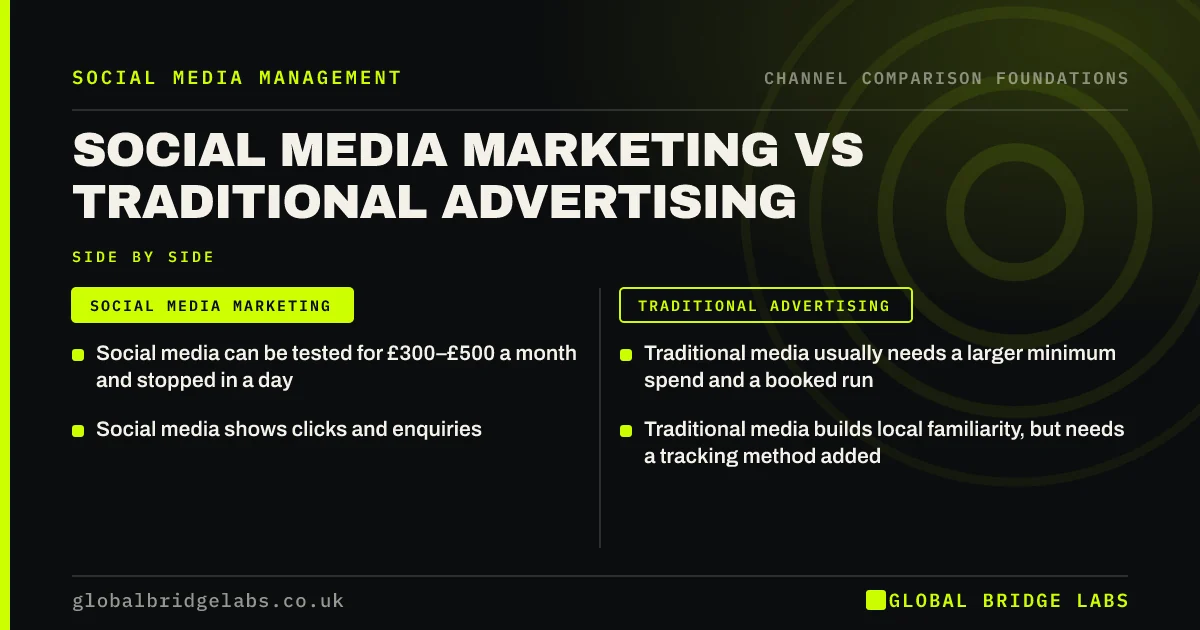
Cold calling vs social media is a choice between interrupting a stranger and being found by one. Cold calling to businesses can still work for high-value B2B sales when the rules are followed. For most small firms, social media is the cheaper and lower-risk way to start a conversation.
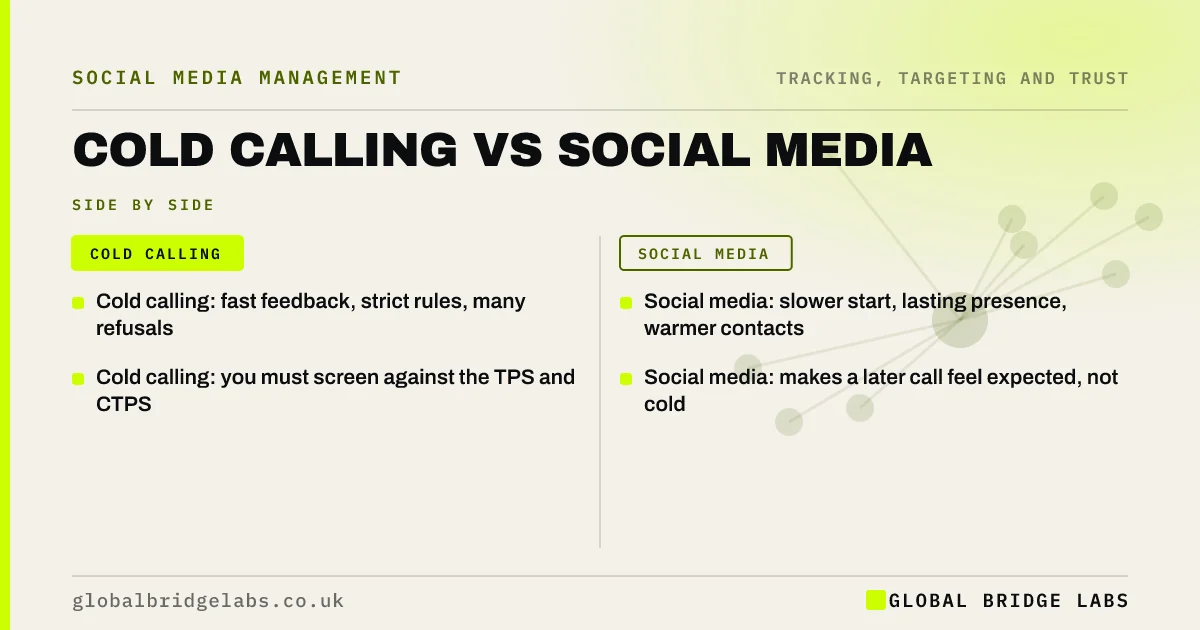
- Cold calling: fast feedback, strict rules, many refusals.
- Social media: slower start, lasting presence, warmer contacts.
- Cold calling: you must screen against the TPS and CTPS.
- Social media: makes a later call feel expected, not cold.
Planning outbound calls? Message us on WhatsApp and we will help you do it properly.
Chat on WhatsApp →What is cold calling?
Cold calling is telephoning a person or business that has not asked to hear from you in order to sell or book a meeting. It is a form of direct marketing, so it is regulated differently from advertising in a newspaper or on a social platform.
Is cold calling legal in the UK?
Live marketing calls are legal only within the Privacy and Electronic Communications Regulations (PECR). You must not call numbers registered with the Telephone Preference Service (TPS) or Corporate TPS unless that person has agreed to your calls, you must not call anyone who has asked you to stop, and you must say who is calling and show your number. Some sectors, such as pensions and claims management, have tighter bans.
- Screen every list against the TPS and CTPS.
- Keep your own do-not-call list.
- Identify your business and display your number.
- Check for sector-specific restrictions.
What does each approach cost?
Cold calling costs time. At the April 2026 National Living Wage an hour costs about £16.27 with employer costs, and a caller may reach only a handful of decision makers in that hour. Most UK SMEs using an agency pay £950–£2,500 a month for managed social media, which works for the whole month, not one hour at a time.
- In-house vs outsourced SDRs for lead follow-up
- Cost per lead by channel: comparing social media and offline
Want outbound and social media costed against each other? Message us on WhatsApp and we will discuss your requirements.
Chat on WhatsApp →How do the results differ?
Cold calling gives quick, clear answers from a small number of people and leaves nothing behind. Social media gives slower, quieter results and builds an asset: every post remains visible to the next person who looks you up. The LinkedIn B2B Institute estimates only about 5% of business buyers are in the market at any time, so most calls reach people who are not ready.
What is social selling?
Social selling is the use of social media, usually LinkedIn, to find the right people, be useful to them in public and start conversations by message. It replaces the cold opening with a warm one: the buyer has seen your name and your thinking before you speak.
When does cold calling still make sense?
Cold calling makes sense for business-to-business sales with a short, well-defined list of prospects and a high order value, where a meeting is worth many hours of effort. It also works for following up people who have already enquired, which is not cold at all.
When is it the wrong choice?
It is the wrong choice for selling to consumers at home, where TPS registration is common and tolerance is low. It is also wrong when nobody would know your name, because a call from an unknown firm with no visible presence is easy to refuse.
How do the two work together?
Use social media to warm the list before you call. Connect with the named buyer, post material relevant to their sector for a few weeks, then call. The opening line changes from an apology to a reference: 'You may have seen our piece on delivery delays.'
- 1. Build a screened list of named buyers.
- 2. Connect and post useful material for a month.
- 3. Call those who engaged first.
- 4. Log outcomes and honour every opt-out.
What does this look like in practice?
A pattern we see with small B2B firms: a list is bought and called in a week, with a handful of meetings and a number of irritated refusals. The same list approached after a month of visible, relevant posting tends to produce warmer conversations, because the name is no longer unfamiliar.
Next step
If you plan to call, screen the list against the TPS and CTPS first. Then spend four weeks being visible to those people before you dial.
Message us on WhatsApp for help planning the warm-up, or book a 30-minute consultation.
Chat on WhatsApp →Sources and further reading
- Telephone marketing under PECR · Information Commissioner's Office
- Telephone Preference Service and Corporate TPS · Telephone Preference Service
- Electronic and telephone marketing under PECR · Information Commissioner's Office
- The 95-5 rule: most B2B buyers are out of market · LinkedIn B2B Institute
Frequently asked questions
Is cold calling illegal in the UK?
Not in general, but it is tightly regulated. You must not make live marketing calls to numbers on the TPS or Corporate TPS without consent, or to anyone who has asked you to stop. You must identify yourself, and some sectors face outright bans.
Does cold calling still work?
It can work for business-to-business sales with a defined list and a high order value. Refusal rates are high and it builds nothing lasting. It works better when the people called have already seen the firm's name, for example on LinkedIn.
What is the difference between cold calling and social selling?
Cold calling interrupts someone who does not know you. Social selling uses social media to become familiar and useful to that person first, then starts a conversation by message or call. The second takes longer and meets less resistance.
Do TPS rules apply to calls to businesses?
Yes. Sole traders and some partnerships can register with the TPS, and companies can register with the Corporate TPS. You must screen business numbers against both before making unsolicited marketing calls. Screening is normally done through a licensed provider, and lists should be re-checked at least every 28 days.
Written by

Global Bridge Labs (GBL) is a UK–Sri Lanka partner for social media, websites and BPO. Everything here comes from client delivery, not theory.