On this page
- 01Key takeaways
- 02Why do arguments online never really win?
- 03What are the risks beyond reputation?
- 04How do you reply without arguing?
- 05Who should reply when it is personal?
- 06Is staying silent better than replying?
- 07How do you spot that a reply is turning into an argument?
- 08What does this look like in practice?
- 09Calm reply checklist
- 10Next step
- 11Sources and further reading
- 12Frequently asked questions
Key takeaways
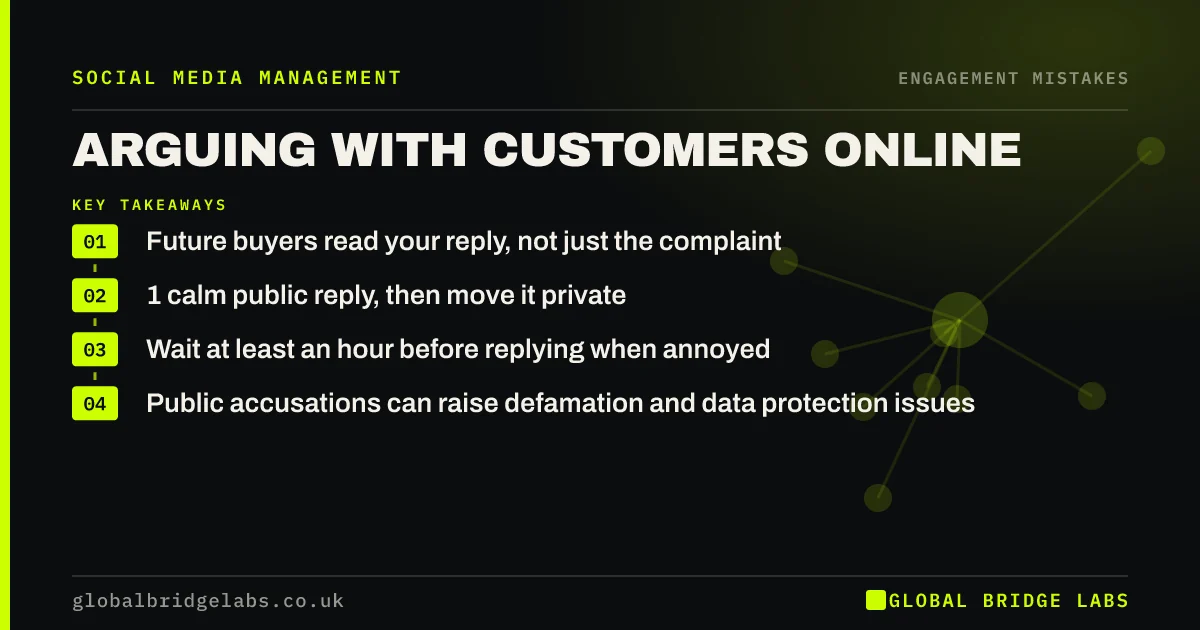
Arguing with customers on social media is a mistake even when the business is right, because readers judge the tone of the reply more than the facts. Long, angry replies are screenshotted and shared. Reply once, briefly and calmly, then take the conversation private. Never post a customer's personal details or accuse them of lying in public.
- Future buyers read your reply, not just the complaint.
- 1 calm public reply, then move it private.
- Wait at least an hour before replying when annoyed.
- Public accusations can raise defamation and data protection issues.
Need help with a reply right now? Message us on WhatsApp.
Chat on WhatsApp →Why do arguments online never really win?
Arguments online rarely win because the audience is not the customer; it is every future buyer reading the thread. They see a business that argues with its customers. Even a detailed, accurate rebuttal reads as defensive, and the more replies there are, the more the post is shown.
What are the risks beyond reputation?
Beyond reputation, public arguments carry legal and data risks. Posting a customer's address, order details or health information can breach UK GDPR. Accusing someone of dishonesty in public could raise defamation issues under the Defamation Act 2013 if it causes serious harm. Keep facts private.
How do you reply without arguing?
Reply once, within the working day, in two or three sentences: thank them, acknowledge the experience, and offer a named contact to sort it privately. If facts are wrong, say so politely in one line without detail. Then stop replying in public.
- Thank them for raising it.
- Acknowledge how they feel.
- Correct facts briefly, without blame.
- Offer a named private contact.
Want reply templates written for your business? Message us on WhatsApp and we will discuss your requirements.
Chat on WhatsApp →Who should reply when it is personal?
When the owner is upset, someone else should reply, or the reply should wait. A short rule helps: nobody replies to a complaint within an hour of reading it if they feel angry. A second person reads any reply to a complaint before it goes out.
Is staying silent better than replying?
Usually not. Silence can look like you do not care. For trolls with no real complaint, though, no reply is often best. For real customers, one calm reply is better than both silence and argument.
How do you spot that a reply is turning into an argument?
A reply is turning into an argument when it disputes details, uses 'actually' or 'to be clear', runs past three sentences or is the second public reply to the same person. Any of those is the moment to stop, offer a private contact and leave the thread.
- The reply disputes each point.
- It runs past three sentences.
- It is your second public reply.
- It mentions the customer's details.
What does this look like in practice?
A pattern we see: an owner's six-paragraph reply to a one-star review, disputing every detail. The review itself might have been forgotten, but the reply is shared. A two-line reply offering a call, written the next morning, would have closed it.
Calm reply checklist
- Wait an hour if you are annoyed.
- Reply once, in two or three sentences.
- Never share customer details publicly.
- Move the conversation private.
- Ask a second person to read the reply.
Next step
Agree a 'wait an hour, second reader' rule with anyone who replies on your accounts today.
Message us on WhatsApp for help with difficult replies, or book a 30-minute consultation.
Chat on WhatsApp →Sources and further reading
- Defamation Act 2013 · legislation.gov.uk
- Advice for small organisations · Information Commissioner's Office
- Publishing consumer reviews and complying with consumer protection law · Competition and Markets Authority
Frequently asked questions
Should a business argue with a customer online?
No. Even when you are right, future buyers judge your tone. Reply once, calmly and briefly, correct any facts in a line, and offer to sort it privately with a named contact.
Can I respond to a false review?
Yes, calmly. State briefly that your records differ and invite the person to contact you. Do not share their details. If a review breaks platform rules or is fake, report it through the platform.
Can a business be sued for a reply on social media?
Potentially, if a reply makes a damaging false statement about someone or breaches their data rights. Keep replies factual, short and free of personal details. Take legal advice if a dispute escalates.
Written by

Global Bridge Labs (GBL) is a UK–Sri Lanka partner for social media, websites and BPO. Everything here comes from client delivery, not theory.