On this page
- 01Key takeaways
- 02Why say what happens after someone enquires?
- 03What should the 'what happens next' text say?
- 04Where should it appear?
- 05How do you set the reply time?
- 06Should you explain how you use their details?
- 07When is this unnecessary?
- 08What does this look like in practice?
- 09After-enquiry information checklist
- 10Next step
- 11Sources and further reading
- 12Frequently asked questions
Key takeaways
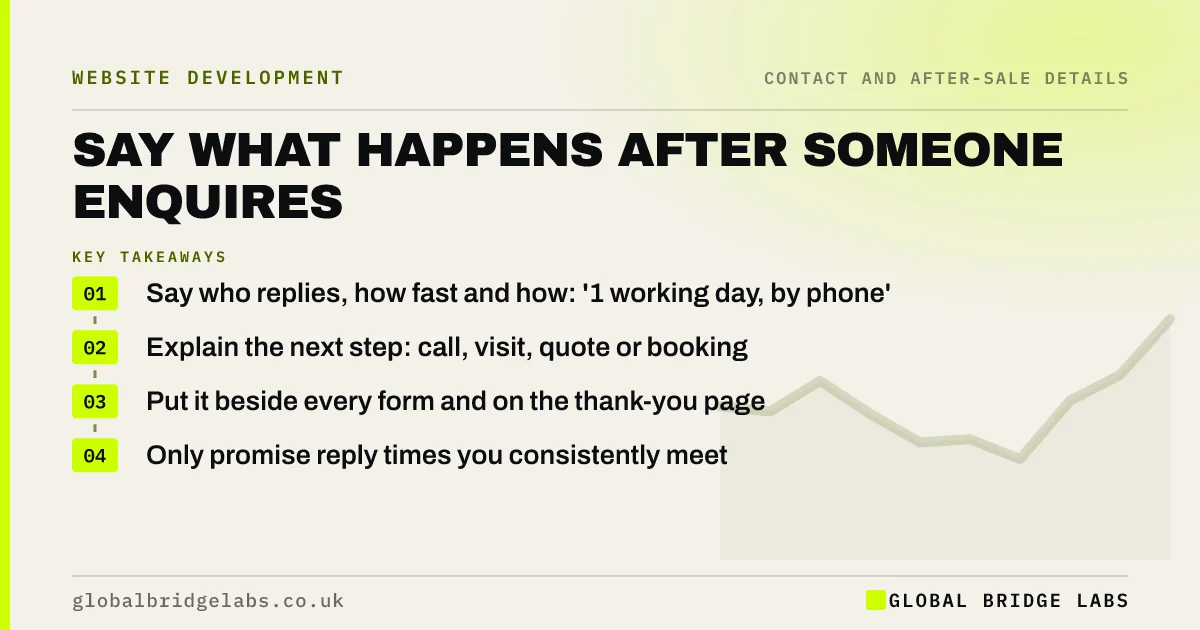
Tell visitors what happens after they enquire: who will reply, how quickly, by what method, what they will be asked and what the next step is, such as a call, visit or quote. Uncertainty stops people pressing Send. A clear 'what happens next' line beside every form makes enquiring feel low-risk.
- Say who replies, how fast and how: '1 working day, by phone'.
- Explain the next step: call, visit, quote or booking.
- Put it beside every form and on the thank-you page.
- Only promise reply times you consistently meet.
Want your enquiry journey reviewed? Message us on WhatsApp.
Chat on WhatsApp →Why say what happens after someone enquires?
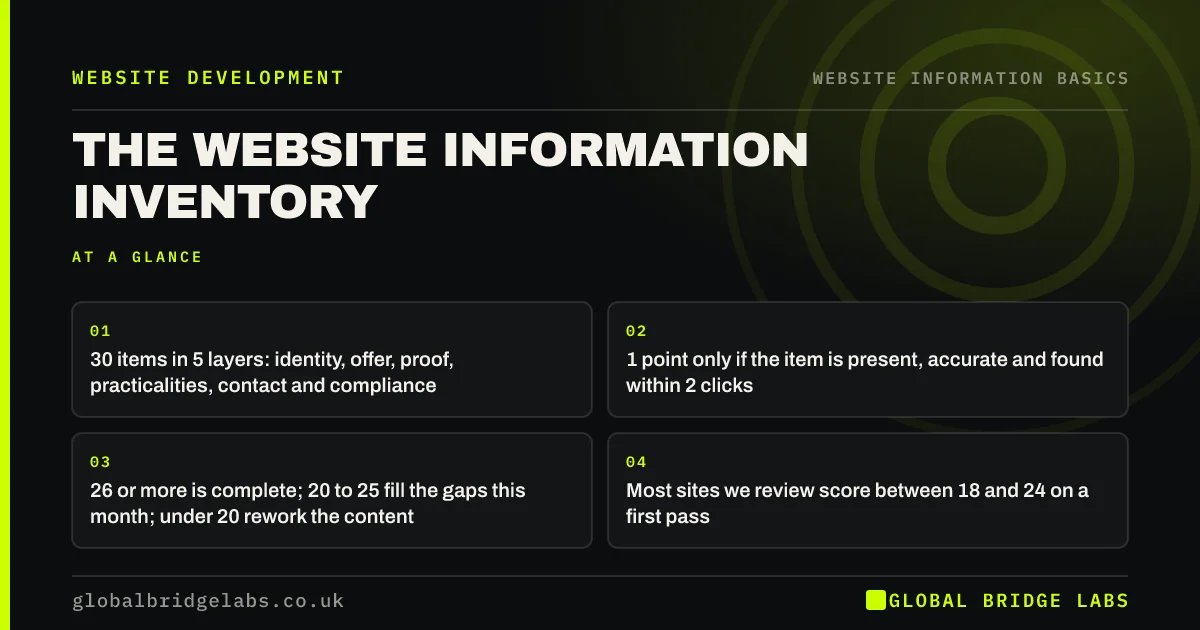
Saying what happens next removes the uncertainty that stops people enquiring: will they be hounded, ignored or sold to? Global Bridge Labs (GBL) treats it as item 26 of the 30-item inventory. A sentence beside the form, such as 'Dan will call you within one working day to arrange a free visit', is often enough.
What should the 'what happens next' text say?
It should say who replies, how quickly, by what method, what you will ask and what the next step is. It can also say what will not happen: 'no hard sell' or 'we will not share your details'. Keep it to three or four short sentences or a numbered list.
Where should it appear?
Put it directly beside or under every enquiry form, on the contact page, and again on the thank-you page or confirmation email. The thank-you page should repeat the timescale and give an alternative route if something is urgent.
How do you set the reply time?
Measure how fast you actually reply, then publish a time you hit nearly always. A modest promise kept beats an ambitious one missed. If replies slow down at weekends or holidays, say so, and update the text when your hours change.
Should you explain how you use their details?
Yes, briefly. A line such as 'We use your details only to reply to this enquiry; see our privacy notice' with a link meets the expectation of transparency in UK GDPR and reassures people worried about marketing calls.
When is this unnecessary?
It is unnecessary only when the action itself completes the transaction, such as an instant online booking with an automatic confirmation. Even then, say what happens on the day. For any enquiry that leads to a human reply, it helps.
What does this look like in practice?
A pattern we see: a firm's form ends with a generic 'Submit' button and a blank thank-you page. Adding who replies, when and what happens next, plus a phone number for urgent jobs, makes the form feel safer and cuts the 'did you get my message?' follow-up calls.
After-enquiry information checklist
- Measure your real reply time.
- Name who replies.
- State the method and next step.
- Add a line on data use.
- Repeat it on the thank-you page.
- Give an urgent alternative.
Next step
Submit your own contact form today and read the thank-you page as a nervous buyer would. Rewrite it to say who, when and what next.
Message us on WhatsApp for an enquiry journey review, with no pitch.
Chat on WhatsApp →Sources and further reading
- Right to be informed (privacy information) · Information Commissioner's Office
- User research · GOV.UK Service Manual
- UK Customer Satisfaction Index · Institute of Customer Service
Frequently asked questions
What should a contact form thank-you page say?
It should confirm the message arrived, say who will reply and when, explain the next step and give an alternative route for urgent matters. Optionally, link to helpful pages such as your 'what to expect' guide, so the visitor has something useful to read while they wait for your reply.
Should I promise a response time on my website?
Yes, if you can keep it. Measure your real reply times first and publish one you meet nearly always. Update it for holidays and weekends, and say on the thank-you page when the reply will come.
How do I make people feel safe filling in a form?
Tell them who replies, how quickly and what happens next, keep the form short, explain how you use their details, and say what will not happen, such as a hard sell or sharing their data.
Written by

Global Bridge Labs (GBL) is a UK–Sri Lanka partner for social media, websites and BPO. Everything here comes from client delivery, not theory.