On this page
- 01Key takeaways
- 02What is a website discovery phase?
- 03How much does website discovery cost?
- 04What should discovery deliver?
- 05Why can discovery save money?
- 06When is discovery not worth paying for?
- 07What does this look like in practice?
- 08Discovery checklist
- 09Next step
- 10Sources and further reading
- 11Frequently asked questions
Key takeaways
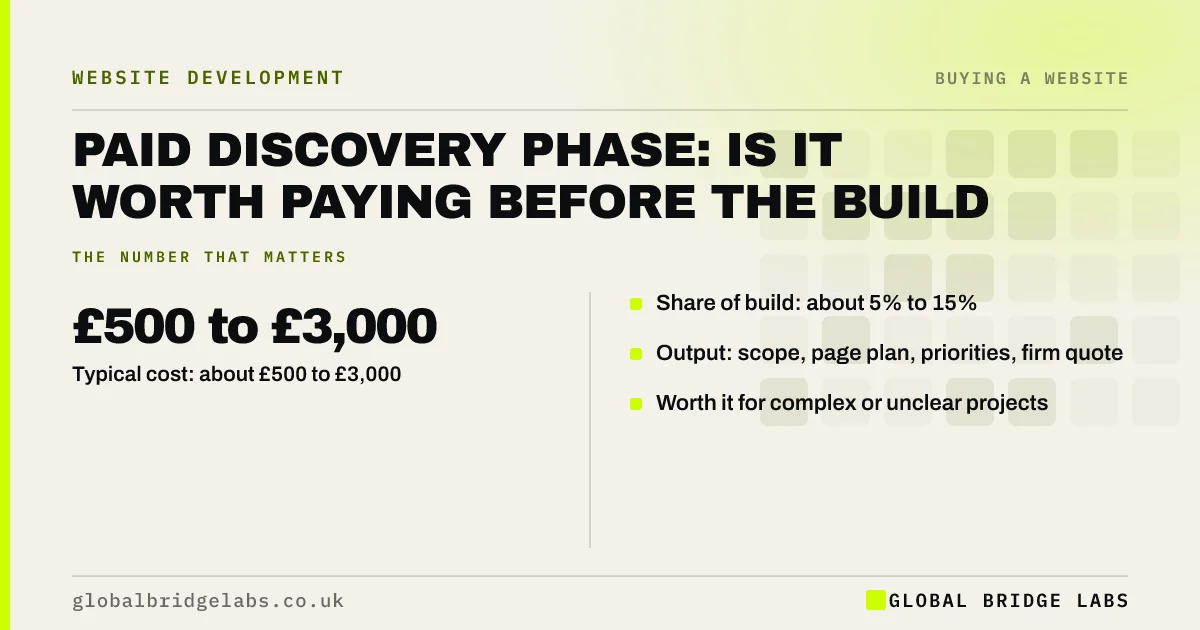
A paid website discovery phase typically costs a UK small business £500 to £3,000, or about 5% to 15% of the build. It produces a clear scope, page plan, priorities and a firmer quote. Discovery pays for itself when the project is complex or unclear, because it prevents scope creep and rework. Simple sites rarely need it.
- Typical cost: about £500 to £3,000.
- Share of build: about 5% to 15%.
- Output: scope, page plan, priorities, firm quote.
- Worth it for complex or unclear projects.
Want to know if your project needs discovery? Message us on WhatsApp.
Chat on WhatsApp →What is a website discovery phase?
A website discovery phase is a paid planning stage before design and build, where the supplier works with you to define goals, audiences, pages, features, content and success measures. It ends with a written scope and firmer quote. Some suppliers call it scoping, strategy or planning.
How much does website discovery cost?
Website discovery typically costs £500 to £3,000 for a small business, about 5% to 15% of the build, based on UK quotes. Shorter workshops sit at the lower end; discovery with customer interviews, analytics review and content planning at the upper end.
- Workshop and scope: about £500 to £1,200.
- With research and content plan: about £1,200 to £3,000.
Want a discovery phase scoped for your project? Message us on WhatsApp and we will discuss your requirements.
Chat on WhatsApp →What should discovery deliver?
Discovery should deliver written goals and success measures, audience notes, a page plan, a feature list with priorities, content responsibilities, a tracking plan for key events and a firm quote for the build. You should own the outputs and be free to use them with any supplier.
Why can discovery save money?
Discovery saves money by catching misunderstandings and unnecessary features before they are designed and built. Changing a plan costs little; changing finished code costs a lot. It is one of the best defences against scope creep.
When is discovery not worth paying for?
Discovery is not worth paying for when the site is simple, you already have a clear brief, or the supplier sells a fixed package. In those cases, a good brief and a short call are enough.
What does this look like in practice?
At Global Bridge Labs (GBL), a UK training company paid £1,500 for discovery before a £12,000 build. It showed two planned features were rarely needed and one missing feature, course date filtering, was critical. The build scope changed before design, avoiding later rework.
Discovery checklist
- Decide whether your project is complex or unclear.
- Ask what discovery delivers.
- Confirm you own the outputs.
- Include a tracking plan.
- Get a firm build quote at the end.
- Skip it for simple fixed packages.
Next step
If you cannot write your site's goals, pages and must-have features on one page, discovery is likely worth paying for.
Message us on WhatsApp for a discovery checklist, or book a 30-minute consultation.
Chat on WhatsApp →Sources and further reading
- About key events · Google Analytics Help
- SEO Starter Guide · Google Search Central
- Web Content Accessibility Guidelines (WCAG) 2.2 · W3C
Frequently asked questions
How much does website discovery cost?
Website discovery for a small business typically costs £500 to £3,000, roughly 5% to 15% of the build cost. Simple workshops cost less; discovery with customer interviews, analytics review and content planning costs more. It should end with a written scope and firm quote.
Is a paid discovery phase worth it?
It is worth it for complex or unclear projects, where it prevents scope creep, rework and unnecessary features. For simple sites with clear briefs, a good brief and a short call are usually enough. Make sure you own the outputs so you can use them with any supplier.
Can I take discovery outputs to another web designer?
You should be able to, if the contract says you own them. Ask before paying. Good discovery outputs, such as the scope, page plan and feature list, are useful briefing documents for any supplier and make quotes far more comparable.
Written by

Global Bridge Labs (GBL) is a UK–Sri Lanka partner for social media, websites and BPO. Everything here comes from client delivery, not theory.