On this page
- 01Key takeaways
- 02What is website scope creep?
- 03What causes scope creep?
- 04How much does scope creep cost?
- 05How do you control scope creep?
- 06When is some scope change healthy?
- 07What does this look like in practice?
- 08Scope control checklist
- 09Next step
- 10Sources and further reading
- 11Frequently asked questions
Key takeaways
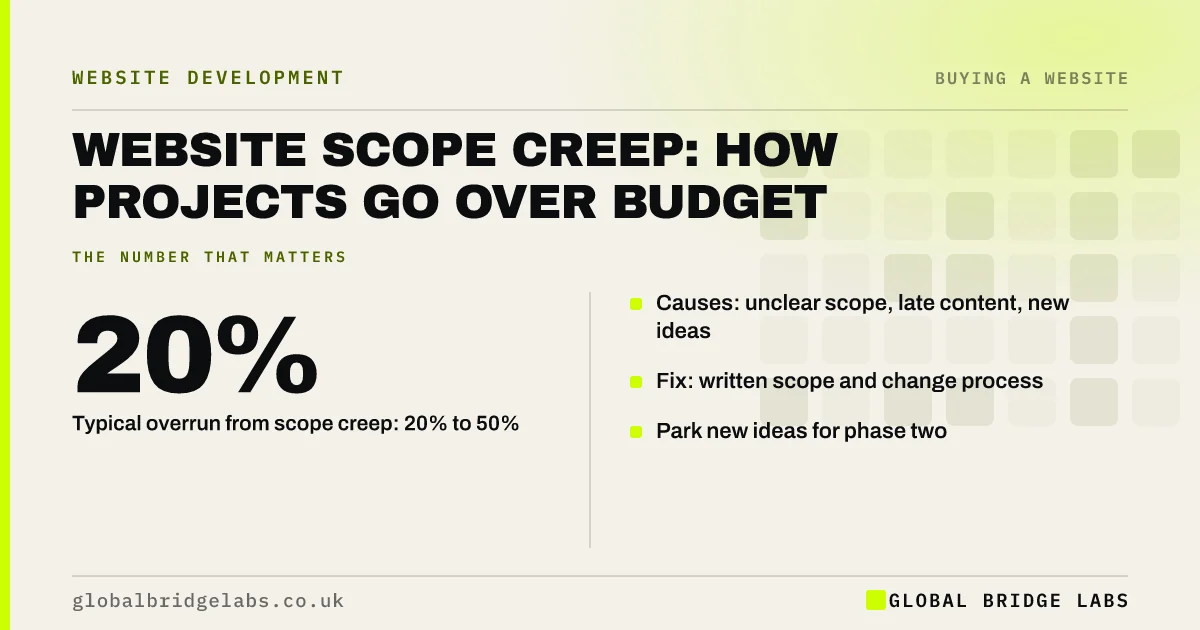
Website scope creep is the gradual growth of a project through small added requests, and it is the main reason UK website projects go 20% to 50% over budget. It starts with unclear scope, late content and new ideas mid-build. Control it with a written scope, a change request process and a list of ideas parked for phase two.
- Typical overrun from scope creep: 20% to 50%.
- Causes: unclear scope, late content, new ideas.
- Fix: written scope and change process.
- Park new ideas for phase two.
Want your project scope tightened? Message us on WhatsApp.
Chat on WhatsApp →What is website scope creep?
Website scope creep is the gradual expansion of a website project beyond its agreed scope through added pages, features, design rounds or changes, often without matching changes to budget or timeline. Each request seems small; together they push cost and launch dates out.
What causes scope creep?
Scope creep is caused by vague initial scope, content arriving late or changing, several decision-makers adding ideas, and features discovered mid-build. Unclear approval also invites endless design rounds.
- Vague scope at the start.
- Late or changing content.
- Too many decision-makers.
- New ideas during the build.
Want a change process set up for your project? Message us on WhatsApp and we will discuss your requirements.
Chat on WhatsApp →How much does scope creep cost?
Scope creep commonly adds 20% to 50% to website budgets and similar delays, based on typical project experience. Late features can cost more than if planned at the start because they mean reworking finished design or code.
How do you control scope creep?
Control scope creep with a written scope, one decision-maker, content ready before build, a change request process that prices each change before work, and a phase-two list for new ideas. Launch first, then improve using real data from tracked key events.
- Written scope and one decision-maker.
- Content ready before build.
- Changes priced before work.
- Phase-two list for new ideas.
When is some scope change healthy?
Some change is healthy when testing shows a real problem, such as a confusing journey or an accessibility issue. The aim is not zero change but deliberate change: priced, approved and worth it.
What does this look like in practice?
At Global Bridge Labs (GBL), a UK event venue's £8,000 project reached £11,500 through added galleries, a second booking form and four design rounds. On their next phase, a parked-ideas list kept the build on budget; half the parked ideas were dropped after launch data showed visitors did not need them.
Scope control checklist
- Agree a written scope.
- Name one decision-maker.
- Have content ready before build.
- Price changes before work starts.
- Keep a phase-two list.
- Review the list after launch data.
Next step
Start a parked-ideas list today. Every new idea goes on it unless it fixes a problem that blocks launch.
Message us on WhatsApp for a website scope template, or book a 30-minute consultation.
Chat on WhatsApp →Sources and further reading
- Consumer Rights Act 2015 · legislation.gov.uk
- About key events · Google Analytics Help
- Web Content Accessibility Guidelines (WCAG) 2.2 · W3C
Frequently asked questions
How do I stop my website project going over budget?
Agree a written scope, name one decision-maker, have content ready before the build, and price every change before work starts. Park new ideas for a phase two after launch. These steps prevent the small additions that commonly push website projects 20% to 50% over budget.
Why do website projects take longer than planned?
Website projects usually take longer because content arrives late, decisions take time, new ideas are added mid-build and design rounds multiply. Supplier capacity can also slip. Agreeing deadlines for content and approvals, and parking new ideas, keeps most projects close to plan.
Should I pay for changes during a website build?
Changes outside the agreed scope are usually chargeable, which is fair if they were priced and approved before work. Changes that fix defects in agreed work should not be charged. A written change process makes it clear which is which and avoids disputes.
Written by

Global Bridge Labs (GBL) is a UK–Sri Lanka partner for social media, websites and BPO. Everything here comes from client delivery, not theory.