
On this page
- 01Key takeaways
- 02When do trades calls usually peak?
- 03What seasonal patterns do trades see?
- 04How do you find your own pattern?
- 05How do you match cover to the pattern?
- 06How should pricing match the pattern?
- 07How often should you check the pattern?
- 08What does this look like in practice?
- 09Call pattern checklist
- 10Next step
- 11Sources and further reading
- 12Frequently asked questions
Key takeaways
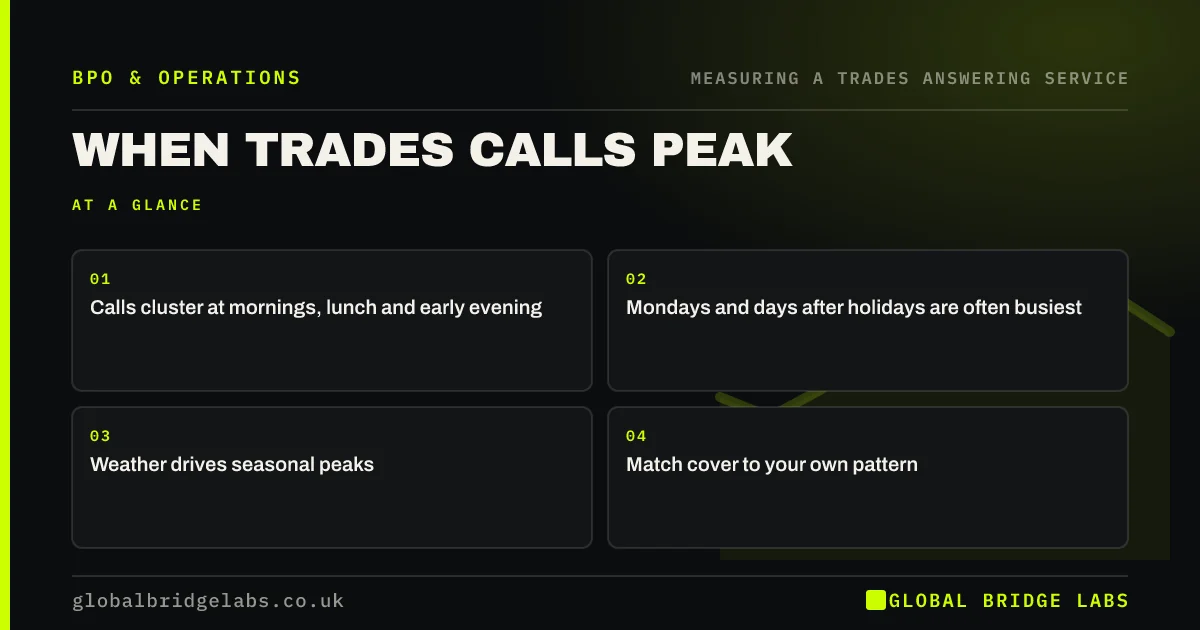
Trades calls are not spread evenly. Most firms see peaks early in the morning, at lunchtime and in the early evening, on Mondays and after bank holidays, and in seasons driven by the weather, such as heating in winter and landscaping in spring. Find your own pattern from three months of call logs, then match answering cover to the busiest windows.
- Calls cluster at mornings, lunch and early evening.
- Mondays and days after holidays are often busiest.
- Weather drives seasonal peaks.
- Match cover to your own pattern.
Want your call pattern mapped? Message us on WhatsApp.
Chat on WhatsApp →When do trades calls usually peak?
Common patterns are early morning before work, lunchtime and early evening after work. Mondays bring weekend problems. Seasonal peaks follow the weather and the calendar.
What seasonal patterns do trades see?
Each trade has its own year.
- Heating and plumbing: first cold weeks of winter.
- Roofing: after storms and heavy rain.
- Landscaping: spring and early summer.
- Decorating: spring and before Christmas.
- Building: planning in winter, starting in spring.
How do you find your own pattern?
Export three months of call logs, ideally a year. Count calls by hour and day, and mark missed calls. Plot them. Your busiest and most-missed windows will stand out.
Want your call log turned into a cover plan? Message us on WhatsApp and we will discuss your requirements.
Chat on WhatsApp →How do you match cover to the pattern?
Cover the busiest and most-missed windows first. A firm missing calls mainly at 8am and lunchtime may need cover only then. A firm with evening peaks may need extended hours.
How should pricing match the pattern?
If volumes swing sharply by season, choose flexible or per-call pricing. Steady volumes suit bundles or hourly teams. Ask each provider to price your actual pattern across a full year, not just an average month.
How often should you check the pattern?
Once a year, and after any big change such as new marketing, a new service or a new area. Patterns shift, and cover set two years ago may no longer match when calls arrive.
What does this look like in practice?
A pattern we see: a firm pays for all-day cover but misses calls mainly between 8am and 9.30am. Concentrating cover in that window halves missed calls for less money.
Call pattern checklist
- Export call logs.
- Count by hour and day.
- Mark missed calls.
- Note seasonal peaks.
- Match cover to peaks.
- Match pricing to swings.
Next step
Export three months of call logs and mark your three busiest windows this week.
Message us on WhatsApp for a call pattern review, or book a 30-minute consultation.
Chat on WhatsApp →Sources and further reading
- UK bank holidays · GOV.UK
- Online Nation: how the UK uses online services · Ofcom
Frequently asked questions
What time of day do trades businesses get most calls?
Many trades businesses see peaks early in the morning before customers go to work, at lunchtime and in the early evening. Mondays and days after bank holidays are often busy too. Your own call log is the best guide, because patterns vary by trade, area and customer type.
Do trades calls increase in winter?
For heating, plumbing and some roofing work, yes, especially in the first cold spell when boilers fail and pipes freeze. Other trades, such as landscaping and decorating, peak in spring and summer. Check your call log over a year to see your own seasonal pattern.
How do I use call patterns to choose an answering service?
Find when calls arrive and when you miss them, then choose cover hours, staffing and pricing that match. If you miss calls only at peak times, you may not need all-day cover. If volumes swing by season, choose flexible pricing that does not charge for quiet months.
Written by

Global Bridge Labs (GBL) is a UK–Sri Lanka partner for social media, websites and BPO. Everything here comes from client delivery, not theory.


