On this page
Key takeaways
To see which support tickets can be outsourced, tag a month of tickets by type, then rate each type for effort and risk. Types that are frequent, answered from documented information and low risk, such as order status, account changes and how-to questions, can usually move. Bugs, refunds above a limit and complaints stay or escalate.
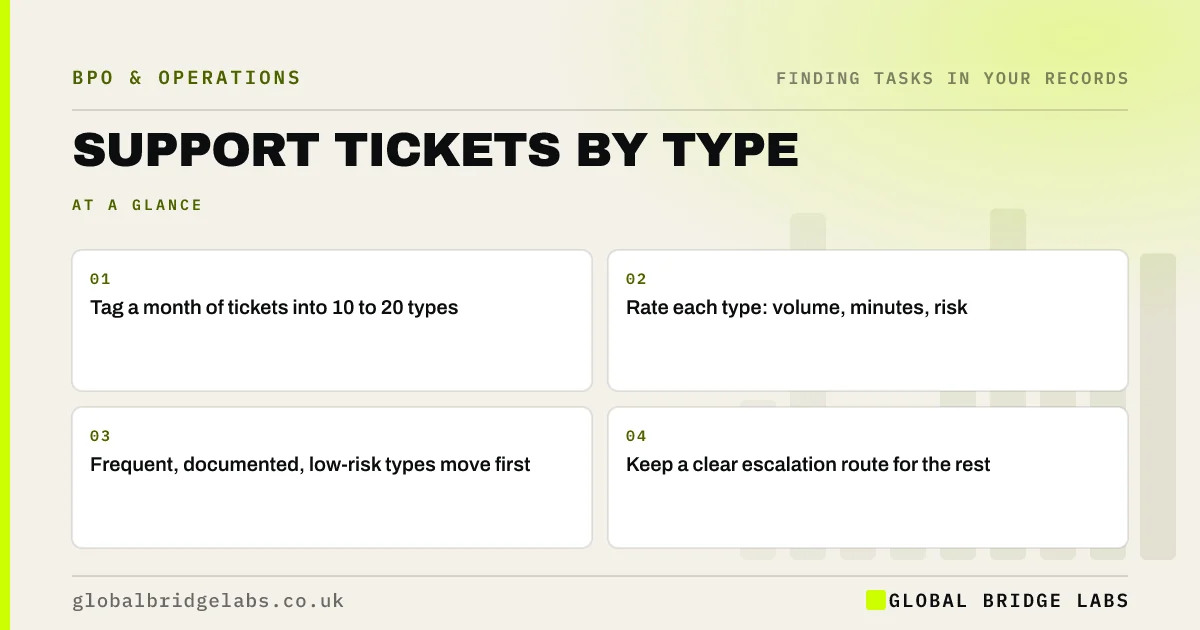
- Tag a month of tickets into 10 to 20 types.
- Rate each type: volume, minutes, risk.
- Frequent, documented, low-risk types move first.
- Keep a clear escalation route for the rest.
Want your ticket types sorted into move and keep? Message us on WhatsApp.
Chat on WhatsApp →Why categorise tickets before outsourcing?
Because 'support' is not one task. A helpdesk mixes simple lookups with technical faults, billing disputes and angry complaints. Outsourcing 'support' as a block either overwhelms the provider or leaves you checking everything. Categorising shows which types are routine enough to resolve outside and which need your team.
How do you tag tickets usefully?
Keep the tags few and practical, and tag by what the customer needed, not by product.
- 1. Read a sample of 100 tickets and draft 10 to 20 types.
- 2. Tag a full month with those types.
- 3. For each type, note volume and average handling minutes.
- 4. Rate each type low, medium or high risk.
- 5. Mark types answered from a help article or saved reply.
Which ticket types usually move?
Types answered from known information move best: order and delivery status, password and account changes, invoice copies, simple how-to questions and appointment changes. Types needing investigation, product judgement or money decisions beyond an agreed limit usually stay, though the provider can gather the details first.
What does this look like in practice?
A pattern we see: a small software company tags a month of tickets. A handful of types, such as log-in help, invoice copies, plan changes, how-to questions and data exports, make up the bulk of the volume and are all answered from help articles. They move first, with bugs and refunds escalated.
Ticket categorisation checklist
- Draft types from a 100-ticket sample.
- Tag a full month of tickets.
- Record volume, minutes and risk per type.
- Mark types with documented answers.
- Agree escalation for every type that stays.
Next step
Export last month's tickets and draft your types from the first 100. Most teams can tag a month in an afternoon once the types are agreed.
Message us on WhatsApp for the ticket tagging sheet, or book a 30-minute consultation.
Chat on WhatsApp →Sources and further reading
- Consumer Duty · Financial Conduct Authority
- UK Customer Satisfaction Index · Institute of Customer Service
Frequently asked questions
Which customer support tickets are easiest to outsource?
Tickets answered from documented information: order and delivery status, account and password changes, invoice copies, appointment changes and simple how-to questions. They are frequent, low risk and easy to check, which makes them the natural first block to hand over.
How many ticket categories should I use?
Ten to twenty is usually enough. Fewer and the categories hide differences in risk; more and tagging becomes slow and inconsistent. Draft them from a sample of 100 real tickets and merge any type that appears less than once a week.
What happens to tickets the outsourced team cannot answer?
They follow an agreed escalation route: the outsourced team gathers the details, tags the ticket and passes it to a named person in your team within a set time. Clear escalation is what makes partial outsourcing of support safe.
Written by

Global Bridge Labs (GBL) is a UK–Sri Lanka partner for social media, websites and BPO. Everything here comes from client delivery, not theory.