On this page
- 01Key takeaways
- 02How much does an SSL certificate cost?
- 03What is the difference between free and paid SSL?
- 04Does SSL affect search rankings?
- 05What goes wrong with SSL?
- 06When is a paid certificate worth it?
- 07What does this look like in practice?
- 08SSL checklist
- 09Next step
- 10Sources and further reading
- 11Frequently asked questions
Key takeaways
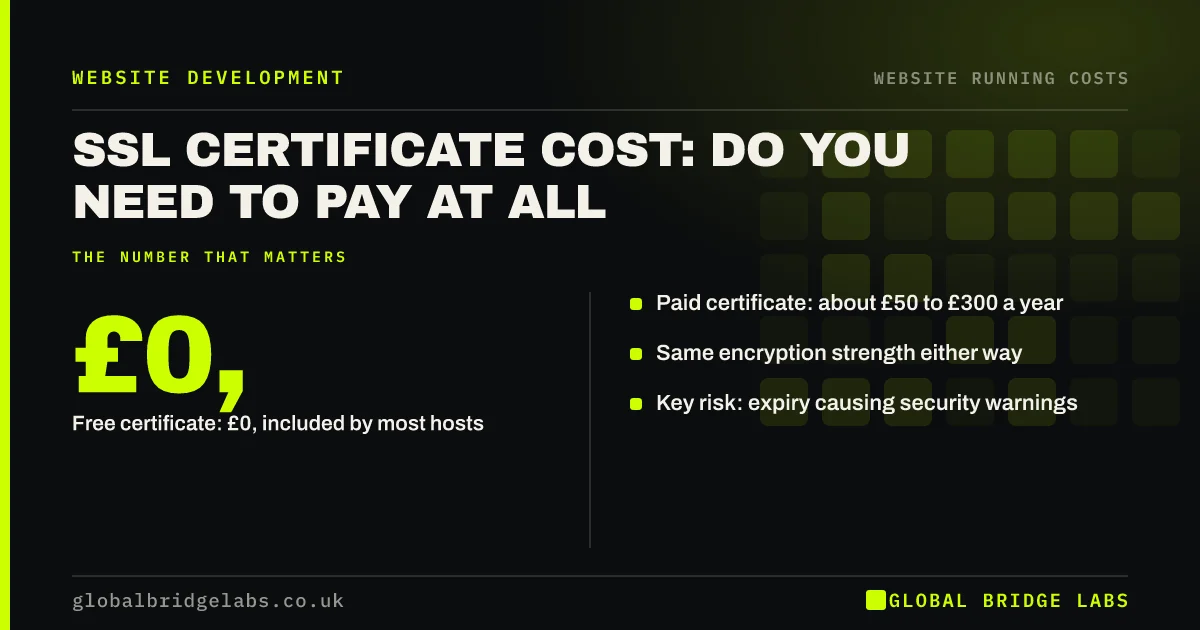
Most UK small business websites do not need to pay for an SSL certificate: free certificates from Let's Encrypt, included by most hosts, give the same encryption as paid ones. Paid certificates cost about £50 to £300 a year and add organisation checks that few visitors notice. What matters is that HTTPS works on every page and renews automatically.
- Free certificate: £0, included by most hosts.
- Paid certificate: about £50 to £300 a year.
- Same encryption strength either way.
- Key risk: expiry causing security warnings.
Want your HTTPS set-up checked? Message us on WhatsApp.
Chat on WhatsApp →How much does an SSL certificate cost?
An SSL certificate can cost nothing: Let's Encrypt provides free certificates, and most UK hosts and builders include them automatically. Paid certificates typically cost about £50 to £300 a year, depending on the level of validation. Some hosts charge for installing a certificate.
What is the difference between free and paid SSL?
Free and paid certificates encrypt traffic in the same way. Paid organisation or extended validation certificates add checks on the business behind the site, but browsers no longer display this prominently, so most visitors never see it. Paid ones may include warranties and support.
- Same encryption.
- Paid: business identity checks.
- Paid: warranty and support.
- Free: automatic renewal on most hosts.
Want to know if you need anything beyond free SSL? Message us on WhatsApp and we will discuss your requirements.
Chat on WhatsApp →Does SSL affect search rankings?
HTTPS is a light ranking signal in Google, and browsers mark sites without it as not secure. Any valid certificate, free or paid, meets this. The bigger risk is a misconfigured site with mixed content or an expired certificate.
What goes wrong with SSL?
Common problems are certificates that fail to renew, pages loading some images over plain HTTP, and old addresses not redirecting to HTTPS. Each can trigger browser warnings that put visitors off. Check renewal is automatic and test key pages after changes.
When is a paid certificate worth it?
A paid certificate can be worth it when a contract or partner requires organisation validation, for some payment set-ups, or when you need a wildcard certificate across many subdomains not covered by your host's free option.
What does this look like in practice?
At Global Bridge Labs (GBL), a UK restaurant was paying £180 a year for a certificate its host could provide free. When the paid one lapsed, the site showed security warnings for a weekend. Switching to the host's free, auto-renewing certificate removed both the cost and the renewal risk.
SSL checklist
- Check whether your host includes free SSL.
- Confirm renewal is automatic.
- Redirect all HTTP addresses to HTTPS.
- Fix mixed content warnings.
- Cancel paid certificates you do not need.
- Check key pages after site changes.
Next step
Open your site in a browser and check the padlock on several pages. Then look up who issues the certificate and whether you are paying for it.
Message us on WhatsApp for an HTTPS health check, or book a 30-minute consultation.
Chat on WhatsApp →Sources and further reading
- About Let's Encrypt · Let's Encrypt
- HTTPS as a ranking signal · Google Search Central Blog
- Small Business Guide: cyber security · National Cyber Security Centre
Frequently asked questions
Do I need to pay for an SSL certificate?
Usually not. Free certificates from Let's Encrypt, included by most hosts and website builders, provide the same encryption as paid ones. Paid certificates cost about £50 to £300 a year and add business identity checks, warranties and support, which most small business sites do not need.
What happens if my SSL certificate expires?
Browsers show a security warning that most visitors will not click past, so enquiries and sales stop until it is fixed. Forms and payments may also fail. Use certificates that renew automatically, and check your site after any hosting or domain change.
Is free SSL safe for a business website?
Yes. Free certificates use the same encryption standards as paid ones and are trusted by all major browsers. Let's Encrypt is widely used by hosts and large organisations. The differences with paid certificates are identity checks, warranties and support, not the security of the connection.
Written by

Global Bridge Labs (GBL) is a UK–Sri Lanka partner for social media, websites and BPO. Everything here comes from client delivery, not theory.