On this page
- 01Key takeaways
- 02What are leading indicators in social media?
- 03Which six leading indicators should you track?
- 04How quickly should they move?
- 05How do you track them simply?
- 06What if leading indicators move but enquiries do not?
- 07What if nothing moves after 12 weeks?
- 08What does this look like in practice?
- 09What does a leading indicator report look like?
- 10Which indicators suit which businesses?
- 11Next step
- 12Sources and further reading
- 13Frequently asked questions
Key takeaways
Leading indicators are early signals that social media is building towards business results, such as profile visits from your area, saves, shares, replies from relevant people and branded searches. They move within weeks, while enquiries can take months. Tracking them stops businesses giving up just before consistency pays off.
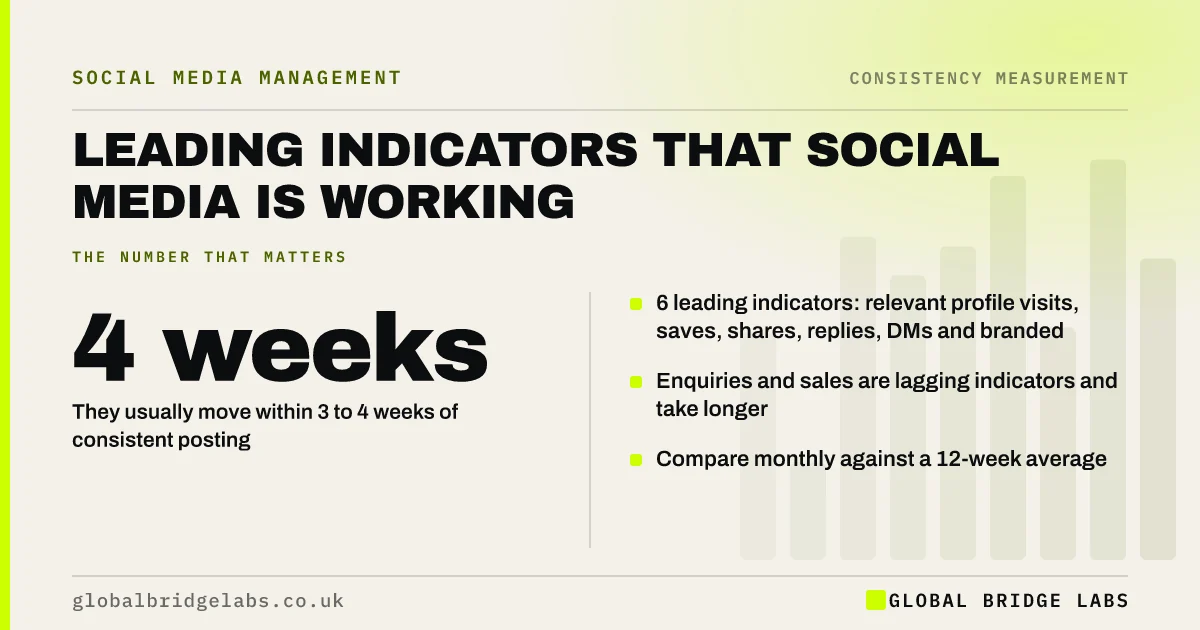
- 6 leading indicators: relevant profile visits, saves, shares, replies, DMs and branded search.
- They usually move within 3 to 4 weeks of consistent posting.
- Enquiries and sales are lagging indicators and take longer.
- Compare monthly against a 12-week average.
- No movement after 12 weeks means something needs changing.
Want to know whether your leading indicators are moving? Send us your analytics on WhatsApp.
Chat on WhatsApp →What are leading indicators in social media?
Leading indicators are measurable signals that tend to change before business outcomes do. In social media they show that the right people are noticing and valuing your content. Lagging indicators, such as enquiries and revenue, confirm the result but arrive later.
Which six leading indicators should you track?
- Profile visits from your target area or audience.
- Saves, which show content worth keeping.
- Shares, which show content worth passing on.
- Comments and replies from relevant people, not other suppliers.
- Direct messages asking questions about your offer.
- Branded searches for your business name.
How quickly should they move?
With consistent posting, leading indicators usually start to move within three to four weeks. Across GBL social media clients, the first measurable result typically arrives in 3 to 4 weeks. Enquiries follow over the next two to three months, depending on how long buyers take to decide.
How do you track them simply?
- Record the six numbers on the first working day of each month.
- Compare with the average of the previous three months.
- Note any change in content or cadence that might explain a shift.
- Look for trends over three months, not single-month jumps.
Want a tracking sheet with these six indicators? Message us on WhatsApp.
Chat on WhatsApp →What if leading indicators move but enquiries do not?
Check the path from interest to action. Is the profile clear about what you do and how to contact you? Do links work? Is the website enquiry route simple? Often the content is doing its job and the conversion step is the problem.
What if nothing moves after 12 weeks?
Then something fundamental needs changing, usually the audience focus or the channel. Check that your content is aimed at one clear buyer and that your buyers are actually on the platform. Change one thing and give it another 8 to 12 weeks.
What does this look like in practice?
A UK architectural practice posted consistently for two months with no enquiries and was ready to stop. Its leading indicators told a different story: saves had tripled, profile visits from local developers had doubled and branded searches were rising. It continued, and the first two project enquiries attributed to LinkedIn arrived in month four.
What does a leading indicator report look like?
- Profile visits from target area: 340 this month, 12-week average 260.
- Saves plus shares: 95, average 70.
- Replies from relevant people: 28, average 22.
- Direct messages about the offer: 9, average 6.
- Branded search clicks: 410, average 380.
- Verdict: indicators rising; keep cadence, check enquiry route.
Which indicators suit which businesses?
Local businesses should weight profile visits from their area and direct messages most. B2B firms should weight relevant followers by job function, branded searches and mentions in sales calls. E-commerce brands should weight saves, link clicks and repeat visitors. Choose the three that best fit how your buyers act.
Next step
Record your six leading indicators today as a baseline. Check them monthly and judge progress over 12 weeks.
Message us on WhatsApp and we will set up your leading indicator tracker.
Chat on WhatsApp →Sources and further reading
- Performance report (Search results) · Search Console Help
- Engagement rate and bounce rate · Google Analytics Help
- Meta Business Help Centre · Meta
Frequently asked questions
How do I know if my social media is working?
Track leading indicators such as profile visits from your area, saves, shares, replies from relevant people, direct messages and branded searches. If these rise within the first 12 weeks of consistent posting, social media is building towards results, even before enquiries arrive.
What is the difference between leading and lagging indicators?
Leading indicators change early and suggest future outcomes, such as saves or profile visits. Lagging indicators confirm outcomes after they happen, such as enquiries and revenue. Both matter; leading indicators help you decide whether to keep going.
Which social media metric predicts sales best?
No single metric predicts sales reliably, but profile visits and direct messages from your target audience, together with branded searches, are among the strongest signals. Saves and shares indicate content people value.
How often should I check social media metrics?
Monthly for decisions, compared with a three-month average. Checking daily encourages overreaction to normal variation. Weekly checks are useful only for spotting problems such as a missed post.
Are leading indicators enough to justify social media spend?
They are enough to justify continuing during the first three to six months, while enquiries build. After that, a board or owner will reasonably expect enquiries or sales influence too. Present leading indicators as evidence of progress, not as the final result.
Written by

Global Bridge Labs (GBL) is a UK–Sri Lanka partner for social media, websites and BPO. Everything here comes from client delivery, not theory.